
SpiceJet has added two Boeing 737 aircraft to its fleet, deploying them on key international and domestic routes.
On Tuesday, SpiceJet shares jumped 5.42% to ₹34.26, with the stock gaining nearly 15% over the last three trading sessions.
IndiGo’s parent InterGlobe Aviation has seen its shares fall around 12% in five days, while SpiceJet’s stock has risen about 6%.
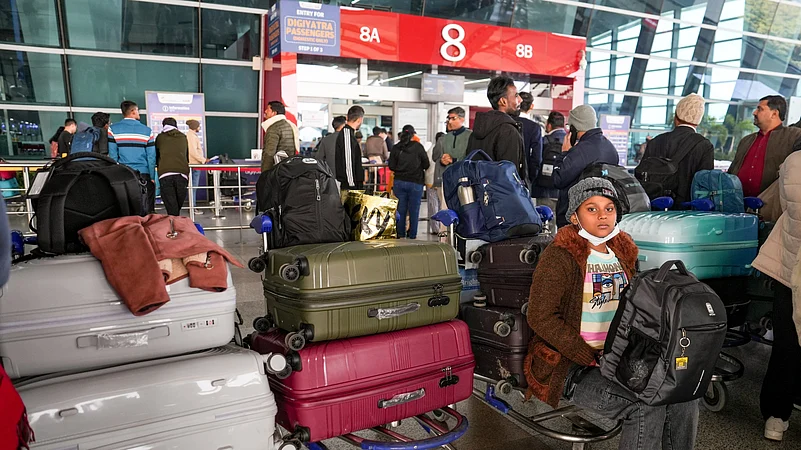
Ajay Singh–led low-cost carrier SpiceJet on Tuesday announced the induction of two Boeing 737 aircraft into its fleet, operating on routes such as Delhi–Bangkok, Ahmedabad–Dubai and Ahmedabad–Kolkata. The fleet expansion comes amid a crisis in the Indian civil aviation industry, triggered by thousands of flight cancellations by its larger rival IndiGo.
This crisis has weighed on the share price of IndiGo’s parent, InterGlobe Aviation Ltd, which has fallen about 12% in the past five days. At the same time, SpiceJet shares have gained roughly 6%.

1 September 2026
Get the latest issue of Outlook Business

On Tuesday, SpiceJet shares rose 5.42% to ₹34.26 on the BSE at 3:19 pm. Over the last three trading sessions, the stock has climbed from ₹30.35 to an intraday high of ₹34.68, rising about 15%.

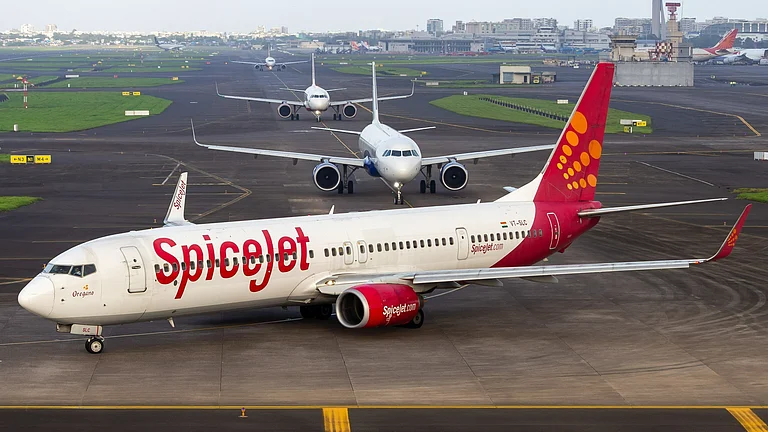
SpiceJet said both aircraft have completed all regulatory formalities and have already entered commercial service. They commenced operations on 26 and 29 November, respectively.
“The induction of two Boeing 737 aircraft into our fleet is another step in our ongoing efforts to expand capacity in a calibrated and responsible manner,” said Debojo Maharshi, Chief Business Officer, SpiceJet.
Advertisement
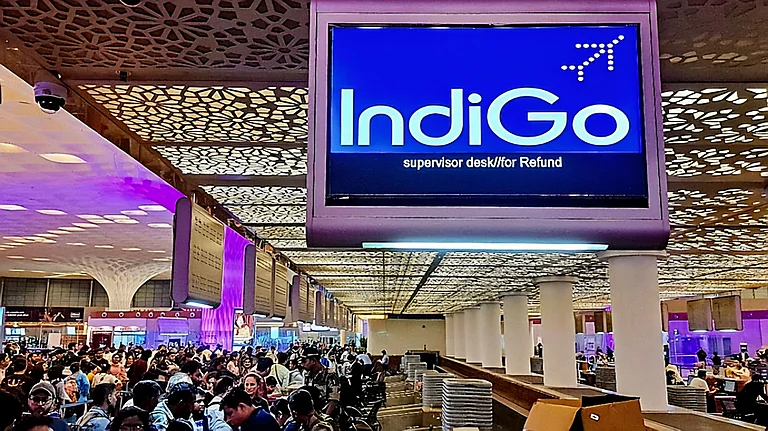
The development comes as the Directorate General of Civil Aviation (DGCA) has ordered a 5% cut in IndiGo’s winter schedule following widespread disruptions. These reduced flights routes are expected to be allocated to its rivals including SpiceJet, Air India and Akasa Air.
The crisis, according to IndiGo, was driven by several factors, including the new Flight Duty Time Limitation (FDTL) norms that came into force on 1 November. The rule, which required airlines to reset crew rosters, led to pilot shortages, cancellations and delays across thousands of flights last week.
Advertisement
The airline has also been accused of allegedly orchestrating the crisis to push for a reversal of the FDTL norms. Following directions from the Ministry of Civil Aviation, the DGCA has ordered a probe into the matter.
Meanwhile, SpiceJet has a total fleet of 56 aircraft, of which only 21 are operational, while the remaining 35 have been grounded for the past five to six years, according to a September 30 report by Crisil. The airline provides connectivity to 53 domestic and 10 international destinations.
The company has improved its operations over the past year, including restructuring a significant portion of its lease liabilities, which have reduced from ₹4,227 crore as of March 2024 to ₹3,329 crore as of March 2025.
For FY25, on a consolidated basis, the company reported a net profit of ₹61.93 crore compared with a net loss of ₹423.72 crore in the previous fiscal, on operating revenue of ₹7,085 crore.