
West Asia conflict and rising crude, commodity prices have put some pressure on India’s FMCG sector.
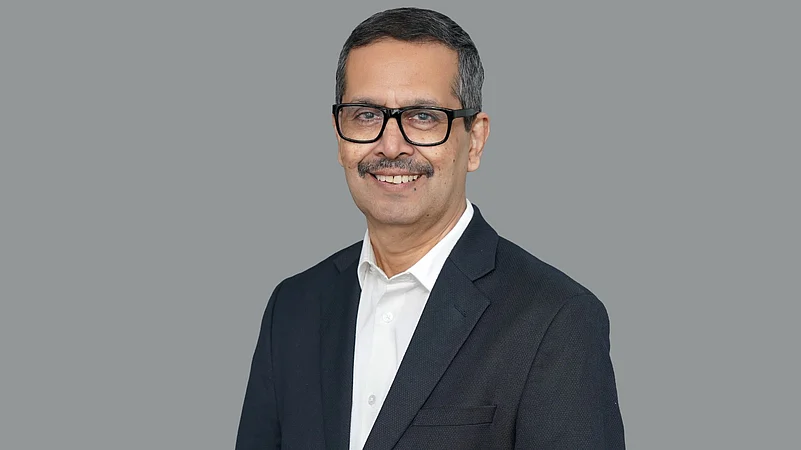
But, AWL Agri Business MD & CEO Shrikhant Kanhere says the industry is used to managing such volatility.
Company is closely monitoring the situation while ensuring product availability across price points and pack sizes, he noted.
India’s fast-moving consumer goods (FMCG) sector is once again facing pressure from rising crude and commodity prices amid the West Asia conflict, but the industry is no stranger to such cycles, according to AWL Agri Business CEO Shrikhant Kanhere.
“We are monitoring developments closely. Our priority remains to ensure availability of products across price points and pack sizes, so that consumers continue to have access despite external volatility,” Kanhere said in an interview with Outlook Business.

1 September 2026
Get the latest issue of Outlook Business

He added that the extent of the impact will “depend on how long the situation persists and how global markets respond”.
Since the outbreak of the conflict involving the US, Israel and Iran, trade through the strategic Strait of Hormuz has been severely impacted, with only a fraction of the usual crude oil volumes passing through. Crude prices, which were trading below $80 per barrel, have surged to over $109 per barrel. Alongside this, the costs of raw materials, logistics and shipping insurance have also increased.
A recent report by Japanese brokerage Nomura mapped how prices of key raw materials for the sector rose in Q4 FY26. Among agri-based inputs, sunflower oil rose about 16% year-on-year (YoY), palm kernel oil increased 15% YoY, and liquid paraffin (LLP) was up 27% YoY. Rice bran and soya oil saw relatively lower increases of 9% YoY and 7% YoY, respectively. Some categories, such as copra and coffee, witnessed sharp corrections, with Arabica down 15% YoY and Robusta falling 29% YoY.
Advertisement
On the crude-linked side, HDPE increased 14% YoY and linear alkyl benzene rose 9% YoY, reflecting a recovery in input costs, while Brent crude itself was up 6% YoY.
For AWL Agri Business, which has been diversifying after its rebranding last year following the Adani Group’s exit, the focus remains on closely monitoring the situation. Formerly known as Adani Wilmar Ltd, the company is also working on strengthening its portfolio and improving distribution, according to its CEO.
Here’s the edited excerpts from the interview:
How has the ongoing West Asia crisis impacted AWL Agri Business?
The situation has implications across global supply chains, particularly through crude-linked costs such as logistics and packaging. We are monitoring developments closely. Our priority remains to ensure availability of products across price points and pack sizes, so that consumers continue to have access despite external volatility.
Advertisement
Is price and forex volatility putting pressure on input costs?
There is some pressure, particularly where inputs are linked to global commodity and crude movements. However, this is something the industry is accustomed to managing owing to the nature of its volatility.
Can we expect this impact to be industry-wide?
Yes, these are broad macro developments and will have an impact across sectors to varying degrees. The extent will depend on how long the situation persists and how global markets respond.
How does AWL plan to deal with this? Will costs be passed on to consumers?
We evaluate all such decisions carefully. The focus is on balancing cost management with consumer affordability. Every shift is being calibrated minutely, keeping long-term demand and accessibility in mind.

Does the shock from the war offset the benefits of GST rationalisation and tax cuts?
GST rationalisation has supported consumption by improving affordability. External factors such as global price movements can influence this in the short term, but structural policy support remains important for sustaining demand.
Do you expect this to lead to an inflationary spiral like Covid-19?
It is early to draw such comparisons. The situation is being closely monitored across industries. From our side, the focus is on preparedness, ensuring continuity in supply and maintaining operational stability.

It’s been a while since AWL Agri Business’ rebranding. How have the market and investors adapted to it?
The transition to AWL Agri Business reflects the evolution of the company beyond a single category into a broader food and FMCG business. Market and investor response has been aligned with this shift.
Ultimately, rebranding is only meaningful if it is backed by execution and we have been delivering positive results across all our categories. Our focus has been on strengthening the portfolio, improving distribution and delivering consistent performance, which is what builds long-term confidence.
Has the change from a JV to a fully owned business altered working dynamics at the boardroom level?
A more aligned ownership structure naturally enables faster decision-making. It allows for clearer strategic direction and quicker coordination across functions. At the same time, governance processes remain strong. The emphasis is on execution speed while maintaining discipline in capital allocation and long-term planning.
AWL’s stock has been on a downward trajectory. Do you see any triggers, and how do you plan to address it?
Stock performance is influenced by multiple external factors to broader market sentiment. Our approach remains consistent focus on strengthening the business fundamentals. We continue to invest in the portfolio, improve efficiencies across the value chain and build scale. Over time, performance at the business level is what drives value creation.
Beyond edible oils, which segments look attractive in the near term?
Consumption patterns are evolving, and we are seeing interest in categories linked to convenience and nutrition. Products such as protein-based foods, including soya nuggets, are gaining relevance. Multigrain and better-for-you formats are also seeing traction. Our approach is to build in adjacencies that are close to the kitchen, while continuing to strengthen the core. You will see measured expansion based on clear consumer demand.
Does Wilmar International plan to look for a new domestic partner?
The current structure is working well, with strong alignment between strategy and execution. AWL continues to expand its portfolio, invest in infrastructure such as the Gohana facility and strengthen its distribution. At this stage, the focus is on scaling the existing business and delivering on growth priorities rather than structural changes.