Nirmala Sitharaman held the third pre-budget meeting with MSME stakeholders in November.
The Union Budget outlines the government’s yearly plan for earning, spending, and investing, serving as a roadmap for growth and welfare.
Article 112 defines the Union Budget as the government’s yearly revenue and spending plan, split into revenue and capital budgets.
The preparations for Budget 2026 has already started, with Union Finance Minister Nirmala Sitharaman chaired the third Pre-Budget Consultation meeting with stakeholders from the MSME (micro, small and medium enterprises) sector in November. But the date of budget presentation is not clear yet.
Typically, the budget is presented on the first day of February every year. However, since the day falls on a Sunday, which is a restricted holiday, the final date will be confirmed by the Cabinet Committee on Parliamentary Affairs in January 2026.
Before looking at what comes ahead, let’s understand the history of the Union Budget and how the entire process works.

1 September 2026
Get the latest issue of Outlook Business

The Union Budget is the government’s plan for money in a year, showing how it will earn, spend, and invest. It is not just numbers but a guide for growth, development, and welfare.
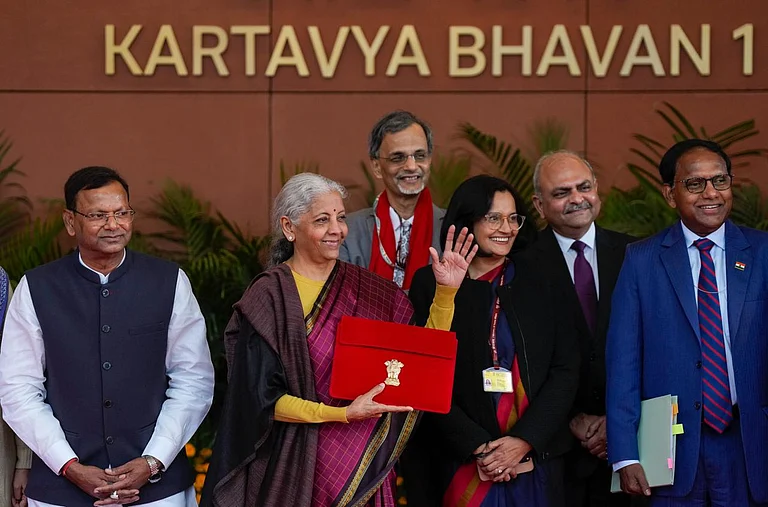
History of Union Budget
Under Article 112 of the Indian Constitution, the Union Budget is the government’s yearly estimate of revenue and expenditure. It is prepared for the period from April 1 to March 31 and is divided into two parts: the revenue budget and the capital budget.
Advertisement
The history of the Indian budget began on 7 April 1860, when James Wilson of the East India Company presented the first budget to the British Crown. After independence, India’s first Union Budget was presented on November 26, 1947 by Finance Minister R. K. Shanmugham Chetty. It came during the unrest of partition and covered only seven and a half months, before the next full-year budget started on 1 April 1948.
Who Prepares the Union Budget?
The Union Budget is put together by the finance minister with support from advisors and senior officials. Before drafting it, the minister also takes inputs from industry leaders and economists. The Budget Division of the Department of Economic Affairs (DEA) in the Finance Ministry is the main team that prepares the budget.
Advertisement
Who Presents the Union Budget?
The Finance Minister presents the budget in Parliament, and the Budget Division of the Department of Economic Affairs is responsible for preparing it. The Union Budget comes in the form of the Finance Bill and the Lok Sabha pass the Appropriation Bill for the government to spend money.
How the Budget Is Printed?
The full Union Budget is printed only 24 hours before the Finance Minister presents it in Parliament. The process is highly secret, with staff kept isolated and the operation carefully watched.

Longest Budget Presenters
Several leaders have played key roles in shaping India’s Union Budget history. Morarji Desai holds the record for presenting the most Union Budgets in India, delivering six budgets during his tenure from 1959 to 1964 and another four between 1967 and 1969.
P Chidambaram delivered nine Union Budgets, making him the second most frequent budget presenter. He presented his first budget in March 1996 and continued with multiple budgets under the Congress-led UPA government, with his last in 2009.
Pratap Mukherjee delivered eight Union Budgets during his career. He first served as Finance Minister in 1982, 1983 and 1984, presenting three budgets, and later delivered five more budgets from February 2009 to March 2012, contributing significantly to India’s financial planning.

Understanding the history of the Union Budget helps explain how India’s economic decisions have evolved. Each year’s budget tells a part of the country’s story, showing its challenges, ambitions, and the steps taken to build a stronger future.