
In a bid to expand international banking business, Central Bank of India is all set to operationalise IFSC Banking Unit (IBU) at GIFT City in Gandhinagar in the first week of next month.
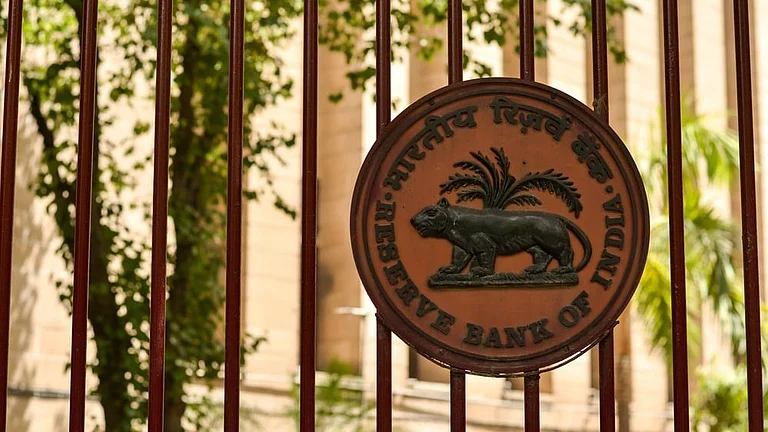
The bank has received regulatory approvals from the Reserve Bank of India and the International Financial Services Centres Authority (IFSCA) to set up an IBU, Central Bank of India MD and CEO Kalyan Kumar told PTI in an interview.
The public sector lender has already posted a branch head and groundwork is in progress there, according to Kumar.

1 September 2026
Get the latest issue of Outlook Business

"We would be in a position to open our IBU branch by first week of next month. The bank would certainly mobilise a good amount of forex business," he said.



Emphasising that the opening of IBU will be a significant milestone in the bank’s growth story, Kumar said, this will help expand international banking business and also enable the Central Bank of India to provide specialised banking services to customers.
The IBU will provide the bank access to international financial markets and allow it to deliver a complete range of products to its corporate clients with foreign currency funding requirements, Kumar said.
The bank will offer a suite of services, including foreign currency loans, trade finance solutions, treasury and risk management products, and enhanced convenient banking solutions to its customers, he added.
Advertisement
Asked if the Expected Credit Loss (ECL) guidelines, which kicks in from April 1, 2027, to make a dent in its bottomline, Kumar said the bank has been preparing for the last several quarters to migrate to the ECL framework.
"We have been working since so many quarters and we have made additional provision of ₹1,575 crore for stage 1 and stage 2 assets. We have been making 100 per cent provision for stage 3 assets. Therefore, there is no challenge in migrating to the ECL framework," he said.
As per the ECL framework, banks are required to estimate losses using probability of default, loss given default and exposure at default, enabling earlier recognition of credit deterioration and more proactive risk management.
Advertisement
The ECL framework sets slightly higher minimum provisioning requirements than current norms, resulting in increased provisions across most product segments.
Kumar further said the Central Bank of India has brought significant improvements in credit underwriting quality and also post-disbursement credit monitoring quality.
Looking at the current macroeconomic and domestic scenario, he said, "We are developing the different models through which we can actually conduct stress testing and see how our portfolio behaves and in this dynamic process, we are prepared for migrating to ECL."