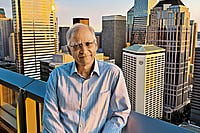

Deepinder Goyal resigned as CEO of Eternal, effective February 1, 2026
A 10-day notice period sparked debate over governance standards for listed firms
Albinder Dhindsa was named successor, signaling a shift toward quick-commerce leadership
After Eternal CEO Deepinder Goyal announced his resignation on Wednesday, questions have emerged over whether the move was unusually abrupt for a listed company or a more conventional transition process could have been followed.
The timing of the announcement caught investors and industry observers off guard, largely because there had been no prior public indication of an imminent transition or a longer handover period. In public markets, CEO exits are often communicated well in advance to allow shareholders, employees and regulators time to absorb the transition.

1 September 2026
Get the latest issue of Outlook Business

On this, an industry observer on the condition of anonymity, told Outlook Business stated that while a founder transition [of Eternal] may have been expected at some point, the short notice period could have been handled more gracefully.


“This reflects that the company is still learning how to behave like a mature public company,” the person said, adding that stronger board-level challenge and a longer transition period, as seen in leadership changes at companies like Infosys or within the Tata Group, might have reassured the market.
However, Goyal gave an explanation for his sudden exit from the top role. In a separate note to shareholders, the Eternal founder stated that he was increasingly drawn to a set of high-risk ideas that are difficult to pursue while serving as the executive head of a public company.
Advertisement
“These are the kinds of ideas that are better pursued outside a public company like Eternal,” he wrote. While he said he personally had the bandwidth to continue leading Eternal alongside exploring new ventures, Goyal added that the legal, regulatory and stakeholder expectations of a public-company CEO in India demand singular focus, making such a dual role impractical.
However, another senior industry executive attributed the case to the founders-struggle with the shift in role after the company became large and publicly listed.
The executive while talking to Outlook Business said, “Running a listed company is a very different job from building a start-up.” The person pointed to what they described as past governance missteps at Zomato as a listed entity, ranging from delayed disclosures and corrections in reported numbers to a reluctance, initially, to engage with analysts.
Advertisement
“...public companies do get punished for this kind of behaviour. Sometimes the punishment is informal, investors simply lose confidence. Sometimes it is formal, regulatory scrutiny or fines. But the reality is that Zomato’s leadership has never looked fully comfortable operating as a public company, and they are still learning that part,” he said.

CEO Departure Norm For Public Company
In India, the resignation of a CEO, classified as Key Managerial Personnel, is treated as a material event under the Securities and Exchange Board of India’s Listing Obligations and Disclosure Requirements (LODR) Regulations.
Companies are required to inform stock exchanges as soon as possible, typically within 24 hours of the occurrence of the event. If the decision is taken during a board meeting, the outcome must be disclosed within 30 minutes of the meeting’s conclusion.
Further, the resignation letter, along with detailed reasons for stepping down, must be filed with exchanges within seven days of the resignation becoming effective.
For instance, in October 2020, Aditya Puri stepped down as managing director and CEO of HDFC Bank after completing his approved tenure. The transition followed classic public-company norms: the board had pre-approved succession, the bank made timely stock-exchange disclosures, and Sashidhar Jagdishan was announced as successor well in advance, ensuring continuity and minimal market disruption. The handover was orderly, planned, and regulator-cleared, reflecting textbook governance practice for a listed Indian company.
Similar norms are followed globally too, like in February 2021 Amazon announced that founder Jeff Bezos would transition from CEO to executive chair and that Andy Jassy would become CEO in the third quarter of 2021. The company issued formal public disclosures (press release and investor filings), named a successor and gave a clear effective timeframe, a textbook, board-approved handover that left Bezos on the corporate payroll in a different role.
On the other hand, Goyal’s resignation was announced via the company’s shareholder letter accompanying its quarterly earnings report.
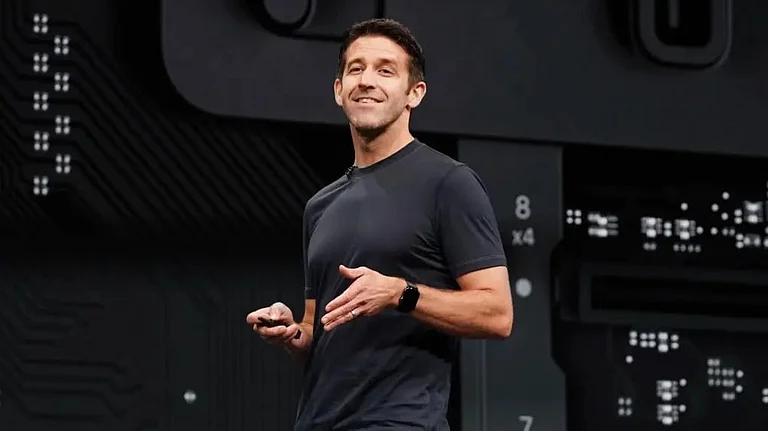
It stated the resignation will take effect from February 1, 2026, barely 10 days after the announcement, with current Blinkit CEO Albinder Dhindsa set to take over as chief executive. Following the leadership transition, Goyal will continue to be associated with the group in the role of Director and Vice Chairman.

In Goyal’s Defence
Some governance and industry experts defended Goyal’s move. Shriram Subramanian, managing director at InGovern, said that as companies mature, reliance on founders naturally reduces and systems take precedence over individuals. “Even if it appears abrupt externally, internally the transition is usually far more prepared than it looks,” he said.
Satish Meena, founder of Datum Intelligence, struck a similar note, saying that while leadership exits are often telegraphed well in advance, the absence of such signalling does not automatically imply poor planning.
“The communication made it feel sudden, but that doesn’t necessarily mean the transition itself is unthought-through,” he said, adding that leaders often develop parallel priorities over time that culminate in such decisions.