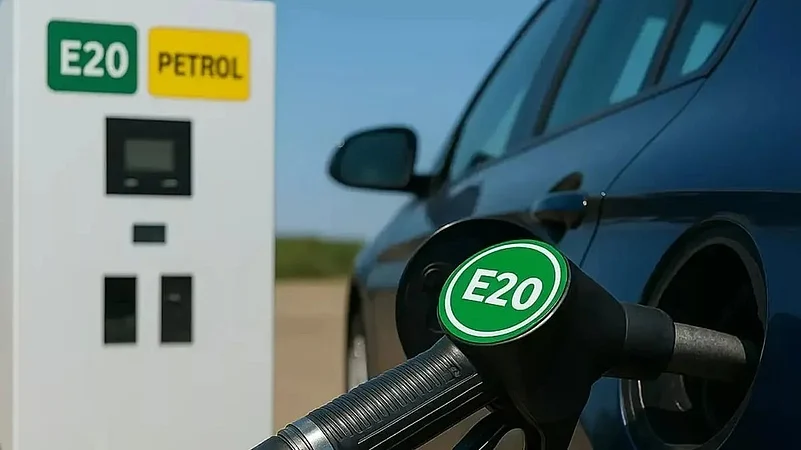

E20 blending can improve fuel quality and support domestic ethanol production, but it is unlikely to significantly reduce India's crude oil imports.
A broader strategy targeting electronics, energy equipment, chemicals and other major imports is needed to lower the import bill.
Expanding domestic manufacturing, electric mobility and clean energy could deliver more meaningful long-term foreign exchange savings.
The Government of India is right in trying to find ways to save foreign exchange. For a country of India’s size, with large energy needs, a growing middle class, and a development agenda that requires capital goods, technology, defence equipment, electronics, and infrastructure inputs, every dollar saved matters. Reducing avoidable imports is not just an accounting exercise, it is a strategic necessity, particularly given that India imports close to 88.5% of the crude oil it consumes.
It is in this context that ethanol blending must be understood. It has a certain policy logic. It supports domestic ethanol production, helps sugar mills and farmers, improves the octane value of petrol, and reduces the quantity of petrol that needs to be supplied from refineries. As a diversification measure, it has some merit. As a farm-linked industrial policy, it can be defended. As an octane-enhancement strategy, it also makes technical sense.

1 September 2026
Get the latest issue of Outlook Business

Limited Benefits
But as a serious foreign-exchange-saving strategy, E20 has very limited power. The reason is simple. Crude oil is imported not only to make petrol. A barrel of crude is refined into a basket of products: diesel, petrol, LPG, aviation turbine fuel, naphtha, fuel oil, bitumen, lubricants, and petrochemical feedstocks. Petrol is only one part of that basket. Even if 20% of petrol volume is replaced by ethanol, India still needs crude for diesel, LPG, aviation fuel, naphtha, and the rest of the petroleum chain.
Advertisement
Hence, there cannot be a mechanical application of E20 arithmetic to crude import bill. A 20% ethanol blend in petrol cannot produce a 20% reduction in crude imports. It cannot even come close. India still needs to import Crude to meet demands in diesel, aviation, LPG, petrochemical feedstock etc. The refinery barrel won’t disappear because petrol has been blended with ethanol.
The true test is whether India’s crude import volume has fallen after E20, which is not yet visible. There is no structural decline in crude imports. Despite the fall in volume of crude oil by 4.3% in April 2026, the monthly import bill soared roughly 50% year-on-year to $16.3 billion. That does not mean ethanol has saved nothing. It means the saving is marginal and is overwhelmed by growth in the rest of the petroleum economy.
Advertisement
Assessing Cost of Saving
There is also another uneasy question. What is the domestic cost of this saving? With Ethanol, the foreign-exchange saving is being achieved by using scarce domestic water, land, power, and policy support. Can India afford to replace one strategic vulnerability with another?
The government’s instinct is correct. India must save dollars. But the instrument must match the objective.
Here hybridisation, electric mobility, public transport, rail freight, cleaner logistics, and a gradual reduction in diesel intensity should be the focus. Diesel is the real petroleum workhorse. Unless diesel demand is addressed, crude imports will not fall meaningfully.
Adopt Multi-pronged Strategy
To bring down the total import bill, the target should be even broader. India must focus on locally produced substitutes for major non-crude imports where domestic capability can be built at scale. Electronics and components are an obvious area. Solar energy infrastructure is another, where heavy reliance remains evident, for example; India imported solar cells and modules worth over $1.27 billion in the first quarter of 2026 alone.
Chemicals, APIs, fertiliser inputs, industrial intermediates, and machinery components also deserve attention. Coal imports can be reduced through domestic renewables, storage, grid reform, and logistics efficiency. Gold imports require a separate savings-market solution, because gold is essentially imported household savings.
India should work towards selective import substitution where competitive scale can be built, technology depth can be added, and domestic value addition can be encouraged. Assembly alone is not enough. The real Dollar saving comes when components, materials, design, tooling, and supply chains move into India.

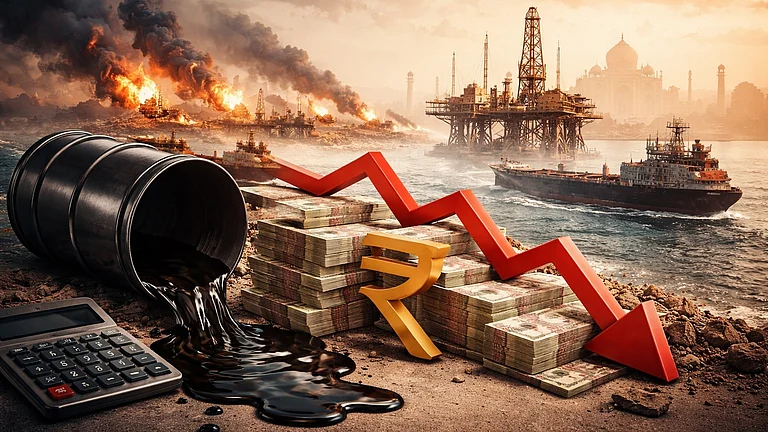


E20, therefore should not be centrepiece of India’s foreign exchange saving strategy, it can be at the most a limited petrol-pool substitution measure with agricultural and octane benefits.
A serious Dollar-saving strategy must attack the larger import base, without creating hidden costs in water, food, power, or consumer efficiency. That requires industrial depth, not just fuel blending.
E20 may have a role, but the real battle lies in electronics, energy equipment, batteries, chemicals, coal substitution, transport efficiency, and domestic manufacturing capability. That is where the Dollars are. And that is where policy attention must go.
Disclaimer: Sankar Chakraborti is former MD and CEO, Acuite Ratings. Views expressed are personal.