100-octane premium petrol sales have more than doubled in recent months, with the sharpest rise in July.
Delhi is seeing the highest demand, with ethanol-free petrol there costing ₹160/litre, 57% more than regular E20 petrol.
Despite the surge, 100-octane fuel remains a niche product, just 0.1% of total petrol sales, stocked at under 1% of India's fuel stations
Sales of 100-octane premium petrol, the only fuel grade that skips ethanol blending, have more than doubled over the past few months. The jump has been sharpest through July, as anxiety over possible engine damage from ethanol-blended fuel has intensified, particularly in Delhi.
State fuel retailers sell this ethanol-free grade under separate brand names, including Indian Oil's XP100, Bharat Petroleum's Speed100, and Hindustan Petroleum's poWer100, according to a Business Standard report.

1 September 2026
Get the latest issue of Outlook Business

It's built for high-performance vehicles, supercars, luxury sedans, superbikes, and even with the recent spike, it still accounts for only about 0.1% of India's total petrol sales, largely because of its steep price premium over regular fuel, the report said.
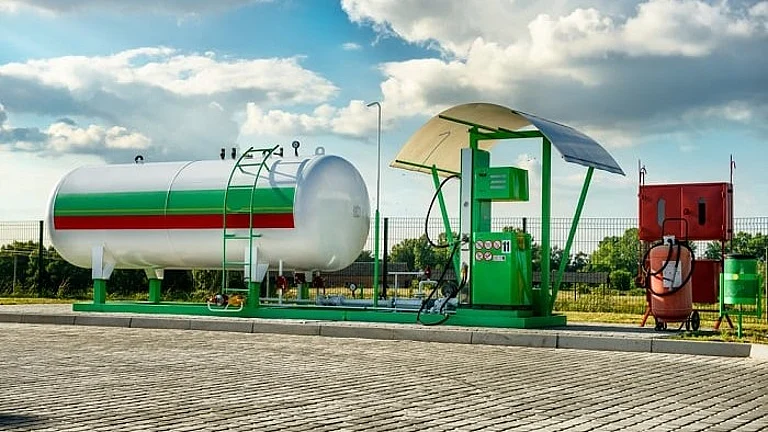
Delhi Leads the Spike
As per the report, the surge has been driven by social media claims linking ethanol blending to vehicle damage, with demand concentrated most heavily in Delhi.
In the capital, ethanol-free 100-octane petrol sells for roughly ₹160 a litre, about 57% above regular petrol. Regular E20 petrol (20% ethanol blend) costs ₹102.12 a litre, while premium E20 variants such as XP95, Speed97 and poWer95 run around ₹111-112.
Advertisement
Mumbai shows a similar gap with 100-octane at ₹167.35 a litre against ₹111.21 for regular petrol, with premium E20 grades priced between ₹120-121.
Because demand remains so small, fewer than 1% of India's fuel stations stock the 100-octane grade, and availability is mostly limited to metro cities.
Officials Expect the Spike to Fade
Queries sent by Business Standard to the Ministry of Petroleum and Natural Gas, along with IOC, BPCL and HPCL, went unanswered before publication.
Officials expect demand to cool once concerns over ethanol-blended fuel settle down, as per the Business Standard report.
One senior official noted that the fuel is meant for high-end vehicles, and that some regular vehicle owners appear to be buying it too, a trend they called unsustainable given the sharp rise in fuel costs that would follow.
Advertisement
The Ethanol Debate
The controversy centres on fears that some vehicles, especially older models not built for E20, could see faster wear, reduced efficiency and higher upkeep costs.
A customer reportedly noted that 100-octane petrol costs nearly 45% more than E20, undercutting any mileage advantage; the appeal, they said, lies purely in sidestepping the perceived risk of ethanol-related engine harm.
For context, 100-octane fuel carries a Research Octane Number (RON) of 100, giving it stronger resistance to knocking and letting it handle higher compression and temperatures, a property suited to high-performance engines
Government's Position
Earlier this month, the government acknowledged that E20 petrol cuts vehicle mileage by 3-5% compared to conventional petrol, but maintained that the blend delivers a higher octane rating, better anti-knock performance, faster combustion and smoother acceleration.
It also ruled out reviving pure petrol or E10 alongside E20, pointing to nearly ₹1 trillion in annual bank financing that has gone into ethanol production and related infrastructure.
Last week, the government reiterated that premium petrol grades sold by state retailers would continue to be supplied without ethanol blending, while ruling out any move to raise the blending cap beyond 20% or reintroduce E0 or E10 petrol.