

AGEL adopts TNFD guidance, embedding nature-related risk management into core operations.
Company commits to No Net Loss of Biodiversity, planting 27.86mn trees.
Global report stresses careful renewable expansion benefits ecosystems, human well-being and society.
Adani Green Energy Ltd (AGEL) on December 8 said that it has integrated the guidance of the Taskforce on Nature-related Financial Disclosures (TNFD) into its core sustainability strategy, reinforcing its shift toward nature-positive renewable energy development.
The TNFD framework is a global, science-led initiative founded by the United Nations Environment Programme Finance Initiative, the United Nations Development Programme, the World Wildlife Fund and Global Canopy.
1 June 2026
Get the latest issue of Outlook Business

The integration provides a structured framework for organisations to identify, assess, manage and disclose nature-related risks and opportunities.
By aligning with the TNFD framework, AGEL strengthens its leadership among global renewable companies integrating biodiversity considerations into strategic decision-making, supporting both global conservation priorities and India's climate leadership.
This strengthens AGEL's ambition to transition from traditional Environmental, Social, and Governance (ESG) compliance to a more integrated, nature-positive model of renewable energy growth, a company statement said.

Beginning in FY24, AGEL initiated company-wide assessments to map nature-related dependencies, impacts, risks, and opportunities across all operational sites.
AGEL is also a signatory to the India Business Biodiversity Initiative (IBBI and IBBI 2.0). Reaffirming its long-term biodiversity goal, AGEL has committed to achieving No Net Loss of Biodiversity by 2030, supported by its plan to plant 27.86mn trees across project locations.
It is one of the world's leading renewable energy companies, enabling a clean energy transition. It develops, owns, and operates utility-scale grid-connected solar, wind, hybrid and energy storage solutions.
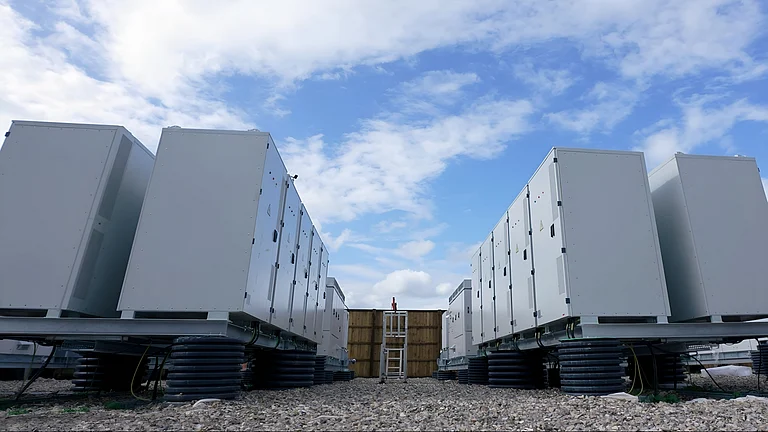
AGEL currently has an operating renewable portfolio of over 16.5 GW, the largest in India, spread across 12 states. The company has set a target of achieving 50 GW by 2030, aligned to India's decarbonisation goals.
It is developing the world's largest renewable energy plant (30 GW) on barren land at Khavda, Gujarat, covering 538 square kilometers, an area five times larger than Paris.
AGEL's operating portfolio is certified 'water positive', 'single-use plastic free' and 'zero waste-to-landfill', a testament to the company's commitment to powering sustainable growth.

Nature-Friendly Renewable Transition
According to a joint report by World Wildlife Fund and the Boston Consulting Group, well-planned shift to renewable energy can benefit ecosystems and human wellbeing far more than fossil-based energy—if biodiversity considerations guide project siting and design.
The joint report emphasised that a rapid transition is dramatically better for nature and society in key areas including mining, air quality, water quality, ecosystems and biodiversity, human well-being, and land area footprint.
Renewables can and should be scaled up more aggressively but scaled up thoughtfully and responsibly. This includes making sure decision-makers have access to the tools and resources required to make evidence-based decisions to mitigate and/or minimise harm to nature when planning and installing renewable energy infrastructure.
(With inputs from PTI.)