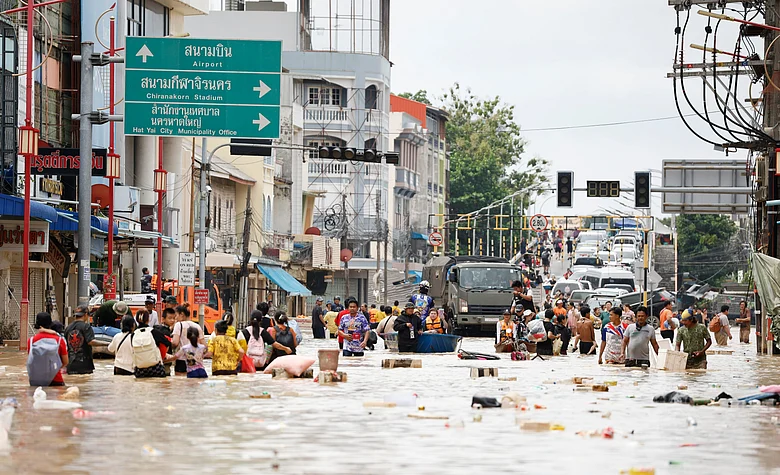

Southeast Asia floods kill over 1,300 and displace millions of residents.
Cyclones, monsoon rains and deforestation worsen flooding across affected regions.
Experts warn climate change intensifies disasters, urging stronger preparedness measures.
The catastrophic floods and landslides have claimed over 1,300 lives in Indonesia, Sri Lanka and Thailand, with nearly 1,000 people missing and have incurred at least $20bn in losses since late last month across parts of South and Southeast Asia. This indicates the growing risks from climate change and extreme weather for the region’s fast-growing populations and economies, according to Bloomberg.
Three tropical cyclones, coinciding with the northeast monsoon that typically brings heavy downpours to Southeast Asia this time of year, have caused widespread destruction in the region. Peninsular Malaysia and southern Thailand have also received significantly above-normal rains in the past week, according to data from the US Climate Prediction Center. This sequence of cyclones ended up damaging homes, roads and rail lines, wiped out crops, inundated tourist spots and slowed factory output.

1 October 2026
Get the latest issue of Outlook Business


Climate Change Fuels Extreme Weather
Experts say that climate change is most likely behind the aggravated impact on the flooding along with factors including deforestation, failures in flood defenses and a lack of funding for disaster resilience.
Commenting on the natural pattern that could have led to the current situation, Roxy Matthew Koll, a climate scientist at the Indian Institute of Tropical Meteorology, told Al Jazeera, “Warmer oceans fuel stronger rain bands around tropical cyclones, and a warmer atmosphere holds more moisture and releases it in more intense bursts.”
Advertisement
The phenomenon called La Niña, causes the Pacific Ocean to become cooler than usual in the east and warmer in the west, resulting in winds to strengthen and push more warm water and moisture towards Asia. This pattern fills the atmosphere with extra moisture over Asia that often leads to heavier rainfall and higher flood risk, Koll told Al Jazeera.

While the effects of heavy rainfall are clear, Turton told Al Jazeera that additional research, known as attribution studies, is required to comprehend other unusual aspects of last week’s storms, such as possible interactions between Cyclone Senyar and Typhoon Koto.
Advertisement
Davide Faranda, research director in climate physics at the French National Center for Scientific Research who led a study on Vietnam’s November floods also echoed similar reason as he told Bloomberg, “Climate change is undeniably fuelling more severe flooding in Southeast Asia.”
Research firm BMI, part of Fitch Solutions, told Bloomberg that Southeast Asia faces a growing threat of “compound disasters,” where several extreme events hit in quick succession and cause greater damage in the years ahead.
Storms made worse by cyclones, along with deforestation, show how urgently countries need stronger disaster preparedness and response systems.