Odisha’s MSME economy is entering an important phase. With more than 14 lakh micro, small and medium enterprises registered across state portals, the sector is not merely a source of livelihoods but a critical engine of industrialisation, employment and regional growth. As the state looks to deepen manufacturing, strengthen clusters and build stronger links between large industries and local enterprises, access to timely and appropriate finance is emerging as one of the most consequential pieces of the growth puzzle.
This is the context for the conclave, themed “Banking on Bharat: Empowering Odisha’s MSMEs”. On August 27, 2026, the august gathering of business professionals will be hosted at MAYFAIR Convention Centre, Bhubaneswar, designed to bring entrepreneurs, policymakers, bankers, financial institutions, industry leaders and ecosystem partners to discuss MSME opportunities and turn those conversations into practical knowledge, business connections and actionable pathways for growth.
The Hub of Emerging Businesses
The case for Odisha’s MSMEs is reinforced by the state’s policy direction. For 2026–27, the Odisha Legislative Assembly has allocated Rs 762.78 crore to the MSME Department, with an emphasis on credit access, technology adoption and employment generation.
The Odisha MSME Development Policy places clusters and industrial infrastructure at the heart of this ambition. Dedicated industrial estates, specialised parks and MSME spaces along important economic corridors are intended to create an environment where smaller enterprises can operate closer to markets, suppliers and larger industrial units.
Financial support is another important pillar. Capital investment subsidies, SGST reimbursements and credit enhancement through national frameworks such as CGTMSE are designed to reduce the barriers for smaller businesses and inclusion.
Advertisement
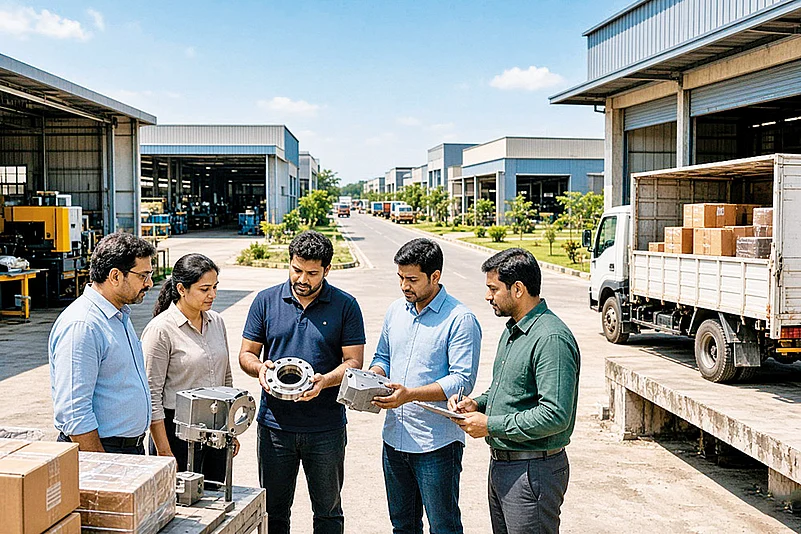
Perhaps most significant for the next stage of Odisha’s industrial development is the emphasis on ancillary and downstream linkages. By encouraging large and mega industries to develop dedicated spaces for vendor and ancillary units, the state is creating the potential for MSMEs to become integrated into larger manufacturing value chains. The opportunity extends across sectors—from food processing, textiles and handicrafts to metal ancillaries, marine-linked businesses and light engineering.
Bank of Baroda’s MSME Proposition
MSME growth requires infrastructure working capital, investment finance, digital banking capabilities and the confidence to take the next business step. With its regional presence anchored by its Zonal Office in Bhubaneswar, Bank of Baroda is positioning itself as a financial partner for Odisha’s MSME ecosystem, combining conventional lending capabilities with increasingly digital and cash-flow-led solutions.
Advertisement
Its MSME portfolio spans different stages of enterprise growth. Bob Digi Udyam, for instance, is positioned as a digital, cash-flow-based lending solution for micro and small enterprises, offering collateral-free financing options ranging from Rs 10 lakh to Rs 2 crore, subject to eligibility. The bank’s digital MSME loan proposition is designed around paperless processing and faster access to funds, addressing the working-capital pressures that can arise from inventory cycles and urgent business requirements.
For enterprises moving into a larger investment phase, the Baroda SME Loan Pack provides a composite credit structure for working capital and longer-term capital expenditure. Meanwhile, solutions such as the Baroda Laghu Udyami Credit Card are aimed at the recurring credit requirements of smaller traders, artisans, tiny industries and self-employed professionals.
Government-backed programmes remain another route into formal finance. The Pradhan Mantri Mudra Yojana and PM Vishwakarma can help bring smaller entrepreneurs into the formal credit ecosystem. The bank’s proposition also extends beyond lending. Bob World Business provides an integrated digital banking environment for payments, transactions and cash-flow management, while specialised current-account propositions such as Baroda Start-Up and Baroda Scale-Up are designed to support businesses at different stages of their journey.
Cluster-led Odisha strategy
Credit demand across the state for a handicraft enterprise, a marine exporter, a food processor and a metal ancillary unit have different cash cycles, collateral positions, working-capital requirements and growth ambitions. A cluster-based strategy could allow financing programmes to be aligned with the specific needs of traditional handicraft hubs, marine and export-oriented zones, food-processing centres and engineering clusters. At the same time, expanding outreach into underserved and aspirational districts can bring formal finance closer to businesses outside the major urban centres.
As more enterprises digitise their operations and build formal financial histories, lenders have an expanding opportunity to use transaction and cash-flow information to understand businesses beyond traditional collateral-based measures.
Mark of Outlook MSME Growth Conclave
The Outlook MSME Growth Conclave intends to create a dialogue, connect, collaborate and benefit. As Anchor Partner, Bank of Baroda will bring its expertise in finance, enterprise growth and business banking to the centre of the experience. The bank will also host a powerful dialogue session, creating a focused setting for business leaders to exchange ideas and engage with decision-makers.
The Masterclass platform is designed to make the conversation even more practical. Domain specialists will address issues that directly influence business growth: accessing finance, entering new markets, understanding export processes, managing trade risks and navigating government procurement.
Outlook Group brings its editorial and convening capabilities to create a platform where industry experience, institutional expertise and entrepreneurial realities can meet.
Ultimately, the value of the conclave will be assessed by the outcomes that arise from them. For Bank of Baroda, that represents an opportunity to move beyond being a lender to becoming a deeper partner in the state’s next phase of enterprise growth. And for Odisha, the larger prize is an MSME ecosystem capable of turning the state’s industrial potential into sustained, distributed and inclusive economic growth.