The widening trade deficit with Japan is a matter of concern for Indian exporters, industry chamber FICCI President Anant Goenka said on Tuesday, calling for greater recognition of Indian certifications in Tokyo to improve market access.
Stringent certification and regulatory requirements too are among key concerns for Indian exporters, particularly for pharmaceutical companies in the Japanese market.
Goenka said India's trade with Japan has grown primarily in one direction and Indian companies continue to face difficulties in accessing the Japanese market.

1 October 2026
Get the latest issue of Outlook Business

"That (trade deficit) has been an area of concern. I think our trade deficit has widened during this period and it has been raised by the minister as well over the course of various conversations that while trade has grown, it has primarily grown one way. So how do we access Japanese markets? How do we make products and therefore quality for example is something where the exacting standards of Japanese, even Indian manufacturing has to scale up.



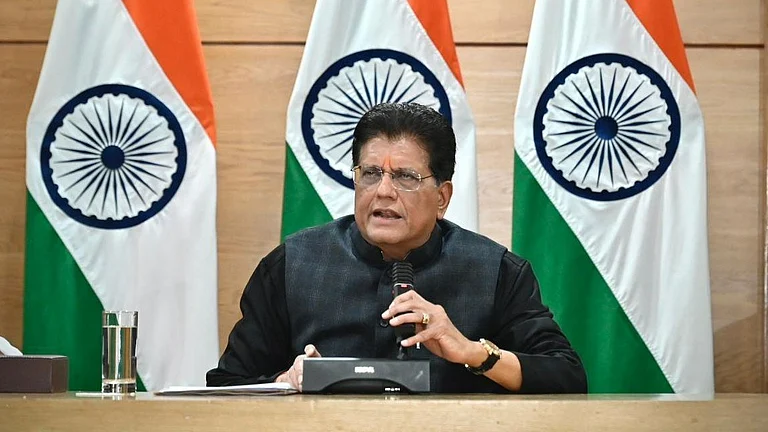
"We are doing some amount. But I think more can be done on that front. The other is I think some amount of cultural opening as well, there is a fair amount of bias of buying products within Japan of Japanese companies. So that is something where it may just take time to solve in my view," he told reporters.
He added that Indian pharmaceutical companies were facing particular difficulties in registering their products in Japan.
"Pharma companies cannot even register their products yet in Japan," Goenka said, describing this as a challenge that needs to be addressed.
He said recognition of Indian certifications in Japan was one of the key areas that Indian industry was seeking to address.
Advertisement
"Recognition of Indian certification, for example, in Japan" could help improve market access, he said, adding that such issues could be resolved even outside a larger review of the India-Japan free trade agreement.
The two-way commerce between the countries grew 9.18% to $27.47 billion (exports of $6.03 billion and imports of $21.43 billion) in 2025-26 from $25.16 billion in 2024-25.
The trade deficit between the countries increased to $15.4 billion in the last fiscal year from $12.66 billion in 2024-25. It was $12.53 billion in 2023-24 and $11 billion in 2022-23.
Goenka said addressing certification and regulatory barriers would be important for making bilateral trade more balanced and helping Indian companies tap the Japanese market.
Advertisement
INDIA-JAPAN COLLABORATION IN AFRICA: ---------------------------------------------- Goenka said that India and Japan have significant scope for collaboration in areas such as high-tech manufacturing, artificial intelligence, data centres, shipbuilding, critical minerals, steel and semiconductors.
"The other opportunity we looked at was India-Japan for Africa. So between the two of us, there are different capabilities that we have. We have had long relationships with Africa, a lot of Indians present there.
"Japan also has its own R&D strengths. So how can we jointly work towards investing more in Africa, selling more to Africa, working towards that space," he said.
He added that critical minerals are key areas where the two countries can collaborate in Africa.
Goenka is also Vice Chairman of the RPG Group, a $5.2 billion conglomerate with interests in the areas of automotive tyres, infrastructure, pharma, IT, energy products, plantations, and venture capital.