The reported suspension covers physical trade, maritime cargo and financial transactions, putting a relationship historically worth $20-$30 billion in annual non-oil trade under severe strain.
Iranian businesses have long relied on Dubai’s ports, re-export networks and financial infrastructure to access goods and foreign currency amid international sanctions.
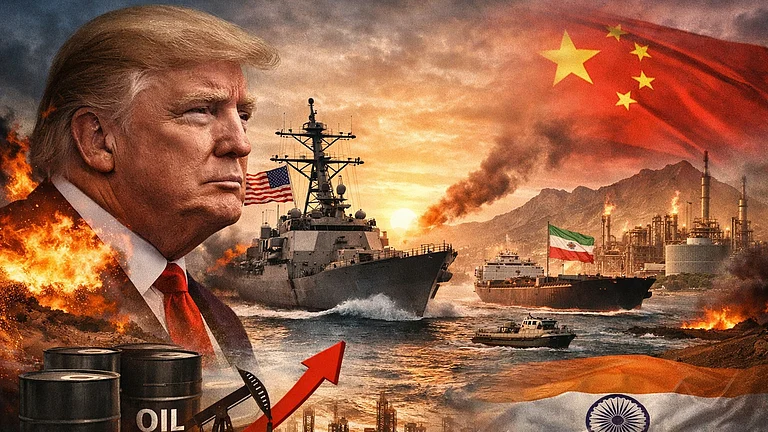
A commercial rupture amid military tensions could increase risks to shipping through the Strait of Hormuz, pushing up war-risk insurance costs and potentially adding pressure to global energy markets.
The decision by the United Arab Emirates to halt its economic relationship with Iran represents a massive geopolitical shift in the Persian Gulf. Long functioning as Iran’s primary economic release valve, the UAE’s emergency suspension of all trade and financial ties upends decades of commercial interdependence.
The UAE Ministry of Foreign Affairs announced an immediate, blanket suspension of all physical commercial trade, exchanges, and maritime cargo flows between Emirati and Iranian ports.

1 September 2026
Get the latest issue of Outlook Business

Alongside the physical trade ban, Abu Dhabi blocked all cross-border financial transactions, bank-to-bank transfers, clearing mechanisms, and foreign exchange channels connected to Iranian entities.



Emirati authorities framed this sweeping freeze as a necessary safeguard to protect regional security and the integrity of the international financial system following direct security escalations, including ballistic missile launches targeting maritime traffic and territorial waters.
How Big is the UAE-Iran Economic Relationship?
Bilateral non-oil trade between the two nations has historically oscillated between $20 billion and $30 billion annually, making the UAE Iran’s single largest non-oil trading partner and its primary source of foreign imports.
Advertisement
Roughly 30 percent or more of Iran's total non-oil imports traditionally flowed through Emirati trading hubs.
This trade volume is anchored by a deep physical footprint, which includes over 10,000 active Iranian-owned businesses operating within the Emirates and an expatriate population of approximately 500,000 Iranians living and working across the UAE.
Why is Dubai So Important to Iran's Trade?
Dubai has operated as Iran's logistical lifeline and financial clearinghouse for decades, largely due to Western secondary sanctions that prevent major global suppliers from shipping directly to Iranian ports like Bandar Abbas.
Goods destined for Iran are routinely shipped to Dubai’s Jebel Ali Port, re-documented, and re-exported across the Persian Gulf on smaller dhows and regional vessels.
Advertisement
Furthermore, because Iranian institutions face severe restrictions on the global SWIFT banking network, Dubai’s currency exchange houses and corporate shell networks in local free zones have provided Tehran with vital access to US Dollars and UAE Dirhams to settle international trade contracts.
What Happens to Businesses on Both Sides?
For Iran, the sudden cutoff creates an immediate supply shock across critical industries dependent on re-exported electronics, machinery, consumer goods, and raw materials. Losing access to Dubai’s liquidity hubs starves the Iranian Central Bank of foreign exchange, driving rapid currency depreciation and severe supply chain bottlenecks as merchants attempt to reroute trade through higher-cost alternatives like Oman or Turkey.
On the Emirati side, the fallout causes localized economic friction; Dubai-based shipping agencies, logistics providers, and re-export trading houses lose significant revenue streams, while Iranian capital flows into local real estate and retail face an immediate freeze.
Why Does the Strait of Hormuz Make This Crisis Bigger?
The narrow maritime choke point separating Iran and the UAE handles nearly 20 percent of global petroleum consumption alongside vast shipments of Liquefied Natural Gas.
Severing diplomatic and commercial ties during active military escalations dramatically heightens the threat of maritime disruptions, vessel interceptions, or missile strikes near the shipping lanes.
Any perceived risk to navigation in the Strait forces marine insurers to sharply raise War Risk premiums, creating a cost spike for crude oil tankers leaving the Gulf and threatening global energy market stability.
What Does the UAE Risk by Cutting Economic Ties?
By cutting commercial ties, the UAE relinquishes the unique position it held as a neutral regional clearinghouse, risking a permanent diversion of valuable trade channels to regional rivals like Oman or Turkey.
The move also strips away an implicit safety mechanism; historically, Iran refrained from targeting critical Emirati infrastructure specifically because Dubai was essential to Tehran's economic survival.
Removing that economic buffer increases the exposure of UAE assets to direct retaliation, while signaling a temporary step away from Abu Dhabi's longstanding strategy of using commercial economic ties to de-escalate regional political conflicts.