




Then-US intelligence chief Tulsi Gabbard used Kurdistan President Nechirvan Barzani to establish contact with IRGC leadership, which signalled support for resolving the crisis through negotiations.
Washington proposed confidential US-Iran talks in Erbil, but Tehran raised concerns over potential Israeli attacks on its representatives. The meeting never took place, though separate talks later produced a June memorandum that subsequently fell apart.
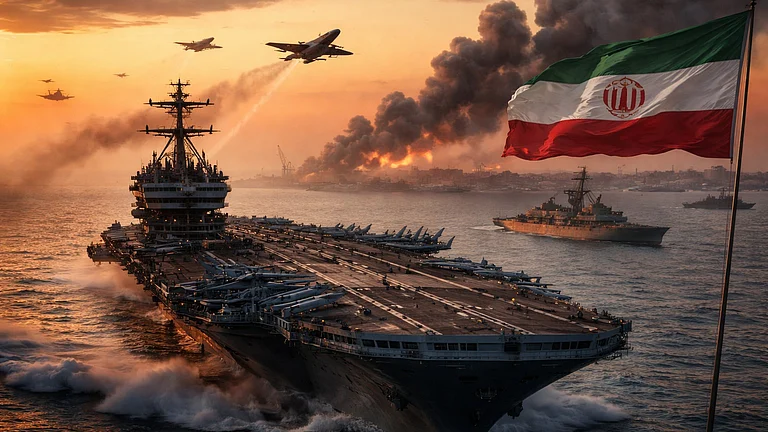
Diplomatic efforts remain stalled while Iran has raised threats against US troops and Washington maintains a major military presence in the region, including the USS Abraham Lincoln.
The Trump administration established a covert diplomatic channel with Iran’s Islamic Revolutionary Guard Corps (IRGC) in May 2026, as US officials worried that the powerful military organisation could undermine negotiations conducted through Iran’s formal political leadership, Axios reported, citing three people familiar with the discussions.
The concern centred on Iranian Foreign Minister Abbas Araghchi and Parliament Speaker Mohammad Bagher Ghalibaf, who were involved in diplomatic efforts with Washington.

1 October 2026
Get the latest issue of Outlook Business

To establish a direct line to the IRGC, then-US Director of National Intelligence Tulsi Gabbard turned to Nechirvan Barzani, president of Iraq’s Kurdistan region.

Barzani’s longstanding relationship with Tehran and his ability to speak Farsi made him a useful intermediary.
Around May 10, Gabbard approached the Kurdish leader, who subsequently passed the message to IRGC officials and relayed their response to Washington.
Secret Erbil Channel
The effort moved forward on May 14, when an IRGC representative arrived at Barzani’s office in Erbil carrying an encrypted phone.
Advertisement
The device enabled Barzani to speak directly with Gen. Ahmad Vahidi and determine whether Iran’s powerful military faction supported negotiations with the US.
Vahidi reportedly expressed support for diplomacy, saying the IRGC preferred resolving the crisis through negotiations.
Following the exchange, Washington proposed holding confidential discussions between senior US and Iranian officials in Erbil.
Iran did not immediately reject the proposal but raised serious security concerns. Iranian officials feared that Israeli intelligence could target their representatives either while travelling to Iraqi Kurdistan or during their stay there.
The proposed Erbil meeting ultimately did not take place. US and Iranian officials later held separate discussions that resulted in a memorandum of understanding in June, but that arrangement subsequently collapsed.
Advertisement
Diplomacy Remains Stalled
Pakistan and Qatar continue to serve as intermediaries between Washington and Tehran, although regional officials cited by Axios said there has been little progress towards restarting substantive negotiations.
Iran said last week that it was not currently negotiating with the US and had no immediate plans to resume direct talks, while acknowledging that it remained in contact with mediators.
Barzani has since offered to help facilitate a fresh round of direct US-Iran negotiations, according to a person familiar with the matter.
Iran Raises Threat Against US Troops
The diplomatic stalemate has coincided with increasingly aggressive military rhetoric from Tehran.
Iran’s Army announced on Sunday a $30,000 reward for anyone who kills or captures a US soldier. The reward would reportedly double if the attack were carried out by an Iranian woman.
Army Chief Amir Hatami said the incentive followed what he described as numerous requests from people seeking to participate. He did not specify where or how such an attack or capture could occur.
No US ground troops are currently stationed inside Iran. The only exception was an April rescue operation in which American personnel extracted a US pilot whose aircraft had been shot down.
US Maintains Military Pressure
Despite the diplomatic efforts, Washington continues to maintain a substantial military presence across the Middle East.
Adm. Brad Cooper, the top US military commander in the region, recently completed a 10-day tour that included visits to Bahrain, Iraq, Israel, Jordan, Saudi Arabia and the UAE. He also visited the USS Abraham Lincoln, which is operating in the Arabian Sea.
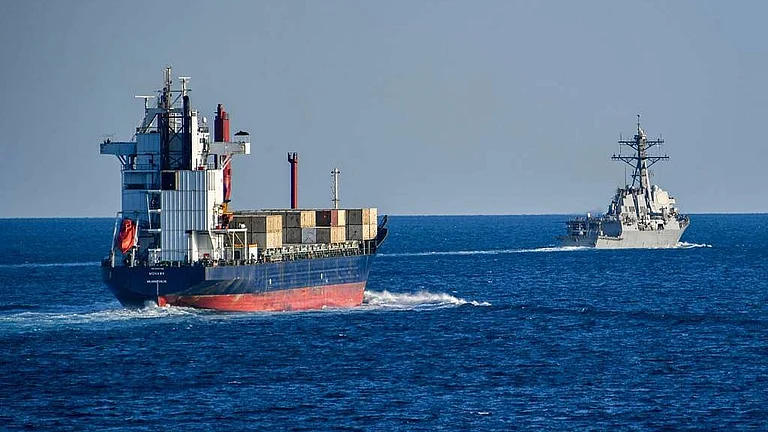
The aircraft carrier has remained in the region since January as part of US military operations against Iran, including efforts to enforce a blockade of Iranian ports.
Cooper described the carrier strike group's deployment as “one of the most operationally intense and consequential of the modern era”, underscoring Washington’s continued reliance on military pressure alongside economic measures even as diplomatic channels remain largely frozen.









