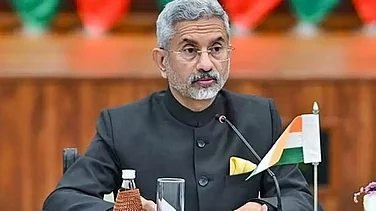
Shah will meet Indian Ambassador Naveen Srivastava and Chinese Ambassador Zhang Maoming separately on Monday to discuss bilateral ties.
US Chargé d’Affaires Scott Urbom is scheduled to meet Shah on Tuesday, expanding the PM’s diplomatic engagement beyond Nepal’s two neighbours.
The meetings mark Shah’s first one-on-one engagements with foreign envoys since taking office and signal a push to actively balance Nepal’s ties with India, China and the US.
Nepal Prime Minister Balendra Shah is set to hold separate meetings with the ambassadors of India and China on Monday, followed by a meeting with the US Embassy’s Chargé d’Affaires on Tuesday.
The meetings will be Shah’s first one-on-one engagements with foreign envoys since he took office on March 27, signalling a shift in his approach to diplomatic outreach after more than 100 days in office.

1 September 2026
Get the latest issue of Outlook Business

Shah will first meet Indian Ambassador Naveen Srivastava on Monday morning, followed by Chinese Ambassador Zhang Maoming later in the day. US Chargé d’Affaires Scott Urbom is scheduled to meet the prime minister on Tuesday.
What Will Shah Discuss With India?
The meeting with Srivastava is expected to focus on the current state of Nepal-India relations and the priorities of the new Kathmandu government.
The Indian ambassador is also expected to brief Shah on New Delhi’s assessment of bilateral ties and convey messages from the Indian government.
The timing of the meeting could also be significant. India remains one of Nepal’s most important economic and diplomatic partners, with the two countries sharing an open border and extensive trade, energy and people-to-people links.
Advertisement
Nepal has also been seeking greater connectivity and economic cooperation with India, while Kathmandu has repeatedly emphasised the importance of maintaining balanced relations with both of its large neighbours.
Why Is China Meeting Shah On The Same Day?
Shah will meet Chinese Ambassador Zhang Maoming later on Monday. The meeting is expected to cover Nepal-China bilateral ties, including economic cooperation, connectivity and Beijing-backed projects.
China has emerged as a major development and infrastructure partner for Nepal, particularly through projects linked to the Belt and Road Initiative.
Kathmandu has also sought to deepen economic links with China while avoiding an approach that could strain its relationship with India.
Advertisement
A senior Nepal Foreign Ministry official told The Kathmandu Post that the sequence of the meetings could indicate the government's diplomatic priorities, with the Indian ambassador scheduled to meet Shah first and the Chinese envoy later in the day.
Is Nepal Trying To Balance India And China?
The back-to-back meetings suggest that Shah's government is seeking to engage both India and China rather than leaning exclusively towards either neighbour.
Nepal sits between the two Asian powers and has historically had to carefully balance its relationships with New Delhi and Beijing.
Foreign Minister Shisir Khanal travelled to both New Delhi and Beijing in June, signalling Kathmandu's intention to maintain engagement with both sides.
Khanal has previously said Nepal wants to transform the country into a "vibrant, dynamic bridge" between India and China, reflecting Kathmandu's ambitions to use its geographic position to attract investment, connectivity projects and trade.
Why Is The US Also Meeting Shah?
The meeting with US Chargé d’Affaires Scott Urbom on Tuesday will broaden Shah's diplomatic outreach beyond Nepal's two immediate neighbours.
The US is an important development, trade and strategic partner for Nepal, with cooperation spanning areas including infrastructure, development assistance and economic ties.
Shah had previously avoided individual meetings with senior US officials, including Assistant Secretary of State for South and Central Asian Affairs Samir Paul Kapur and US President Donald Trump's special envoy for South and Central Asia Sergio Gor.
His decision to now meet the US chargé d'affaires indicates a more active approach towards Kathmandu's wider diplomatic relationships.
Why Are These Meetings Happening Now?
Shah took office on March 27 following a landslide election victory but initially chose not to hold individual meetings with foreign diplomats.
Instead, on April 8, he held a joint courtesy meeting with 17 Kathmandu-based ambassadors and heads of diplomatic missions.
His upcoming meetings therefore mark a departure from that approach.



Some earlier diplomatic engagements were also delayed amid communal violence in Nepal's Terai and Madhesh regions.
The meetings with the Indian, Chinese and US representatives could consequently serve as an opportunity for Shah to establish direct diplomatic channels with key foreign governments and outline the priorities of his new administration.
For now, there is no indication that the meetings are centred on a single major agreement or diplomatic dispute. Rather, they are expected to be high-level bilateral consultations covering the state of Nepal's relationships with India, China and the US, while giving Shah an opportunity to hear directly from the three governments.
The sequence also offers an early indication of how Nepal's new prime minister intends to navigate Kathmandu's relationships with the world's major powers.