


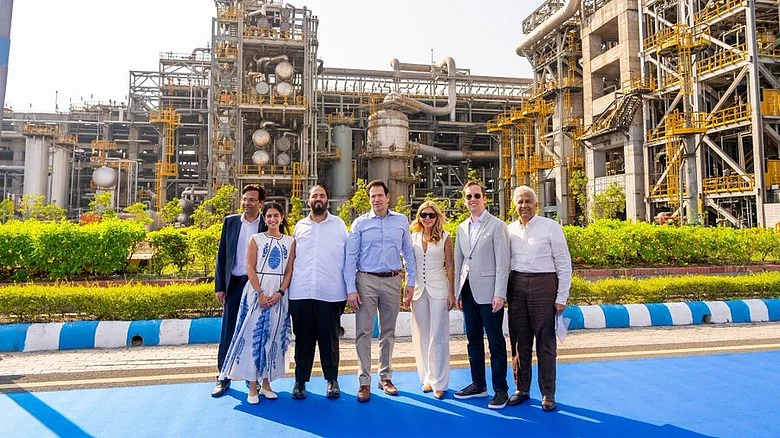

Reliance’s Jamnagar complex has a combined crude-processing capacity of around 1.4 million barrels per day and supplies refined products to international markets.
The Trump administration wants Reliance to process more Venezuelan crude, drawing on the Indian refiner’s ability to handle heavy grades of oil.
Jamnagar’s role in global diesel supplies, India’s Russian oil trade and Reliance’s proposed US refinery project adds another dimension to India-US energy ties.
Jamnagar, a coastal city in Gujarat, may seem an unlikely destination for a senior US diplomat. But the city is home to Reliance Industries’ vast oil-refining complex, whose scale and technical capabilities have made it a significant player in international energy markets.
US Secretary of State Marco Rubio’s visit to the complex comes as the Trump administration seeks markets for Venezuelan crude and looks to ease pressure on global fuel supplies amid disruptions linked to conflicts in the Middle East. Speaking to reporters in Mumbai on October 20, Rubio said he wanted to discuss increasing Reliance’s processing of Venezuelan oil. He described India as a “refining superpower”, citing its ability to process heavy crude. Reuters also reported that he intended to explore whether Reliance could participate in oil production in Venezuela.

1 October 2026
Get the latest issue of Outlook Business

The interest in Jamnagar is not just about buying more oil. It reflects the importance of refineries that can process different crude grades into commercially valuable fuels and supply international markets. That capability gives Reliance a role in Washington’s energy calculations, although any change in its sourcing decisions will depend on commercial terms and regulatory conditions.
Advertisement
Two Refineries Make Jamnagar A Global Hub
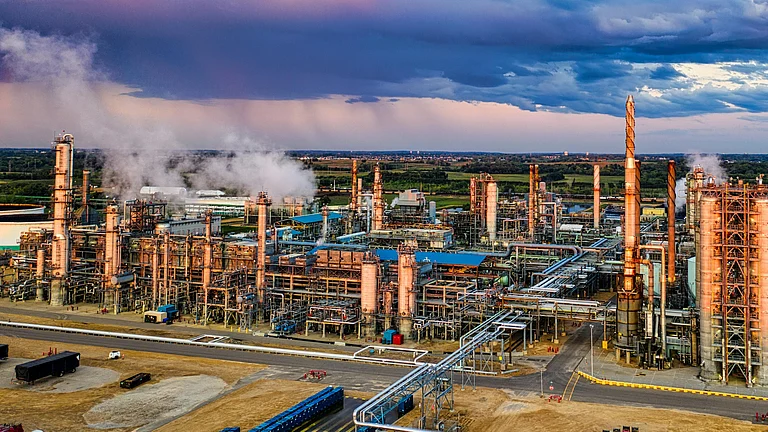
Reliance’s Jamnagar complex comprises two refineries with a combined crude-processing capacity of around 1.4 million barrels per day. The Ministry of Petroleum and Natural Gas lists their capacities at 33 million and 35.2 million metric tonnes per annum, respectively. The first refinery was commissioned in 1999, while the second, located in the special economic zone, was commissioned in 2008.
The complex converts crude oil into petrol, diesel, aviation fuel and other petroleum products. It also produces feedstocks used by the petrochemical industry to manufacture plastics, synthetic fibres and other industrial materials. This connects Jamnagar to both energy markets and industrial supply chains.
Advertisement
Reliance describes Jamnagar as the world’s largest and most complex single-site refinery complex. According to the company’s refining and marketing website, the facility has processed more than 216 grades of crude oil and has a complexity index of 21.1. The complexity index reflects the refinery’s ability to process crude and convert it into a wider range of higher-value products.
The company says this configuration gives it the flexibility to process almost all grades of crude oil and meet the different product specifications required by global markets. Its marine infrastructure also enables it to receive large crude shipments and dispatch refined products to overseas buyers. This combination of processing capability, logistics and export access underpins Jamnagar’s importance in international energy trade.

Why Venezuelan Oil Fits Jamnagar
The refinery’s ability to handle different crude grades is central to Washington’s interest. Venezuelan oil includes heavy and extra-heavy grades, which require suitable equipment and processing capabilities. Reliance says its refinery configuration allows it to process a broad range of crude grades, and Reuters reported that the company already imports Venezuelan crude.
Rubio’s stated intention is to encourage Reliance to process more Venezuelan oil and potentially explore renewed involvement in production in the South American country. The US administration is seeking buyers as it looks to expand Venezuelan supplies. Indian refining capacity could provide an additional market for that oil, although the extent of any increase remains uncertain.
For Reliance, however, the decision would depend on more than the availability of crude. The price of each shipment, its quality, freight costs, applicable sanctions and other regulatory conditions, and the value of the resulting products would all influence the economics. The ability to process a particular grade does not automatically make it the most profitable option.
Rubio’s remarks should therefore not be interpreted as a confirmed purchase commitment. Any increase in Venezuelan crude processing would depend on commercial negotiations and the terms under which supplies could be secured.

How Jamnagar’s Diesel Exports Matter
Jamnagar’s importance also lies in what leaves the refinery. Diesel is a major internationally traded fuel used in freight transport, industry and other economic activities. Disruptions to crude supplies and shipping routes can affect its availability and price, making large export-oriented refineries important to global markets.
A Financial Times report linked Rubio’s visit to pressure on global diesel supplies amid the conflict involving Iran and disruption around the Strait of Hormuz. The report also highlighted the refinery’s high utilisation, which limits the scope for a sudden increase in output.
This distinction matters. A refinery can redirect some products towards markets offering better returns, but it cannot necessarily raise production sharply at short notice. Additional exports depend on available capacity, inventories, domestic demand, the product mix and shipping conditions. Jamnagar’s existing output can influence global fuel markets even if production does not rise immediately.
Its strategic importance, therefore, is not simply that it can produce more fuel. Its established capacity and ability to supply overseas buyers make it relevant when international markets face supply disruptions.
Russian Oil Adds Another Dimension
Jamnagar also sits within a wider dispute over India’s purchases of Russian crude. Since Russia’s invasion of Ukraine in 2022, India has increased its reliance on Russian oil, making energy trade a source of friction with Washington.
However, the US position has evolved. Reuters reported that President Donald Trump had waived potential sanctions on major Russian-oil buyers, including India. The report also noted that the US had agreed to import Russian diesel, highlighting the complexity of energy policy as Washington responds to supply pressures.
For Reliance, changing crude sources is a commercial decision involving price, quality, logistics and the suitability of each grade for its refineries. Jamnagar’s flexibility gives the company options, but switching suppliers is not simply a matter of replacing oil from one country with oil from another.
Nor does Washington’s interest in Venezuelan crude establish that Reliance will stop buying Russian oil. The refinery’s significance lies partly in its ability to evaluate different supplies as market conditions and regulatory requirements change.
From Jamnagar To Texas
The relationship extends beyond crude purchases. Reliance is backing the America First Refining project, a proposed refinery at the Port of Brownsville in Texas, announced in March 2026. Intended to process domestic shale oil, the project is part of the Trump administration’s push to expand US refining capacity and attract investment. It has been presented as the first new oil refinery on the US Gulf Coast in nearly 50 years.
The project adds a commercial dimension to discussions between Washington and Reliance. While Jamnagar demonstrates the company’s established refining and export capabilities in India, the proposed Texas facility would place it within plans to expand refining infrastructure in the US. It also gives the two sides another potential area of cooperation beyond crude purchases.
The project’s announcement does not, however, establish that it will be completed on a particular schedule or that it will directly resolve current fuel-supply pressures. Its progress will depend on project execution, financing, approvals and other commercial considerations.

For Washington, Jamnagar represents a major refining operation whose decisions can affect international oil and fuel markets. For Reliance, the opportunity lies in using its processing capabilities and global reach to secure commercially attractive supplies and customers while maintaining returns.
Rubio’s visit brings these interests together. Whether it leads to additional Venezuelan crude processing or other commitments remains to be seen. What makes Jamnagar strategically important is the combination of its scale, its ability to process different grades of crude and its established role in supplying refined fuels to global markets.