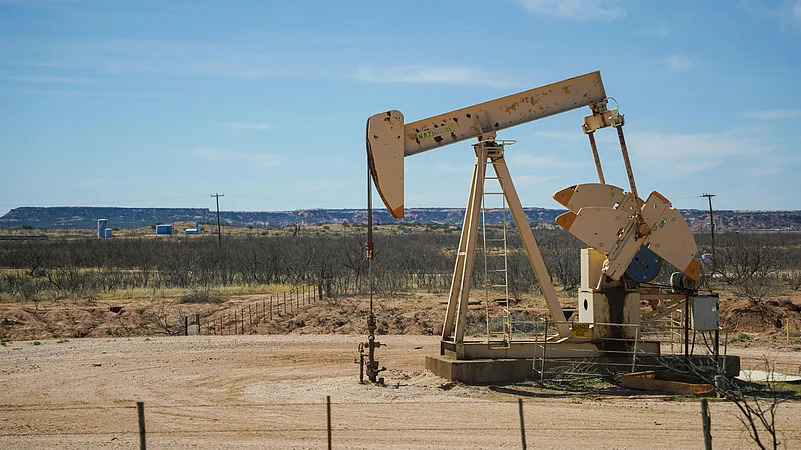
India is widening its crude oil sourcing to Latin America as disruptions linked to the Iran conflict and the Strait of Hormuz push the world's third-largest oil consumer to diversify supplies, ship tracking data showed.
Indian crude imports from Venezuela have risen sharply in August, making the South American producer the country's fourth-largest supplier, according to ship-tracking data from Kpler. Venezuelan supplies reached about 444,000 barrels per day, ahead of Iraq's 118,000 bpd and the United States' 153,000 bpd, the data showed.
Venezuela's position in India's supply mix has risen rapidly since imports resumed in April. Indian refiners increased purchases of Venezuelan, Brazilian and African crude after disruptions to Middle Eastern supplies, while continuing to rely heavily on Russian oil.

1 October 2026
Get the latest issue of Outlook Business

Russia remains the dominant supplier, with imports close to 2 million bpd in August. Russian crude imports reached around 2.6 million bpd in June-July, accounting for more than half of India's crude intake and effectively providing a hedge against disruption to traditional Middle Eastern supply routes.

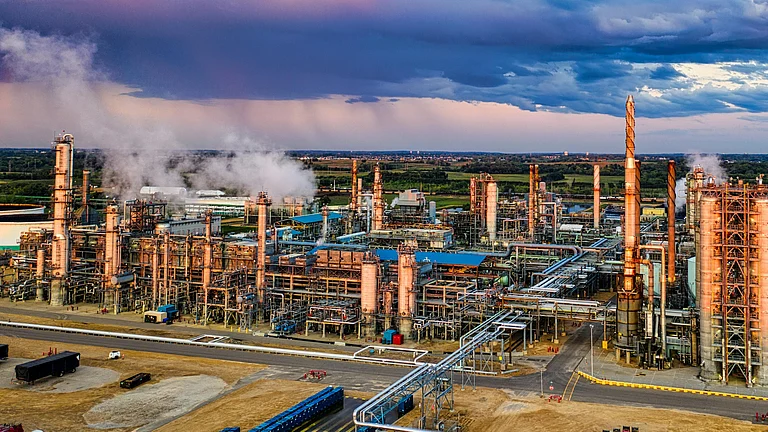

Crude oil is the raw material which refineries turn into fuels like petrol and diesel.
"India's strategy is increasingly operating on several fronts at once: increasing domestic upstream production where possible, diversifying overseas crude suppliers and transportation routes, building strategic and commercial inventories, and accelerating alternatives such as gas, biofuels, EVs and renewables," said Sumit Ritolia, Senior Manager - Modelling at Kpler.
Advertisement
The shift highlights a broader strategy emerging from the disruption: India is not moving away from oil in the near term, but is seeking to make the crude it still needs more secure and resilient by widening its supplier base and transportation options.
That reflects a key feature of India's current energy-security strategy: replacing Middle Eastern barrels entirely is neither practical nor necessarily economical, Ritolia said.
Gulf producers remain geographically closer to India, reducing voyage times and transportation costs compared with alternative sources such as Venezuela, the United States, West Africa and Latin America.
Indian refiners have nevertheless shown considerable flexibility in switching between Middle Eastern, Russian and Atlantic Basin barrels.
Advertisement
Overall crude imports have remained around 5 million bpd in recent months, allowing refinery operations to remain relatively resilient despite the disruption.
Longer voyages from Venezuela, the US, West Africa or Latin America can increase freight and insurance costs, he said adding geopolitical disruption can therefore raise India's oil import bill even when refiners are able to secure sufficient physical crude.
"Diversification helps with supply security, but it can only go so far in insulating India from geopolitics. India will still need to import large volumes of crude, meaning any major disruption will ultimately feed through into higher oil prices, freight and import costs," Ritolia said.
Indian refiners dramatically increased Russian purchases as the Iran conflict disrupted Gulf flows. Russian crude accounted for more than half of India's imports in July, while supplies from the Middle East fell to about 30% of the country's import basket during April-July, from 43% a year earlier. Latin American supplies, including Venezuela and Brazil, rose to 12.7% over the same period from 3.5%.
India has been pushing for greater use of natural gas and CNG, electric vehicles, biofuels and renewable energy. The recent geopolitical disruptions have added urgency to those efforts, but the alternatives remain a long way from materially displacing oil demand.
India remains one of the largest sources of global oil-demand growth, supported by rising vehicle ownership, mobility, aviation, industrial activity and petrochemical consumption.
Even rapid EV adoption will take time to affect the existing vehicle fleet, while growth in transport and industrial demand will continue to require liquid fuels.
"While domestic production alone has limited potential to materially reduce import dependence, every incremental barrel produced domestically offers some insulation from geopolitical disruptions, international price volatility and higher freight costs," Ritolia said.
That is driving a parallel push to increase domestic oil and gas production, encourage exploration and bring discoveries into production. Domestic output cannot eliminate India's import dependence, but each additional barrel produced locally reduces the volume exposed to international markets.
Crude is also not necessarily the hydrocarbon where India is most exposed to Middle Eastern supply disruptions.
The country's dependence on the Middle East is considerably greater for LPG, while LNG also presents significant vulnerabilities because alternative supplies and logistical flexibility are more limited.
That means energy security will increasingly require diversification beyond crude - including gas supply, storage infrastructure and strategic inventories.
The disruptions are also likely to put India's strategic petroleum reserve strategy under greater scrutiny.
As oil demand and import dependence rise, India will need to assess whether its existing strategic stocks provide an adequate buffer against prolonged disruptions. Diversifying suppliers can reduce the impact of the loss of any single source, but it cannot fully insulate the country from a global price shock.
The immediate question is therefore not whether India can stop importing oil, but how effectively it can manage the risks associated with importing it.
"Overall, I would see the current push as a multi-pronged energy-security strategy rather than simply a move away from oil: produce more oil and gas domestically, diversify the crude that still needs to be imported, strengthen supply, invest heavily in creating strategic inventory buffers-SPR for both crude and gas and progressively increase the role of EVs, gas, biofuels and renewables," Ritolia said.
"Given India's economic and demand growth, oil is likely to remain an important part of the energy mix for a long time, even as its share gradually changes."