India is expected to remain largely absent from global sugar export markets for several seasons due to lower cane production and rising domestic demand.
Weak monsoon rains could reduce sugarcane acreage, while the government's push for ethanol blending is diverting more cane away from sugar production.
If weather disruptions intensify, India may eventually need to import sugar for the first time in nearly a decade, potentially driving global prices higher.
India is expected to face a sugar export deficit for at least three seasons as El Nino weather conditions and rising ethanol demand squeeze surplus supplies, Reuters reported citing industry players.
The twin pressures are poised to keep millions of tonnes of sugar off the world market, tightening availability for importers across Asia, Africa and West Asia and supporting benchmark prices in London and New York, the report added.

1 September 2026
Get the latest issue of Outlook Business

The government banned sugar exports until 30 September after the country shipped only 800,000 tonnes this season. India averaged 6.8 million tonnes of sugar exports annually in the five seasons through 2022-23, representing about 10% of global shipments.
Mills need government approval to export sugar, and New Delhi is likely to withhold export permissions each season rather than announce a multiyear ban, government and industry sources said.
Advertisement
India's Department of Food, Civil Supplies and Consumer Affairs did not respond to a request for comment.
A prolonged absence by India from export markets removes a balancing supplier as weather risks and biofuel policies alter global trade flows. Top exporter Brazil is also diverting more cane for ethanol, and Thailand could have its output hit by El Nino-curtailed rains.
El Nino Threatens Cane
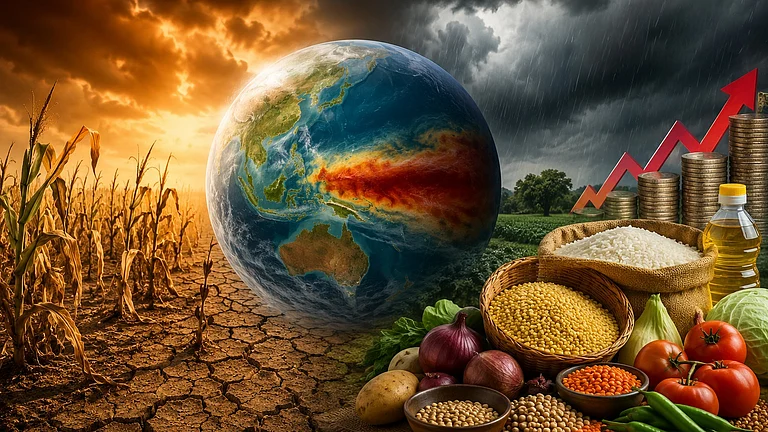
El Nino conditions are forecast to weaken monsoon rains to their lowest in 11 years. June precipitation currently runs more than 40% below average, prompting farmers to delay planting.
Cultivators are likely to switch to less water-intensive crops, reducing cane acreage and availability, the report said citing sources.
Advertisement
Local authorities are promoting alternative crops across most sugar-growing regions. They are encouraging soybeans and pigeon peas while restricting water supplies for irrigation.

Ethanol Squeezes Supply
Domestic ethanol demand is projected to double to 30 billion litres by 2039-40. India currently consumes 12 billion to 13 billion litres annually.
The government eliminated the production tax on high-ethanol petrol blends this month. It also launched fuel containing up to 85% ethanol to support the adoption of flex-fuel vehicles.
Risk of Sugar Imports
India could eventually be forced to import sugar if weather disruptions severely cut cane cultivation and output, government and industry sources said.
The country last imported sugar in 2016-17 and 2017-18 following a 2015 El Nino-induced drought.


In 2009 and 2010, India's heavy sugar purchases pushed global prices to nearly three times previous levels. Traders warn that domestic supplies could tighten further in the coming seasons.