




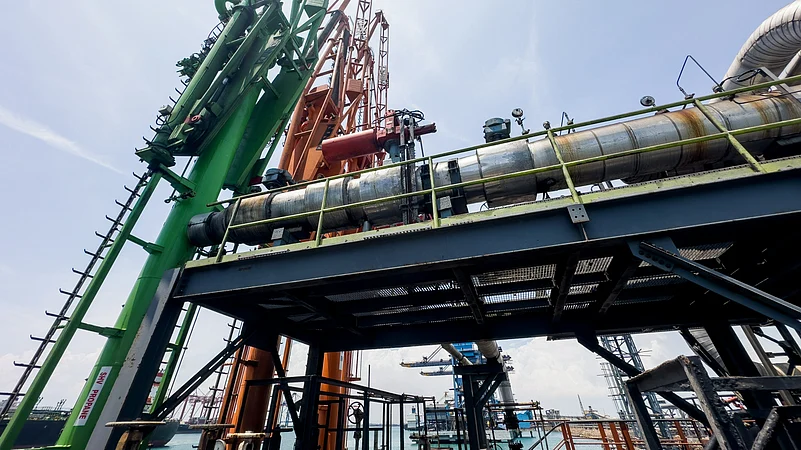
With West Asia supply disruptions laying bare the risks of India's dependence on imported energy, the government has moved to accelerate the development of domestic natural gas infrastructure, notifying a new order that strips away the approvals delays and regulatory fragmentation that have long hampered pipeline expansion across the country.
The Natural Gas and Petroleum Products Distribution Order, 2026, issued by the Ministry of Petroleum and Natural Gas under the Essential Commodities Act, 1955, and published in the Extraordinary Gazette of India, seeks to address one of the more persistent frustrations in India's energy infrastructure story — the gap between the country's ambitions for a gas-based economy and the regulatory and logistical bottlenecks that have repeatedly slowed pipeline development on the ground.
At the heart of the reform is a push to make approvals faster and more predictable. The order introduces deemed approval provisions, meaning that delays in obtaining clearances will no longer be allowed to hold up projects indefinitely. It establishes a single, harmonised framework across jurisdictions, replacing the fragmented permission landscape that has historically complicated pipeline projects crossing multiple administrative boundaries. Arbitrary levies and charges are to be eliminated, and defined compensation mechanisms — described in the order as a "dig and restore" and "dig and pay" framework — are intended to resolve the disputes with local authorities that have frequently delayed work on the ground.

1 September 2026
Get the latest issue of Outlook Business

Advertisement

The order also covers the expansion of city gas distribution networks, the development of trunk pipelines and the provision of piped natural gas connections to homes — including in residential areas where access had previously been limited by unclear rules around land use and right-of-way.
The policy rationale is straightforward. India's energy demand is growing, the global energy landscape is shifting, and the government has repeatedly identified natural gas as a critical transition fuel — cleaner than coal and oil, and well suited to bridging the gap between India's current energy mix and its longer-term climate commitments. But infrastructure has not kept pace with intent. The new order is an attempt to close that gap by removing the regulatory uncertainty that has deterred investment and slowed construction.
Advertisement
For households, the most tangible effect is expected to be a gradual shift from LPG cylinders to piped natural gas connections in areas where pipeline infrastructure exists or is being extended — a change that would improve both convenience and air quality. For industry, the promise of faster and more reliable gas access supports everything from manufacturing competitiveness to the economics of CNG-based transport.
The order takes effect immediately.











