Six of Tata Sons' largest loss-making companies accumulated combined losses of ₹68,341 crore between FY23 and FY26, broadly spanning N Chandrasekaran's second term as chairman, underscoring the scale of the turnaround challenges facing some of the group's biggest strategic businesses.
The losses were led by Air India, Tata Digital, Tata Projects, Tata Play, Tata International and Tata Realty and Infrastructure, according to data compiled by Moneycontrol from Tata Sons and company filings.
The figures assume greater significance after Chandrasekaran announced on August 12 that he would not seek a third term as chairman following differences with the charitable trusts that control the Tata Group.
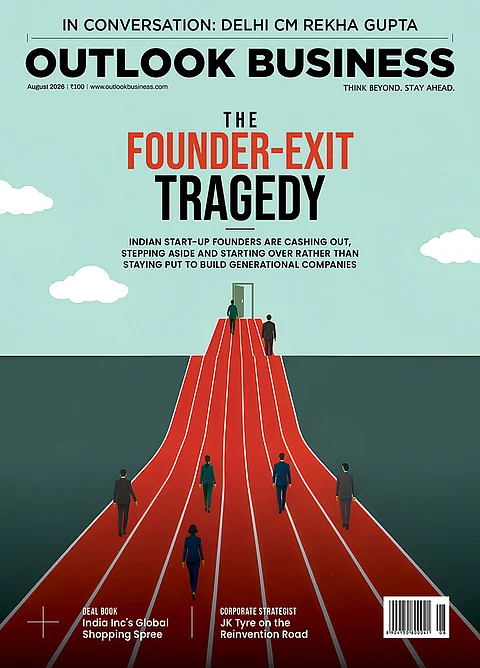
1 August 2026
Get the latest issue of Outlook Business

Among the six companies, Air India alone accounted for nearly 72% of the cumulative losses, reporting ₹48,929 crore in losses over the four-year period. Tata Digital was the second-largest contributor with ₹12,154 crore in cumulative losses.
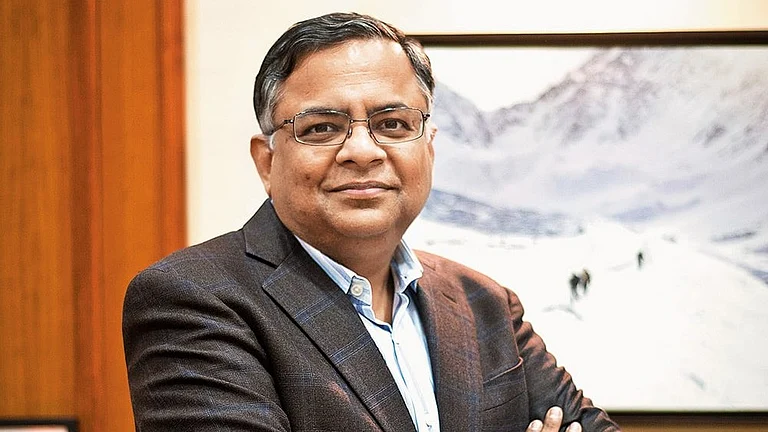


Together, the two companies accounted for ₹61,083 crore, or nearly 89% of the combined losses.
Tata International reported cumulative losses of ₹2,514 crore, followed by Tata Projects at ₹2,444 crore, Tata Play at ₹1,539 crore, and Tata Realty and Infrastructure at ₹761 crore.

Losses Accelerated In Final Two Years
The trend over the four years shows only a brief improvement before losses accelerated sharply.
Advertisement
Combined losses declined from ₹14,078 crore in FY23 to ₹6,322 crore in FY24, aided partly by Tata Projects returning to profitability during the year.
However, the improvement proved short-lived.
Losses climbed to ₹17,219 crore in FY25 before surging another 78% to ₹30,722 crore in FY26.
Together, FY25 and FY26 accounted for ₹47,941 crore, or roughly 70% of the cumulative four-year losses.
Air India Remains The Biggest Turnaround Challenge
Air India was the primary driver of the deterioration.
The airline reduced its loss to ₹4,444 crore in FY24 from ₹11,388 crore in FY23, before losses widened again to ₹10,859 crore in FY25 and more than doubled to ₹22,238 crore in FY26.
Advertisement
In his FY26 letter to Tata Sons shareholders, Chandrasekaran described Air India's transformation as a "five-to-ten-year journey", involving fleet renewal, network expansion, service improvements, technology upgrades and organisational restructuring.
He also cited West Asia-related airspace disruptions, higher fuel prices, foreign exchange movements and the AI171 crash as major headwinds during the year.
Tata Digital's Losses Continue To Mount
Losses at Tata Digital also remained elevated throughout Chandrasekaran's second term.
The company reported losses of ₹1,370 crore in FY23, which expanded to ₹4,974 crore in FY26.
Chandrasekaran acknowledged the challenges facing the business and said the company had undertaken a "decisive shift" in strategy by repositioning Tata Neu around financial services and its loyalty ecosystem, with greater focus on payments, lending and insurance.
Other Businesses Also Under Pressure
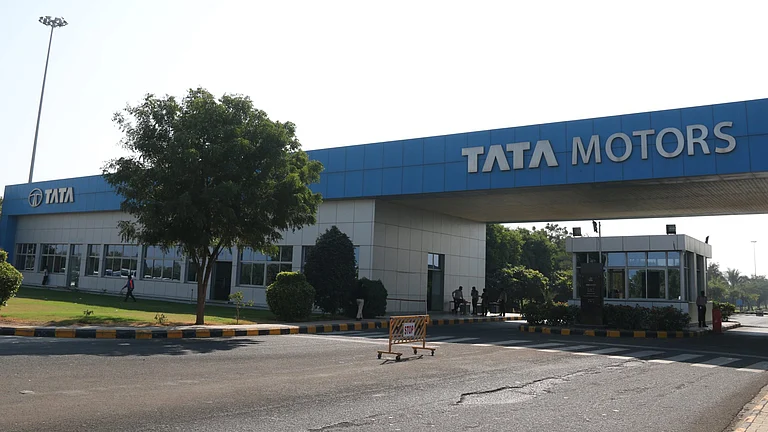
The remaining companies also reported sizeable losses during FY26. Tata International's loss widened sharply to ₹1,611 crore from ₹477 crore a year earlier.
Tata Projects reported a loss of ₹891 crore, compared with ₹697 crore in FY25, while Tata Play's loss increased marginally to ₹552 crore.
Tata Realty and Infrastructure posted a nearly tenfold jump in losses to ₹456 crore.
While several listed Tata companies continued to deliver robust profitability, the numbers highlight the significant investment and restructuring still required across some of the group's largest consumer and infrastructure businesses.
The cumulative losses underline the unfinished turnaround agenda that Chandrasekaran leaves behind as Tata Sons prepares for a leadership transition.