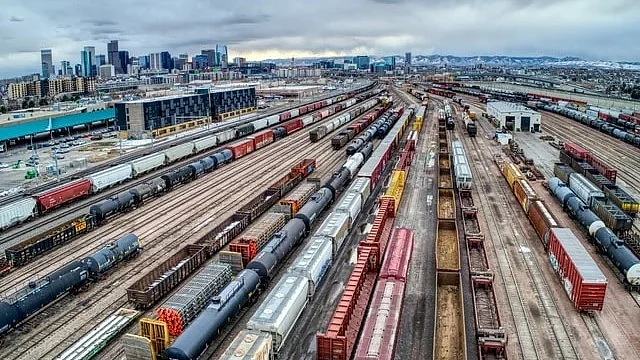

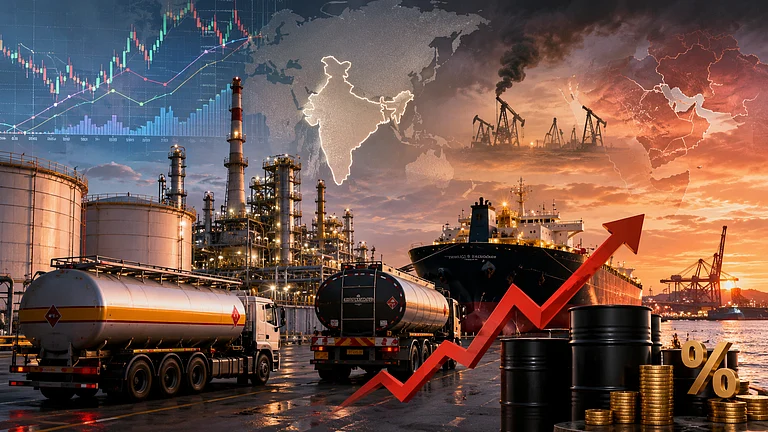
India needs 15.8% export growth this financial year to reach the $1 trillion target, after exports hit a record $863.1 billion last year.
Exports grew around 15% in the first four months, accelerating from the 11.37% growth recorded during April-June.
FTAs and a weaker rupee are supporting exporters, while geopolitical tensions and volatile commodity prices remain key risks to the outlook.
India is targeting $1 trillion in exports in the current financial year, after merchandise and services exports reached a record $863.1 billion in the previous year. Achieving the ambitious target will require exports to grow by about 15.8% annually.
The government appears to be making progress towards that goal. Commerce and Industry Minister Piyush Goyal said Indian exports grew around 15% year-on-year during the first four months of the financial year, keeping growth broadly in line with the pace needed to reach the $1 trillion milestone.

1 September 2026
Get the latest issue of Outlook Business

July Exports Could Hold The Key
Official trade data for July is yet to be released. India recorded $129.3 billion in exports during the April-June quarter, representing growth of 11.37% from a year earlier.

The stronger 15% growth reported for the first four months suggests export momentum accelerated in July. Sustaining that pace through the rest of the financial year, however, will be crucial if India is to close the gap between its current export base and the $1 trillion target.
FTAs Expand India’s Market Access
Goyal attributed the recent improvement partly to India's expanding network of free trade agreements (FTAs).
According to the minister, the combined economic size of countries and trading blocs with which India has preferential trade arrangements has risen to around $60 trillion, from about $10 trillion before 2014.
Advertisement
India now has preferential access to markets representing nearly $25 trillion in global trade, Goyal said.
Recent trade agreements with major economies are expected to provide Indian exporters with improved market access and lower tariff barriers, potentially supporting shipments across manufacturing and other sectors.
Weaker Rupee Adds Export Advantage
Currency movements have also provided some support to exporters. The Indian rupee was more than 9% weaker at the end of July 2026 compared with a year earlier, making Indian goods relatively more competitive in international markets.
A sustained increase in exports could have wider economic benefits by encouraging fresh investment in manufacturing capacity and supporting employment.
Advertisement
However, the export outlook is not without risks. The India Exim Bank has warned that geopolitical conflicts and volatility in international commodity prices could weigh on external demand and trade flows.
“India’s positive export outlook is expected to be driven by sustained expansion in domestic manufacturing and exchange rate movements,” the bank said, while flagging geopolitical tensions and commodity-price volatility as key downside risks.
With just under a year to meet the $1 trillion goal, the pace of export growth in the coming months will determine whether India's ambitious target remains within reach.