

Kospi crashes 10% as chip stocks trigger global tech selloff.
Samsung and SK Hynix tumble amid AI demand concerns.
Fed rate fears and Micron earnings weigh on AI rally.
Global equity markets came under pressure on Tuesday after a sharp selloff in South Korean technology stocks triggered concerns that the artificial intelligence-driven rally may have become overstretched.
South Korea's benchmark Kospi index plunged as much as 10%, marking its steepest decline in more than three months and forcing the Korea Exchange to halt trading for 20 minutes after market-wide circuit breakers were triggered.
1 September 2026
Get the latest issue of Outlook Business

The selloff was led by semiconductor heavyweights. Shares of SK Hynix tumbled more than 11%, while Samsung Electronics fell over 8%, wiping out billions of dollars in market value and rattling investor sentiment across global technology markets.




Chipmakers Lead Global Tech Rout
The sharp decline followed reports that SK Hynix could slow the expansion of its AI memory-chip production and increase its focus on conventional DRAM products, raising concerns about the pace of demand in the AI hardware cycle.
The weakness quickly spread beyond South Korea. The MSCI Asia Pacific Information Technology Index fell nearly 5%, snapping an eight-session winning streak.
US equity futures also came under heavy pressure. Nasdaq 100 futures dropped more than 2%, S&P 500 futures fell over 1%, while Dow Jones futures declined around 0.4%.
Advertisement
The selloff followed weakness on Wall Street overnight, where the Nasdaq Composite fell 1.3% and the S&P 500 closed lower as investors reduced exposure to megacap technology stocks.
Market participants are now closely watching upcoming earnings from Micron Technology, seen as a key indicator of the health of the AI-driven semiconductor cycle.
"Micron's earnings this week are the real test," Dilin Wu, strategist at Pepperstone Group, was quoted by Bloomberg as saying. "A strong print is a direct read-through for Samsung and SK Hynix - that's the number that tells you whether the hardware side of this trade still has legs."
Advertisement
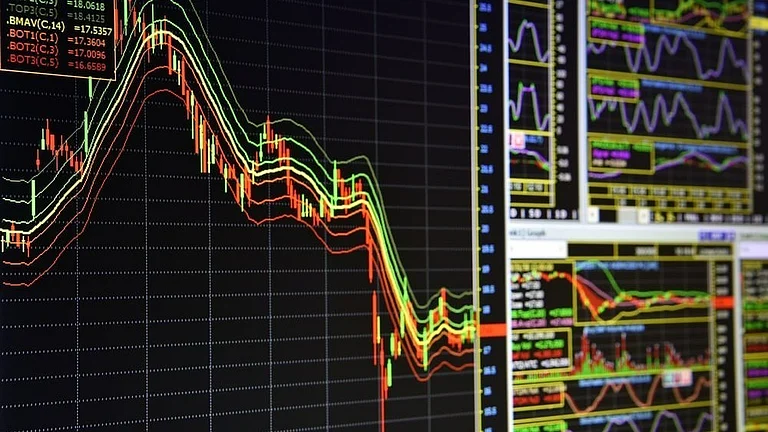
Signs Of An Overheated Rally
The correction comes after an extraordinary rally in South Korean technology shares. SK Hynix had risen for eight consecutive sessions and was up nearly 350% year-to-date at its recent peak, significantly outperforming Samsung Electronics and becoming one of the biggest beneficiaries of the AI boom.
Foreign investors sold more than 4 trillion won (about ₹2.6 lakh crore) worth of Kospi shares by midday, even as domestic retail investors stepped in to buy the dip.
The volatility has also reignited concerns around leveraged exchange-traded funds linked to semiconductor stocks. South Korea's financial regulator recently expressed concern over the growing influence of high-risk leveraged products tied to Samsung Electronics and SK Hynix.
Fed Outlook Adds To Market Nervousness
Adding to investor caution are expectations of a more hawkish US Federal Reserve under Chair Kevin Warsh.
Fed funds futures are currently pricing in a 75% probability of a rate hike by September, while several global brokerages have revised their forecasts to reflect the possibility of tighter monetary policy later this year.
A higher-for-longer rate environment could pose challenges for richly valued technology stocks that have led the global market rally.
"The Fed was perceived as more hawkish than expected and markets have reacted by lifting the USD against most currencies," Fiona Lim, senior FX strategist at Maybank Singapore, said.
The dollar index edged up to 101.01, remaining close to its recent one-year high, while most emerging Asian currencies weakened against the stronger greenback.
AI Rally Faces Its Biggest Test
The latest correction represents one of the most significant challenges yet to the AI-led market rally that has powered global equities throughout 2026.
With South Korean chipmakers at the centre of the AI supply chain and Micron's earnings due later this week, investors are increasingly looking for evidence that demand growth can justify the massive gains seen across semiconductor and technology stocks over the past year.
For now, the sharp selloff in Seoul has raised fresh questions about valuations, profit-taking and whether the next phase of the AI trade can sustain the momentum that has driven markets to record highs.