

Indian couture is gaining global recognition for its rich craft heritage
Supporting women artisans strengthens both communities and craftsmanship
Young luxury consumers value authenticity and meaningful storytelling
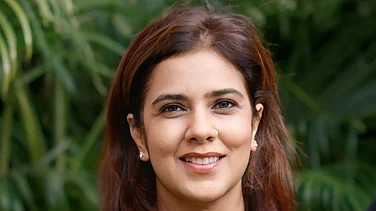
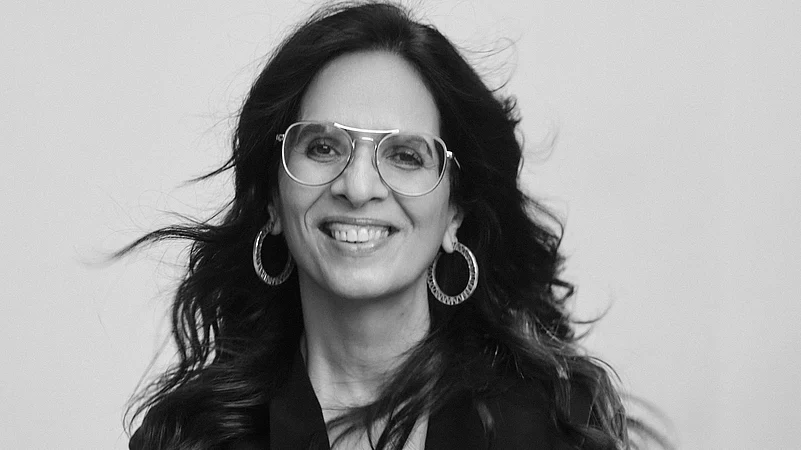
Anita Dongre, Founder and Chief Creative Officer of the House of Anita Dongre, has been one of the most influential voices shaping India’s luxury fashion narrative. Known for blending traditional craftsmanship with contemporary design, her label has also played a key role in creating sustainable opportunities for artisans across the country.
In an interview with Outlook Business, Dongre speaks about the evolving global appeal of Indian couture, the role of women artisans in the craft ecosystem and how luxury fashion today is increasingly driven by purpose, storytelling and conscious consumption.
2 March 2026
Get the latest issue of Outlook Business

Edited Excerpts:
What are the challenges that you face as India's most celebrated luxury apparel designer? What message do you want to give to women who want to achieve the same feat?
The real challenge is staying rooted while the world around you moves very quickly. Fashion today demands constant reinvention, but I believe longevity comes from clarity of purpose. Balancing creativity, business and responsibility is an ongoing discipline.
To women who wish to build something meaningful, I would say be patient and stay consistent. Success in fashion is rarely instant. If your work is honest and your intent is clear, the journey will unfold in its own time.
How do you see the women artisans India has today, and how has the House of Anita Dongre supported their rise alongside couture brands?
India’s women artisans hold extraordinary skill and resilience. What they often need is sustained opportunity and visibility. At the House of Anita Dongre, our focus has been on creating long-term partnerships rather than seasonal engagement.
When women artisans receive consistent work, fair value and skill development, the impact extends beyond the individual to the entire community. Couture, when practiced responsibly, can become a powerful platform for their economic and creative growth.
With global luxury houses increasingly looking toward India, how do you see Indian couture brands, especially your house, positioned globally?
There is definitely a growing global curiosity and respect for India’s craft heritage. Indian couture carries depth, diversity and a strong handcraft tradition that the world is beginning to appreciate more fully.
For us, the focus has always been on building quietly and consistently. We see ourselves as part of a larger movement that is placing Indian craftsmanship on the global luxury map with authenticity and purpose.
Are you eyeing to be listed as a Parisian Haute Couture member?
At this stage, my focus remains on strengthening our own design language and global presence in a way that feels authentic to us. Recognition is always meaningful, but it must align with the brand’s natural journey. For now, I am more interested in building enduring value than pursuing labels.
Could you tell us about some of your most cherished pieces that took a long time to materialise?
Some of the most meaningful pieces are those created through months of intricate handwork, particularly bridal ensembles where multiple crafts come together. These garments often involve hundreds of hours of embroidery and close collaboration with artisans.
What stays with me is not just the time invested, but the collective effort behind each piece. There is a quiet emotion in seeing something so patiently created come to life.
What has changed in the luxury space in the last decade, especially among younger consumers? How has storytelling through apparel evolved?
The biggest shift is awareness. Younger consumers are far more informed and intentional in their choices. They are interested not just in how something looks, but where it comes from and what it represents.
Storytelling today has become more layered. It is no longer enough to present beauty; consumers want meaning, transparency and emotional connection. That shift has been very significant.
How much topline growth have you seen over the last two years and what do you project for 2026? Could you also share couture industry projections?
We have seen steady and healthy growth over the past two years, driven by both domestic and international demand. Our focus has been on sustainable expansion rather than aggressive scaling.
Looking ahead to 2026, we remain optimistic about continued measured growth, particularly in couture and occasion wear. The broader couture market in India also shows strong momentum, supported by increasing global interest in Indian craftsmanship.
How is the men’s couture business performing? What percentage of your business does it comprise?
Menswear has been a steadily growing category for us. Today’s groom is far more involved in the styling process and open to thoughtful experimentation while still valuing classic tailoring.
While womenswear continues to be the larger part of the business, menswear is expanding meaningfully each season and remains an important focus area for future growth.