




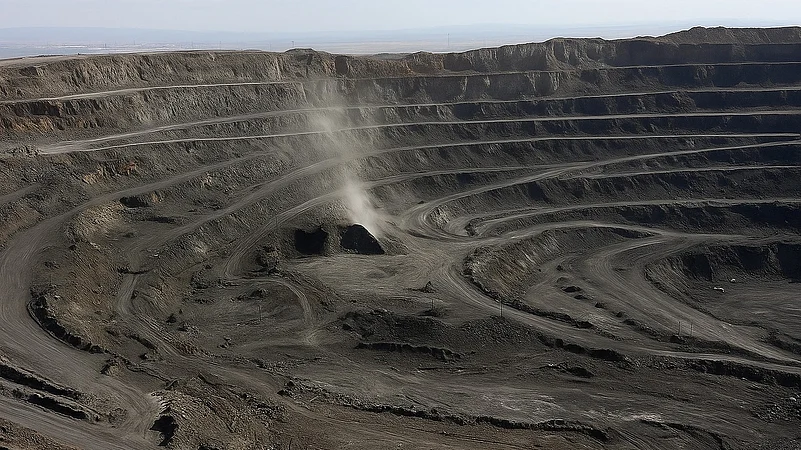

The Bill proposes bringing mineral-bearing land under Union government regulation, potentially reshaping Centre-state powers over mining.
States could be restricted from imposing taxes or cesses linked to mineral value, extraction volumes or royalties without meeting conditions set by the Centre.
The government says the changes will create a more predictable fiscal regime, attract mining investment and strengthen domestic supplies of critical minerals such as lithium, cobalt and rare earths.
The Union government is seeking greater control over mineral-bearing land and tighter restrictions on the taxation powers of state governments under the proposed Mines and Minerals (Development and Regulation) Amendment Bill, 2026.
The Bill was introduced in the Lok Sabha on Monday, August 10, and seeks to alter the division of powers between the Centre and states under the existing Mines and Minerals (Development and Regulation) Act, 1957, Business Standard reported.

1 September 2026
Get the latest issue of Outlook Business

The MMDR Act, 1957, is the principal legislation governing mineral exploration, development and mining rights in India. While the Centre has traditionally exercised regulatory control over mines and mineral development, state governments have retained significant powers over mining leases and taxation.


The proposed amendments could shift this balance further towards the Union government.
Mineral-Bearing Land Comes Under Centre's Control
One of the key changes proposed by the Bill is to bring mineral-bearing land explicitly within the Union government's regulatory jurisdiction. Under the existing framework, the Centre's control primarily extends to the regulation of mines and development of minerals. The proposed legislation would allow the Union government to determine which land qualifies as mineral-bearing based on parameters prescribed under the MMDR Act.
Advertisement
The Bill states that the Union will take control over the regulation of mineral-bearing land containing minerals according to parameters prescribed by the Centre. This would supplement the existing provision under which the Union exercises control over mines and mineral development, according to the draft legislation cited by Business Standard.
The move has wider legal implications because the distinction between mineral rights and the land containing those minerals has been central to the long-running dispute over the taxation powers of states.
The issue was examined by the Supreme Court in Mineral Area Development Authority v. Steel Authority of India, which dealt with the respective taxation powers of the Centre and states over mineral-bearing areas.
Advertisement
The proposed changes could also have implications for strategically important minerals such as lithium, cobalt, nickel, graphite and rare earth elements. These resources are considered critical for electric vehicles, renewable energy systems, semiconductors, batteries and other emerging industries.
Centre Seeks To Curb State-Level Mineral Taxes
The Bill also proposes restrictions on the ability of state governments to impose taxes or cesses on mineral-bearing land or mineral rights based on factors such as the value of minerals, quantities extracted or royalties payable.
States would only be permitted to impose such levies if they comply with conditions prescribed by the Union government. The proposed legislation does not specify a uniform tax rate or an overall cap, instead leaving the Centre to determine the applicable conditions and restrictions through rules.
The Bill also contains a retrospective provision concerning pending state taxes. Levies imposed by states before the amendment comes into force but not yet collected would be cancelled. However, states would not be required to refund taxes that had already been collected.
Government Says Changes Will Improve Investment Climate
The Centre has justified the proposed restrictions on the grounds that unpredictable and inconsistent state-level taxation can raise costs for mining companies and discourage investment.
According to the Bill's explanatory documents, additional levies introduced after mining operations have commenced can undermine project viability, increase the cost of mineral production and ultimately raise expenses for downstream industries. Differences in taxation across states and retrospective levies are also cited as concerns.
For mining companies, the government argues that a more predictable fiscal framework would provide greater certainty over project economics and improve investment visibility. The Bill aims to address multiple and varying levies on mineral production and dispatch while reducing the possibility of retrospective taxation.
The proposed changes form part of the government's broader push to expand domestic mineral exploration and strengthen India's supply of critical minerals. By bringing mineral-bearing land more firmly under central oversight and limiting state-level taxation powers, the Centre is seeking greater policy uniformity while also attempting to create a more predictable environment for investment in the mining sector.









