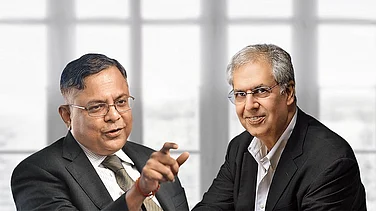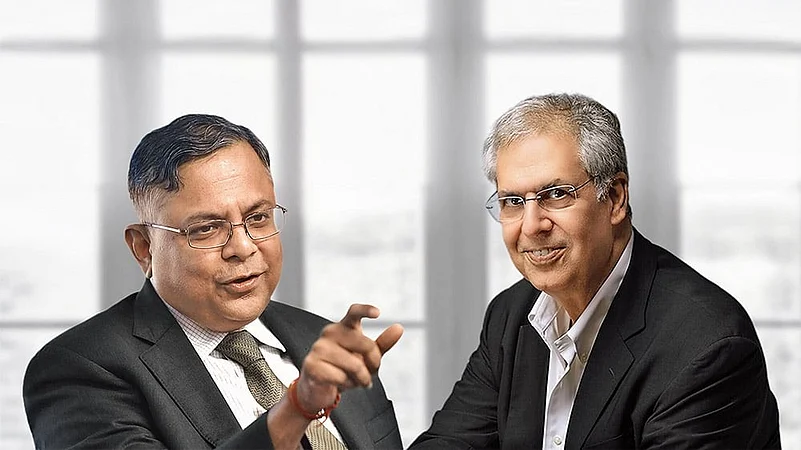

Tata Trusts and Tata Sons are locked in a governance battle over who controls India's largest conglomerate.
The Tata Sons board voted 4-1 to reappoint N. Chandrasekaran as chairman, but Noel Tata called the decision "illegal."
The dispute now moves to the Annual General Meeting, where Tata Trusts' 66% stake could determine Chandrasekaran's fate.
The Tata Group is in the middle of its most serious internal governance crisis in decades. Tata Trusts, which owns 66% of Tata Sons, and the Tata Sons board, which runs India's largest conglomerate, are locked in a battle over who controls the $185 billion empire.
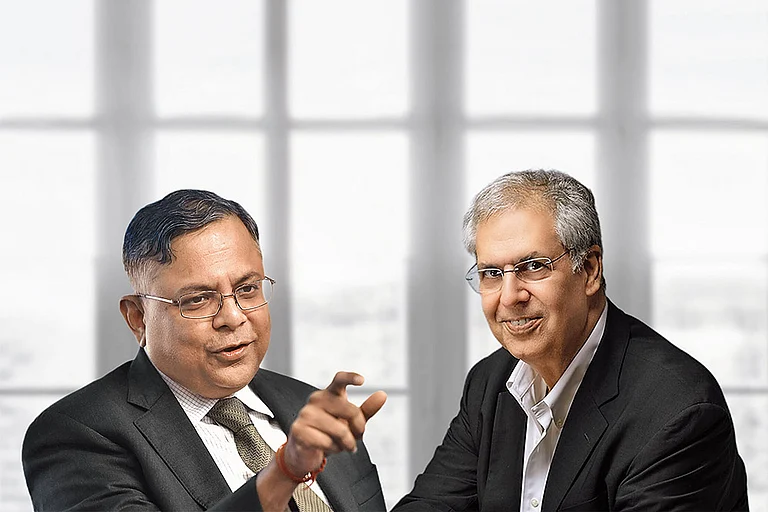
On September 17, 2026, the Tata Sons board voted 4-1 to reappoint N Chandrasekaran as Executive Chairman for another five years. Tata Trusts Chairman Noel Tata called the decision "illegal", as per a Moneycontrol report.

1 September 2026
Get the latest issue of Outlook Business

Tata Trusts is a collective of philanthropic entities. It owns about 66% of Tata Sons, the holding company for the Tata Group. This ownership gives the trusts ultimate control. Under the Tata Sons Articles of Association, the trusts appoint one-third of the directors and hold special veto powers over key decisions, including the appointment of the chairman.
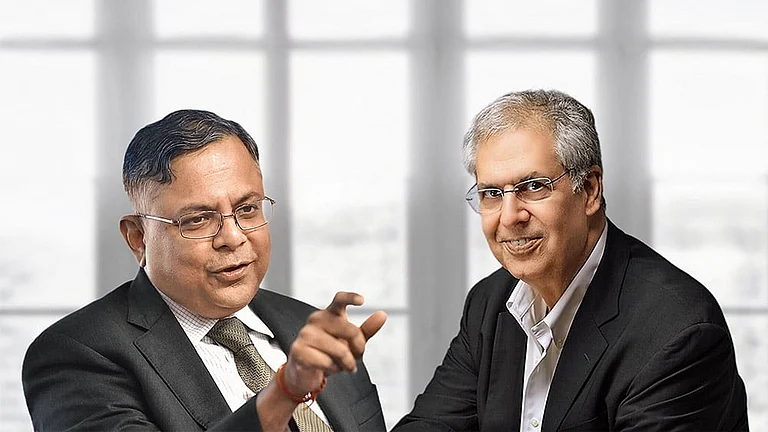
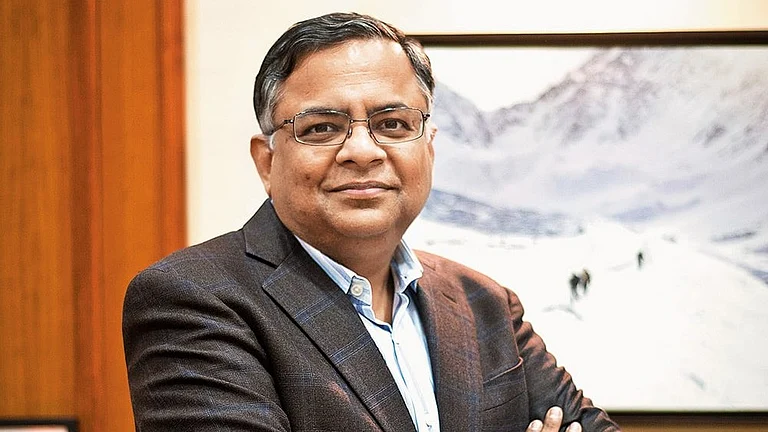

Tata Sons operates the businesses and manages strategy. For decades, this separation worked because the same person often led both institutions. That ended with Ratan Tata's death in October 2024. Noel Tata became chairman of Tata Trusts. N Chandrasekaran continued as chairman of Tata Sons.
Advertisement
The Reappointment Battle
The dispute over Chandrasekaran's tenure has unfolded over more than a year. According to a Tata Sons statement, the board received a unanimous resolution from Tata Trusts dated July 28, 2025, supporting a second five-year term for him. In September 2025, the Tata Sons board agreed in principle. Formal approval was planned for February 2026.
But in February 2026, unanimity broke down. The resolution was deferred. It came up again in May and June 2026 but remained unresolved. On August 12, 2026, Chandrasekaran opted not to seek reappointment when his term ends on February 20, 2027.
On September 3, the Nomination and Remuneration Committee of the Tata Sons board unanimously asked him to reconsider. At the board meeting on September 17, he agreed. The board voted 4-1 to reappoint him for another five years.
Advertisement
Noel Tata cast the sole dissenting vote. He told Moneycontrol, "I voted against Chandra's appointment. My veto was wrongfully overridden on the basis of a legal opinion. The decision is illegal. I recorded my dissent".
The Legal Dispute
Tata Trusts called the resolution a "legal nullity." The trusts argue that the Articles of Association require a majority of trust-nominated directors to vote in favour of any chairman appointment or reappointment. Since Noel Tata voted against, the trusts say the resolution is void.
Noel Tata also submitted a legal opinion from former Chief Justice of India DY Chandrachud supporting the trusts' position. According to Tata Trusts, the board did not take note of the opinion.
Tata Trusts further argues that Chandrasekaran's earlier decision not to seek reappointment had already attained finality. Once such a decision is publicly communicated, the trusts say, it cannot simply be undone.
The Listing Question
A second major fault line is whether Tata Sons should be publicly listed. The Reserve Bank of India rejected Tata Sons' application to surrender its core investment company registration on September 11, 2026, effectively requiring it to comply with listing norms .
In its September 17 statement, Tata Sons said the board resolved to initiate steps to comply with applicable RBI guidelines and will seek guidance from the RBI, Tata Trusts, and other stakeholders. Noel Tata has opposed listing, fearing it would dilute the trusts' control over the group.
The Shapoorji Pallonji Factor
The Shapoorji Pallonji Group holds about 18.37% of Tata Sons and has been seeking liquidity amid heavy debt. According to Mint, Noel Tata presented the SP Group's proposal at the September 17 board meeting: the sale of up to 3% of Tata Sons shares back to the holding company for ₹25,000 crore. The proposal was offered as an alternative to listing while allowing Tata Sons to remain private.
What Comes Next
Chandrasekaran has been reappointed by the Tata Sons board, but the decision is not final. The reappointment requires shareholder approval at the Annual General Meeting, where Chandrasekaran is due to retire by rotation as a director.
Tata Trusts holds roughly 66% of Tata Sons and could vote against his directorship. According to Moneycontrol, the trusts may move to oust him at the AGM, and "once he is ousted as a director, he cannot continue as chairman".
A procedural hurdle remains. Sir Ratan Tata Trust is restrained from holding trustee meetings due to proceedings before the Maharashtra Charity Commissioner. This caused the AGM scheduled for August 18 to be adjourned for want of quorum. Unless this is resolved, the trusts' ability to act on Tata Sons decisions will remain constrained.
What began as a dispute over trustee tenure has become a test of who ultimately controls the Tata Group.