
Government initiatives like PLI, Make in India, and localisation drives have boosted India’s domestic tooling industry.
Indian manufacturers continue to face a systemic disadvantage in price competitiveness, says Pankaj Abhyankar of Godrej Enterprises.
High customs duties on critical “proprietary raw materials and tooling accessories” are a key factor driving this disadvantage.
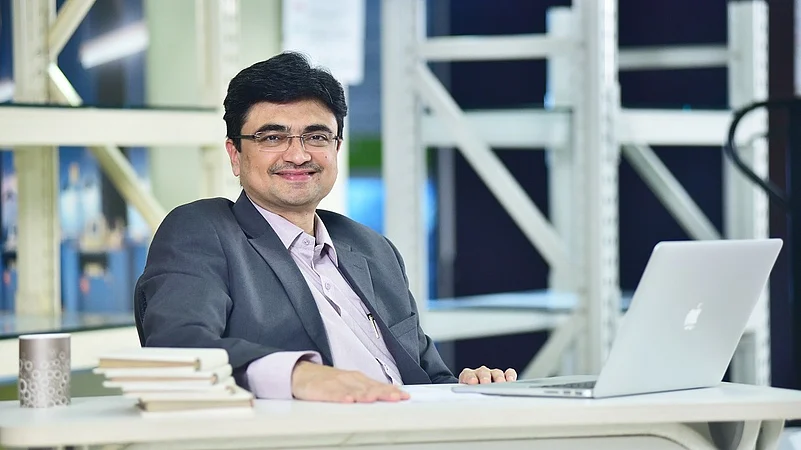
The government’s various manufacturing-focused initiatives, including Production Linked Incentives (PLI), Make in India, and localisation drives, have significantly strengthened the domestic tooling industry. However, the sector still largely relies on imports, and Indian manufacturers remain at a systemic disadvantage in terms of price competitiveness, says Pankaj Abhyankar, EVP & Business Head, Tooling Business, Godrej Enterprises Group.
According to Abhyankar, customs duties imposed on critical "proprietary raw materials and tooling accessories" are primarily to blame. India has imposed a three-year safeguard duty (2025–2028) on certain imported steel products, starting at 12% in the first year (FY26), reducing to 11.5% in the second, and 11% in the third, primarily to curb cheap imports from China, Vietnam, and Nepal. Further, import duties on other products, such as hydraulic cylinders and electric connectors, attract Basic Customs Duty (BCD) between 7.5–10%, along with a 10% Social Welfare Surcharge (SWS) on the BCD, and an 18% Integrated Goods and Services Tax (IGST).
1 September 2026
Get the latest issue of Outlook Business

Advertisement
These elevated input costs, he adds, create significant price arbitrage, severely eroding the competitiveness of Indian toolmakers when compared with counterparts in FTA countries, where such inputs are either duty-free or subject to substantially lower duties.
On top of that, the country lacks “a robust deterrence framework to reduce dependency on tooling imports from Free Trade Agreement (FTA) countries,” which has yet to be effectively instituted, Abhyankar flags.
India’s imports of machinery, including electrical and non-electrical equipment, rose from $48.4 billion in FY24 to $52.8 billion in FY25, marking a 9.1% increase. The upward trend continued into the current year, with imports climbing 15% year-on-year to $56.1 billion in the first 11 months of FY26, data from an ICRA report last month showed.
Advertisement
However, he adds that as localisation accelerates, dependency on imported tooling, especially standard and mid-sized dies, is gradually reducing.
"EV-related precision tooling is also shifting to domestic suppliers as Indian capabilities mature. Active participation by OEMs is facilitating the transfer of critical technologies from Europe and the Far East to India, helping to close technology gaps while ensuring cost efficiency and strengthening supply chain resilience amid increasing geopolitical uncertainties," he said.
However, certain specialised areas, such as very large-tonnage dies and specific tool steels, still rely on imports due to limited domestic supply, according to the Godrej Enterprises EVP.
"We are actively building capabilities in these areas and exploring localisation of select tools currently produced overseas to enhance cost competitiveness and reduce lead times," he said.
How has the Tooling unit’s contribution to GEG expanded over the last few years?
The Tooling business has evolved into one of the most technology-intensive and fast‑growing verticals within Godrej Enterprises Group and will continue to do so. Over the last three years, EV-related tooling alone has contributed 10–15% of tooling business revenues, signalling sharp growth aligned with India’s mobility transition, as mentioned earlier.
We have moved from being a tooling manufacturer to an end‑to‑end solutions partner, supporting customers through product design, advanced simulation, prototyping, and limited-volume manufacturing. A steady stream of innovation-led patents, GEG now holds 122 patents. has also strengthened our technical leadership and export potential.
This transformation has expanded our role within the group, contributing not only to revenue but also to overall capability building and technology leadership.
Which areas of the Indian auto supply chain does Godrej’s Tooling division cater to?
Godrej Enterprises Group’s Tooling business is deeply embedded across the automotive manufacturing value chain, with a large share of its portfolio serving precision‑critical applications.
Over 85% of our business is connected to automotive, where we support OEMs, Proprietary Technology makers and Tier‑1 suppliers in entire range of Automotive industry namely, 2 wheelers, PV, CV and all EV modelswith high‑precision dies and tooling for aluminium components used in powertrain, engine, Motors, transmission and structural systems.
In recent years, we have expanded rapidly into tooling for electric vehicles. EV‑specific dies and tooling, particularly for battery boxes, sheet‑metal enclosures, and lightweight aluminium parts, now contribute 10–15% of our revenue, reflecting a clear shift in the industry’s needs.
Beyond Tooling, the wider Godrej Enterprises Group strengthens the automotive ecosystem through its Motor Solutions business, supplying motor components for EVs, industrial drives and automation systems, thus collectively supporting India’s mobility transition through our Advanced Engineering capabilities.
Our solutions enable customers to manufacture complex, lightweight, high‑precision components that directly improve vehicle efficiency, safety and performance, across both ICE and new‑age EV platforms.
How has the industry’s shift to EVs changed their requirements?
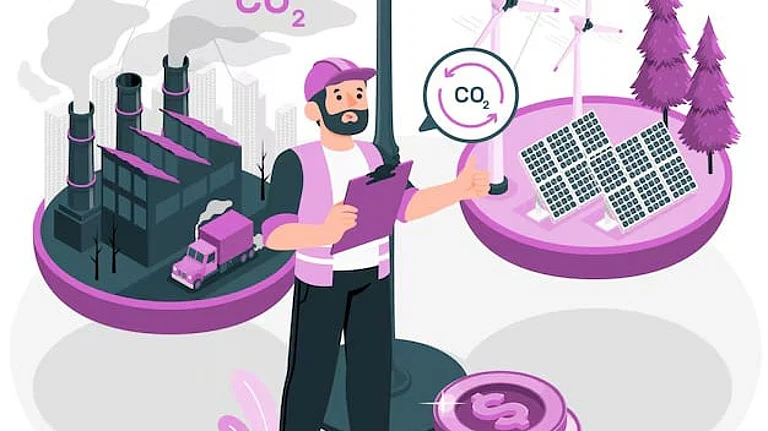
EV technology in the automotive industry is still at a relatively early stage of development when compared to Internal Combustion Engine (ICE) technology, which has benefited from decades of learning, standardization, and well-established norms. ICE vehicles are fundamentally mechanical engineering products, with electronics and IT systems primarily enhancing performance, efficiency, and compliance. In contrast, EVs are built predominantly on electrical engineering, power electronics, and software architectures—areas where many traditional OEMs have limited core competencies and historical experience. As a result, proprietary technology developers have taken on a critical role, particularly in areas such as battery chargers and converters, motor control units, motor technologies, and embedded software. This shift has introduced an entirely new customer segment for the tooling industry in the form of “proprietary technology developers.”
It also presents a significant opportunity for early-stage engagement, enabling tooling partners to contribute pre-engineering inputs, defining specs and setting quality parameters that accelerate product maturation and establish long-term developmental partnerships. Finally, enhancing our portfolio as “complete solution provider”.
Large structural castings, such as consolidated body parts enabled by giga‑casting, are pushing the industry towards large‑tonnage dies, advanced simulations, and robust process-control technologies.
At Godrej Enterprises Group, we are strengthening our design and simulation capabilities to support next‑generation aluminium alloys. We are leveraging advanced allied technologies such as vacuum systems, thermo‑regulation, squeeze casting, and conformal cooling enabled through additive manufacturing to meet increasingly stringent quality requirements. These initiatives are focused on achieving near‑zero porosity castings, minimal warpage, and as‑cast dimensional accuracy within 100 microns.
Does the changing need of the industry put pressure on you to invest more in your capabilities?
Absolutely. Automotive and EV suppliers now expect first‑time‑right outcomes, shorter development cycles, and higher tool life, which require substantial ongoing investments.
We have invested in, AI-enabled smart dies and IoT-led real-time monitoring for precision and predictive maintenance, digital simulation and digital twins to reduce trial iterations, additive manufacturing to solve complex geometries and large‑tonnage die capabilities aligned with giga‑casting trends.
The evolving needs of the industry are driving innovation across the supply chain and tooling is no exception. Recognizing the growing demand for low‑volume production with high product variability, we have developed a modular “Lego” concept in die construction. This approach enables the production of multiple part variants from a single die, achieved by simply replacing interchangeable inserts tailored to specific product features.
As a result, customers benefit from greater flexibility, reduced tooling costs, and faster responsiveness to changing market requirements.
Within Motor Solutions, we continue strengthening advanced manufacturing, such as lamination punching and laser‑welded core packs, to support both domestic and international EV programmes.
Has the current government’s push towards manufacturing helped tooling also expand its business?
Yes, the government’s initiatives of PLI scheme plays a larger role in encouraging OEMs to invest at a mega scale and increase capacity. Other GOI initiatives, particularly Make in India, localisation drives and EV adoption incentives, have significantly strengthened the domestic tooling industry. Demand for locally developed precision dies and EV components has surged as OEMs prefer domestic partners who offer faster lead times and better cost efficiency.
This environment has created strong opportunities for Indian tooling companies to scale up and participate in long-term manufacturing programmes.
Despite the above initiatives, we believe that a robust deterrence framework to reduce dependency on tooling imports from Free Trade Agreement (FTA) countries has yet to be effectively instituted. As a result, eventhough the proven technical and manufacturing capabilities of domestic toolmakers have been demonstrated, the reliance on imports continues. Indigenous manufacturers remain at a systemic disadvantage in terms of price competitiveness, primarily due to customs duties imposed on critical proprietary raw materials and tooling accessories.
These elevated input costs create significant price arbitrage, severely eroding the competitiveness of Indian toolmakers when compared with counterparts in FTA countries, where such inputs are either duty-free or subject to substantially lower duties.
How does that impact imports by them and equipment makers?
As localisation accelerates, dependency on imported tooling, especially standard and mid-sized dies, is gradually reducing. EV-related precision tooling is also shifting to domestic suppliers as Indian capabilities mature.
Active participation by OEMs is facilitating the transfer of critical technologies from Europe and the Far East to India, helping to close technology gaps while ensuring cost efficiency and strengthening supply chain resilience amid increasing geopolitical uncertainties.
However, certain specialised areas such as very large‑tonnage dies and specific tool steels still rely on imports due to limited domestic supply. We are actively building capabilities in these areas and exploring localisation of select tools currently produced overseas to enhance cost competitiveness and reduce lead times.
Does the West Asia crisis also push the need to make the manufacturing supply chain more localised?
Global disruptions, whether geopolitical, logistical or material-related, have reinforced the need for resilient, self‑reliant manufacturing ecosystems. The automotive industry is responding by increasing local sourcing of tools, dies, and precision components.
For global OEMs operating in India, localisation is now a strategic priority, not just a cost decision. Government support combined with escalating global uncertainty is accelerating the development of a strong domestic tooling ecosystem.
This shift not only benefits manufacturers but also strengthens India’s position as a competitive, future-ready manufacturing hub, an area where Godrej, through its Advanced Engineering capabilities, continues to play an important national role.