





In September 2023, Tamilnad Mercantile Bank erroneously credited ₹9,000 crore to an auto-rickshaw driver's account due to a manual file upload error.
The incident exposed the bank's reliance on manual intervention in transaction processing, prompting a complete technology overhaul.
TMB eliminated manual file handling, introduced AI-powered fraud monitoring, migrated to Oracle Cloud, and upgraded to Infosys Finacle to prevent a recurrence.
In September 2023, Tamilnad Mercantile Bank (TMB) erroneously credited ₹9,000 crore to an auto-rickshaw driver's bank account. The transaction was reversed within half an hour, but the incident raised questions about the bank's risk management and reliability.
The error occurred due to a mismatch in account numbers. A digit was accidentally added as a prefix during file upload to the National Automated Clearing House (NACH). This file was then manually uploaded to the bank's core banking system (CBS). Files received from the Reserve Bank of India (RBI) or clearing houses would land in one system and then be manually processed and uploaded into the CBS. This included files from NACH and the cheque truncation system.

1 September 2026
Get the latest issue of Outlook Business

No automated checks were triggered to flag a transaction of this magnitude because the file was being manually uploaded rather than processed through an automated workflow. Once the erroneous file was uploaded with the incorrect account number prefix, the system processed it as a legitimate transaction.
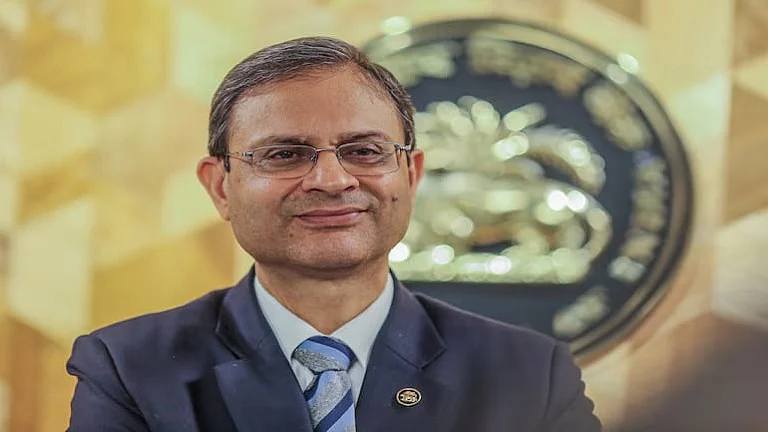


"What we understood was that it happened because of a manual error while processing the file," Davis Jose Thettayil, executive vice president and head of IT at TMB told Moneycontrol.
When the incident happened, ₹9,000 crore was a fraction of the bank's then balance sheet size of ₹53,000 crore. The bank's balance sheet has since grown to ₹75,300 crore as of Q1 FY27.
Advertisement
The incident exposed the bank's reliance on manual intervention in critical transaction processing workflows. The fact that a single manual error could result in a ₹9,000-crore transfer highlighted gaps in automated validation controls and real-time monitoring systems.
The bank's technology architecture had a "human in the middle" between clearing house files and the core banking system. This created a vulnerability where human error could bypass automated checks. The bank's anti-money laundering and fraud detection mechanisms were also not equipped to flag such transactions in real-time.
What Did The Bank Change After The Incident?
The most significant change was the elimination of manual file handling. Files from the RBI and clearing houses now flow directly into the bank's core banking system, which is now with Infosys' Finacle. The internet banking platform was upgraded this year to Infosys' Digital Engagement Hub (DEH).
Advertisement
"No person is sitting in between to download, process or upload the file. There is nothing in between," Thettayil told the publication.
The bank introduced real-time fraud monitoring systems with scenario-based triggers. If a customer does a transaction significantly higher than their usual amount, the fraud monitoring system triggers an alert to the Fraud Risk Management team, which calls the customer for verification before releasing the amount.
The bank also upgraded its anti-money laundering mechanisms to an AI-enabled solution to reduce false positives. "At least 99% of the alerts will be false positives. So, we have implemented an AI solution so that it will identify further which alerts are false positives, and then our team can concentrate only on the genuine alerts," Thettayil said.
TMB migrated from legacy systems to Oracle Fusion Cloud Applications for its finance, HR, and customer experience operations. The bank standardised on Oracle Fusion Cloud ERP, HCM, and CX to unify core business processes. The migration began in January 2025. TMB completed the finance rollout in July 2025 and deployed HR in October 2025.
"As we reimagined how our bank operates and serves customers, we knew we needed a modern, agile and intelligent foundation," Salee S. Nair, managing director and CEO of TMB, had earlier said.
The bank also opened a 30,000 sq ft technology centre in Chennai. TMB plans to build a data lake to centralise customer information and establish an AI and analytics unit for targeted marketing, NPA forecasting, and monitoring customer attrition. The bank expects cybersecurity spending to account for around 20% of its IT budget this fiscal year.

Why Transaction Controls Matter As Much As Digital Banking
The TMB incident demonstrates that robust transaction controls are as critical as digital banking capabilities. While the bank has enhanced its digital offerings, the focus on internal controls and automated workflows has become equally important.
The bank's partnership with Wegofin Digital Solutions for payment aggregator business includes an AI-powered risk engine with a fraud detection accuracy rate of 83.21% and sub-minute flagging, according to previous reports. TMB has also partnered with Nucleus Software for a new Loan Origination System.
Notably, the incident reflects a broader challenge faced by India's smaller private banks and small finance banks (SFBs). In October 2024, the Reserve Bank of India (RBI) released a discussion paper identifying 15-18 private banks with balance sheets under ₹1 lakh crore as "sub-scale" and unable to compete effectively in India's rapidly evolving banking landscape.
The technology arms race poses a significant hurdle. Building a world-class banking application costs ₹500-1,000 crore, while HDFC Bank spent ₹5,200 crore on technology in FY24 alone. Smaller banks, with annual profits around ₹500-1,000 crore, struggle to match such investments. The unit economics also work against them. The cost to acquire a customer for a small private bank is approximately ₹1,200, with recovery taking over 36 months, compared to HDFC Bank's ₹800 acquisition cost recovered in 18 months.
Despite these challenges, smaller banks are pursuing technology upgrades. Fino Payments Bank, which received RBI's in-principle approval to convert into an SFB in December 2025, is migrating its core banking system to Finacle with a 250-member in-house technology team. Ujjivan SFB has moved away from monolithic application architectures towards a microservices-based model, allowing independent scaling and recovery of individual services without disrupting other transaction flows.
Equitas SFB's CTO highlighted how legacy systems force banks to choose between accepting delayed processing or investing time and money to enable real-time capabilities. The bank built a logic interface based on the ISO 8583 protocol to enable its mobile banking app to interact with its mainframe-based credit card system, a journey that took over a year.
Suryoday Small Finance Bank has collaborated with Kyndryl to deploy agentic AI capabilities for faster account opening, voice-enabled mobile banking, and MSME loan underwriting. Meanwhile, TMB itself has set aside ₹250 crore for technology spending in FY26, with similar spending expected in FY27, as per agency inputs. Earlier this year, it was reported that the bank also plans to repurpose 50-60% of its workforce into sales roles over the next two years as automation takes over repetitive tasks.









