

Pixxel raised $100 million in Series C funding, taking total funding to $195 million.
Temasek and Seraphim led the funding round, with participation from existing investors.
Pixxel will expand its satellite constellation and Earth intelligence platform Aurora.
Indian space technology startup Pixxel has raised $100 million in a Series C funding round, marking the largest single funding round by a space technology company in India as the startup looks to expand its satellite constellation and Earth intelligence platform.
The round was led by Singapore state investor Temasek and British space-technology venture firm Seraphim, with participation from existing investors Radical Ventures and growX Ventures and new investors 360 ONE Asset and IMM Investment.

1 October 2026
Get the latest issue of Outlook Business

The latest fundraise takes Pixxel's total funding to $195 million, the company said on Monday.



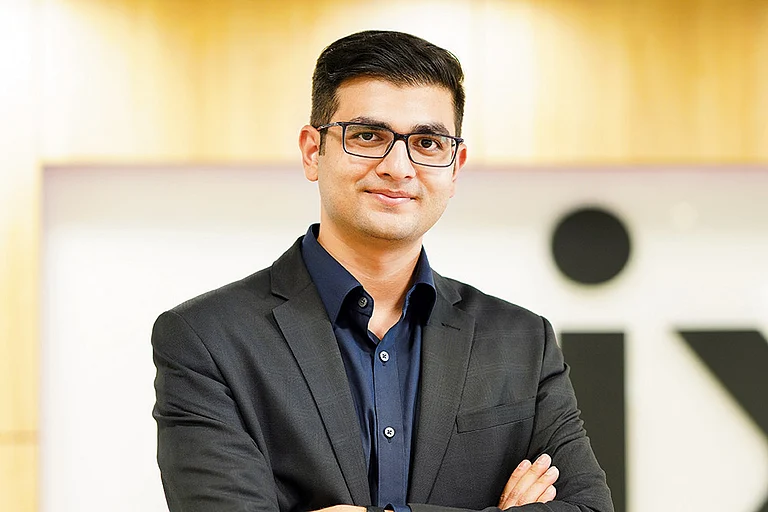
Pixxel To Expand Satellite Capabilities
Pixxel said the fresh capital will be used to expand its sensing capabilities through its Honeybee satellite constellation and high-resolution optical imaging satellites.
The company also plans to further develop Aurora, its Earth intelligence software platform that combines satellite datasets to generate decision-ready insights.
Pixxel's business spans hyperspectral satellites, Earth intelligence software and satellite systems for commercial and sovereign space missions.
The startup emerged after the Indian government opened the space sector to private players. Founded by Awais Ahmed, Pixxel initially focused on hyperspectral satellites capable of capturing information about the Earth's surface beyond conventional imagery.
Advertisement
It has since expanded into what it describes as planetary infrastructure, connecting sensors, software and space systems for governments, industries and institutions.
More Satellite Launches
Pixxel has been expanding its satellite constellation as it builds out its commercial and government businesses.
In an interview with Outlook Business, Co-founder Awais Ahmed said the company had launched a constellation of six Fireflies, which he described as the world's highest-resolution commercial-grade hyperspectral satellites, and planned to launch at least 12 more satellites in the following year and early 2028.
Advertisement
"We are building 12 hyperspectral satellites, which we will own and sell the imagery from, including to Indian government users. We also have contracts where satellites are being built, delivered and operated for the government," Ahmed said.
He added that the company has an Indian Air Force contract involving a 200kg modular satellite capable of hosting four different kinds of payloads.
From Technology Proof To Commercial Orders
Ahmed said Pixxel's fundraising journey evolved from proving its technology to demonstrating the strength of its commercial order book.
"When we raised our Series A, there were early signs of customer interest and contracts. We had one satellite up in space. We had proven that we could put it into orbit, that it would work and beam down data, and that the entire technical chain had been validated," he said.
He said later funding rounds focused more heavily on the company's commercial strength, including the number and geographical spread of customers and the potential size of contracts.
"So, it was the strength of the team and the idea, then proof of the technology and finally the commercial order book," Ahmed said.
Ahmed also pointed to his team's earlier experience building a Hyperloop pod while they were students as an important factor in gaining investor confidence.
"We had built the Hyperloop pod [a capsule designed to carry people or cargo through low-pressure tubes] in India, taken it to the SpaceX headquarters and presented it to Elon Musk," he said.
Before founding Pixxel, Ahmed was part of the student satellite team at Birla Institute of Technology and Science, Pilani, where he worked with scientists at the Indian Space Research Organisation.
With the latest $100 million funding round, Pixxel is now looking to scale its satellite infrastructure and Earth observation capabilities as India's private space sector continues to expand.