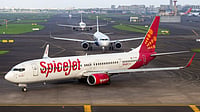
Akasa Air aims to increase passenger capacity by 30% this fiscal year after adding 10 Boeing 737 MAX aircraft and growing its domestic market presence.
The airline reported a 37% rise in revenue, a 4% decline in operating costs per seat kilometre and a 60% improvement in margins.
Akasa is evaluating government-backed loan guarantee and fuel stabilisation schemes introduced to help airlines manage rising aviation fuel costs.
Akasa Air plans to expand its passenger carrying capacity by 30% in the current financial year as it builds on strong revenue growth and improving operational performance.
The airline on Tuesday reported a 37% increase in revenue for the financial year ended March 2026, while losses narrowed compared with the previous year.

1 September 2026
Get the latest issue of Outlook Business

Although the carrier did not disclose absolute revenue and profit figures, it highlighted improvements in efficiency and profitability as it continues to strengthen its position in India's aviation market.
Operational Metrics Improve
Akasa said its cost per available seat kilometre (CASK), a key measure of operating efficiency, declined by 4% year-on-year. The airline also reported a 60% improvement in margins, which it attributed to restructuring initiatives and operational optimisation measures undertaken during the year.
The airline expanded its fleet by adding 10 Boeing 737 MAX aircraft during FY26, supporting its growth ambitions. Since commencing commercial operations in 2022, Akasa has steadily increased its presence in the market and currently commands a 5.4% share of India's domestic aviation sector.
Advertisement
However, the airline remains a relatively small player compared with industry leaders IndiGo and Tata Group-backed Air India, which continue to dominate the country's aviation landscape.
Fuel Costs Remain a Challenge
Despite operational gains, rising fuel prices remain a key concern for airlines globally. Aviation turbine fuel (ATF) is typically the largest operating expense for carriers and can account for up to 40% of total costs.
The recent Iran conflict triggered a surge in crude oil and jet fuel prices, increasing cost pressures across the aviation sector. Airlines worldwide have been grappling with higher fuel bills, raising concerns over profitability and ticket pricing.
Advertisement

Government Support Measures
Against this backdrop, Akasa said it is evaluating the possibility of tapping into government-backed support programmes designed to help airlines manage fuel price volatility.
The airline is considering participation in the Centre's loan guarantee and fuel price stabilisation schemes. Earlier this month, the government approved a ₹10,000 crore ($1.05 billion) fuel stabilisation fund aimed at cushioning airlines from rising ATF costs linked to geopolitical disruptions.
Under the scheme, interest-free advances will be provided to oil marketing companies to cover under-recoveries—the gap between market-linked jet fuel prices and the moderated rates charged to airlines.



The government said the fund is intended to protect domestic and international air connectivity while ensuring uninterrupted airline operations during periods of elevated fuel prices.
The announcement was welcomed by the aviation industry, with shares of market leader IndiGo reversing losses and trading higher following the decision.
As Akasa pushes ahead with expansion plans and works towards improving profitability, the government's fuel support measures could provide a valuable buffer against volatile energy costs while helping the airline strengthen its competitive position in India's rapidly growing aviation market.