Finance Minister Nirmala Sitharaman on Sunday announced an outlay of Rs 20,000 crore over the next five years for Carbon Capture, Utilisation and Storage (CCUS) technologies, signalling a major push to decarbonise India’s hard-to-abate industrial sectors.
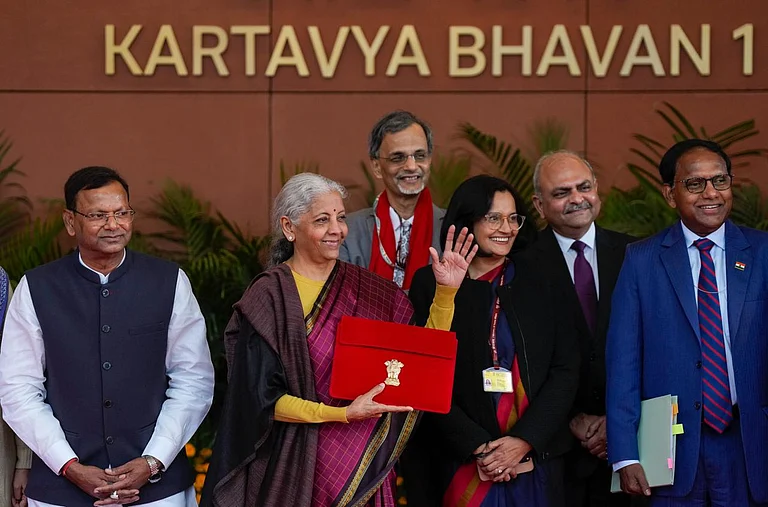
Presenting the Union Budget, Sitharaman said the funding will be aimed at scaling up CCUS projects and improving technology readiness levels to enable wider deployment across end-use applications.

The move is expected to support emissions reduction in carbon-intensive industries such as steel, cement, power generation and chemicals, where direct electrification and renewable substitution remain technically difficult or commercially unviable.
"A dedicated Rs 20,000 crore outlay for CCUS technologies connects decarbonisation with mainstream industry strategy; crucial for sectors where electrification alone can’t cut emissions," said Manish Dabkara, Chairman and Managing Director, EKI Energy Services and President Carbon Markets Association of India.

1 September 2026
Get the latest issue of Outlook Business

CCUS involves capturing carbon dioxide from industrial processes or power plants and either storing it underground or utilising it for products such as chemicals, fuels and construction materials.
Commenting on the announcement Rajib Kumar Debnath , Partner– Sustainability & Developmental/CSR Services, Nangia Global, said, "Announcement of Rs 20,000 crore for CCUS technologies will attract private investment, increase employment opportunities, reduce emission intensity in energy intensive industries, enhance decarbonisation in industries, improve CBAM compliance requirements as well as enhance accrual of carbon credits, while facilitating India's journey to Net Zero in the long term."