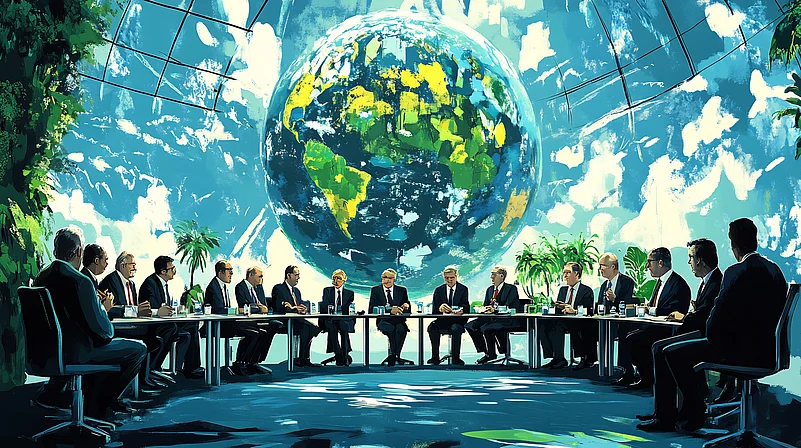
In a world of geopolitical turbulence, India must run a “marathon and sprint” simultaneously, or run a marathon as if it were a sprint, the Economic Survey 2025-26 said on Thursday.
The pre-Budget document tabled in Parliament further said that the global environment is being reshaped by geopolitical realignments that will influence investment, supply chains and growth prospects for years to come.
“Against today's global churn, India must choose to build resilience, innovate relentlessly, and stay the course toward Viksit Bharat, rather than seek quick fixes to visible, short-term pressures,” it said.

1 September 2026
Get the latest issue of Outlook Business




The Survey said 2026 may mark the point at which policy credibility, predictability and administrative discipline cease to be mere virtues and instead become strategic assets in their own right, with lasting relevance.
“Put differently, India must run a marathon and sprint simultaneously, or run a marathon as if it were a sprint,” the document said.
According to the Survey, the appropriate stance for 2026 is therefore one of strategic sobriety rather than defensive pessimism.
“The external environment will require India to prioritise both domestic growth maximisation and shock absorption, with a greater emphasis on buffers, redundancy, and liquidity,” it said. In a world of geopolitical turbulence, the Survey said, this may not be confined to a year but could be a more enduring feature.
Advertisement

“In response, India needs to generate sufficient investor interest and export earnings in foreign currency to cover its rising import bill, as, regardless of the success of indigenisation efforts, rising imports will invariably accompany rising incomes,” it said, adding that this has been the historical global experience.
The Survey pointed out that India is relatively better off than most other countries due to its strong macroeconomic fundamentals, but this does not guarantee insulation.
While noting that the country benefits from a large domestic market, a less financialised growth model, strong foreign exchange reserves and a credible degree of strategic autonomy, it said these features provide buffers in an environment where financial volatility is imminent, and geopolitical uncertainty is permanent.
Advertisement
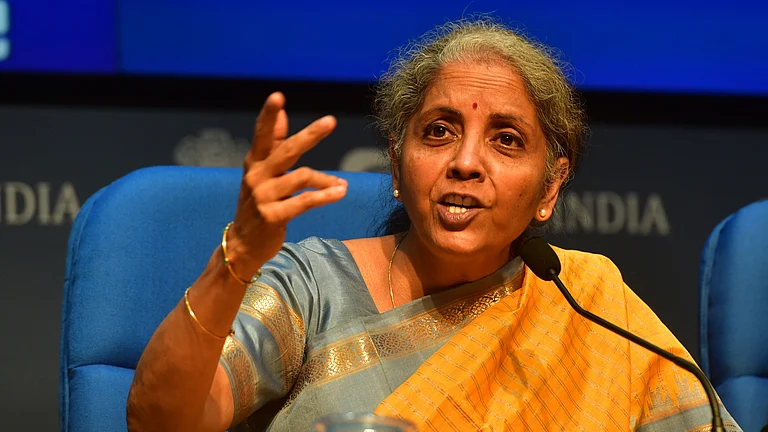
The Survey observed that the paradox of 2025 is that India's strongest macroeconomic performance in decades has collided with a global system that no longer rewards macroeconomic success with currency stability, capital inflows, or strategic insulation.
On global trade tensions, the Survey said, although the President of the United States announced reciprocal tariffs of 25% on India in April, India was expected to strike an early agreement with the US administration and lower them.
So, it said in August, when the American President announced an additional penal tariff of 25% on most of India's merchandise exports to the United States on top of the reciprocal tariff of 25% announced in April, it surprised many since India was expected to be one of the early winners in the new tariff regime of the United States.
“Growth forecasts were revised downward. But in reality, growth accelerated due to a slew of structural reforms and policy measures,” the Survey said.