India–Pakistan monsoon floods killed over 1,860 people, ranking deadliest climate disaster of 2025.
Global climate disasters caused over $120bn losses, driven by floods, heatwaves and wildfires.
Asia hosted four of six costliest disasters, highlighting region’s extreme climate vulnerability.
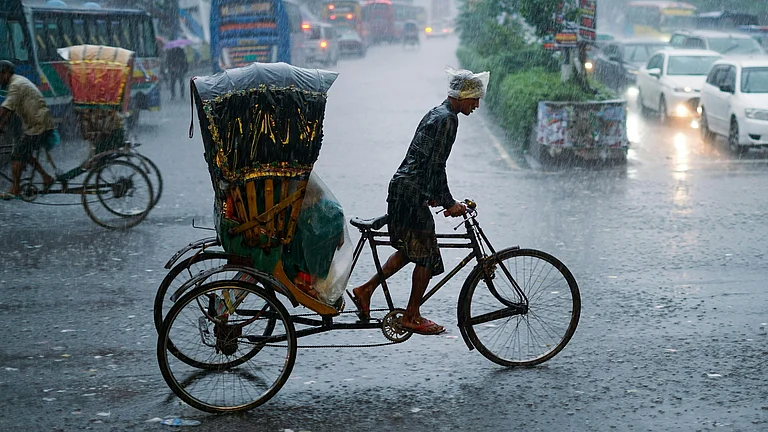
The Southwest monsoon season in India and Pakistan in 2025, which saw 8% more rainfall than usual, caused the greatest number of fatalities among the major climate disasters of 2025, according to a report published by Christian Aid. The floods were among the top 10 climate disasters, resulting in over 1,860 deaths and $5.6 billion in losses.
The report further revealed that heatwaves, wildfires, droughts and storms caused global damage exceeding $120bn in 2025, adding that the 1- most expensive climate-crisis-driven extreme events of the year, each resulting in damage exceeding $1bn. Among them, the Palisades and Eaton wildfires in California alone reportedly accounted for $60bn in losses.

1 April 2026
Get the latest issue of Outlook Business

Asia Bears Heaviest Losses
The report also said that Asia was home to four of the six costliest disasters, including floods in India and Pakistan that resulted in losses of up to $6bn and affected more than 7mn people in Pakistan alone. Meanwhile, typhoons in the Philippines caused damage exceeding $5bn and forced more than 1.4mn people to flee their homes, it added.
The disasters caused by cyclones in Thailand, Indonesia, Sri Lanka, Vietnam and Malaysia have been ranked the second most expensive, having caused estimated losses of $25bn. China’s extreme rainfall and flooding from June to August was responsible for losses to the tune of $11.7bn. Category 5 hurricane Melissa that devastated Jamaica, Cuba and the Bahamas in October-end, was the fourth most impactful disaster financially, causing losses worth $8bn, followed by the Indian subcontinent monsoon.
Hidden Costs, Human Toll
The report pointed out that most of these estimates are based only on insured losses, meaning the true financial costs are likely to be higher, while the human costs are often uncounted.
“These disasters are not ‘natural’ — they are the predictable result of continued fossil fuel expansion and political delay,” Emeritus Professor Joanna Haigh at Imperial College London told Christian Aid. “This year has once again shown the stark reality of climate breakdown …The poorest communities are first and worst affected. These climate disasters are a warning of what lies ahead if we do not accelerate the transition away from fossil fuels,” added Patrick Watt, Christian Aid CEO.