India could face over $200bn annually in climate adaptation costs by 2050.
Current spending protects only a fraction of people exposed to climate hazards.
Rising heat, floods and drought threaten jobs, agriculture and economic stability.
India and Greater China could incur over $200bn each annually in climate adaptation costs through 2050 if the planet warms annually by 2 degrees Celsius, according to a new report by the McKinsey Global Institute.
The report titled ‘Advancing adaptation: Mapping costs from cooling to coastal defenses’, offers a granular analysis of climate adaptation needs — ranging from heat, flooding, drought and wildfires — by using pixel-level geospatial data.

1 September 2026
Get the latest issue of Outlook Business

The findings reveal a staggering gap in climate protection. While 4.1bn people globally are exposed to climate hazards, current spending levels only offer protection to 1.2bn of them — when measured against developed-economy standards.
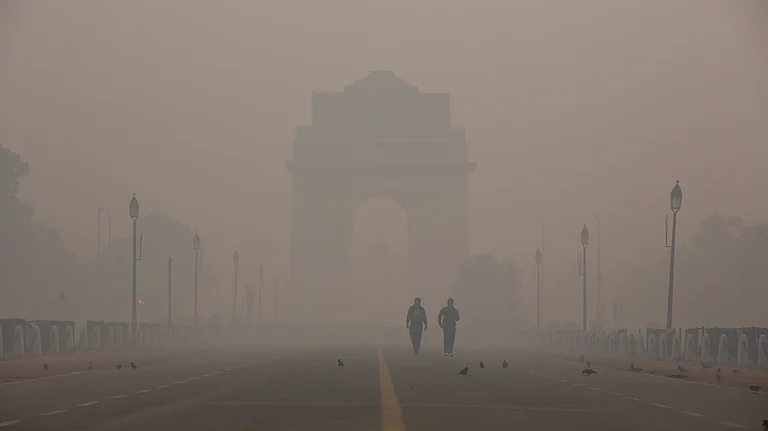
India, the report notes, is among the countries with the highest financial burden. “India currently spends about $15bn a year to defend against extreme weather, yet that spending is about 13% of what’s needed to protect all of the people — 90% of India’s population — living in places currently exposed to at least one of the four hazard categories,” Business Today reported citing the McKinsey report.
Advertisement
The report further warned that even if lower-income regions, including Sub-Saharan Africa and India, maintain current protection levels at 2 degrees Celsius, they would only manage to cover about 15% of the costs needed to shield their populations effectively.
India’s steep adaptation bill stems largely from the sheer number of people at risk. The report added that much of this relatively high total compared with other regions is due to a large population exposed to hazards. Yet in India, even the per capita number of $125 per person is more than a third of the amount budgeted to spend per person in its 2025 central government budget.
Advertisement
From an implementation perspective, more than half of the projected costs would fall to private actors typically undertaken by individuals and companies investing in measures like air conditioning, flood-proofing and crop shading. Public investments, such as sea dikes and early-warning systems, would account for around 30%, while the remaining 20% would support hybrid initiatives like irrigation systems.

Rising Equity Risks
Independent assessments by the World Bank and IPCC warn that climate adaptation costs in India could strain households disproportionately, as informal workers and small farmers lack access to insurance, resilient housing and affordable credit, potentially widening socio-economic gaps even as climate impacts intensify.
Between 2015 and 2021, India lost 33.9mn hectares of crops due to excess rains and an additional 35mn hectares due to drought. Several Indian sectors including agriculture suffered $159bn in economic losses in 2021 due to lost working hours from extreme climate impacts. By 2030, India is projected to see a substantial 5.8% decline in working hours – equivalent to 34mn full-time jobs – due to heat stress.
These numbers are only likely to increase as climate change continues. If, as expected, 45mn people are forced to migrate from their homes by 2050 as a result of climate change, this displacement would have cascading effects on local economies, for example by reducing tax revenues.