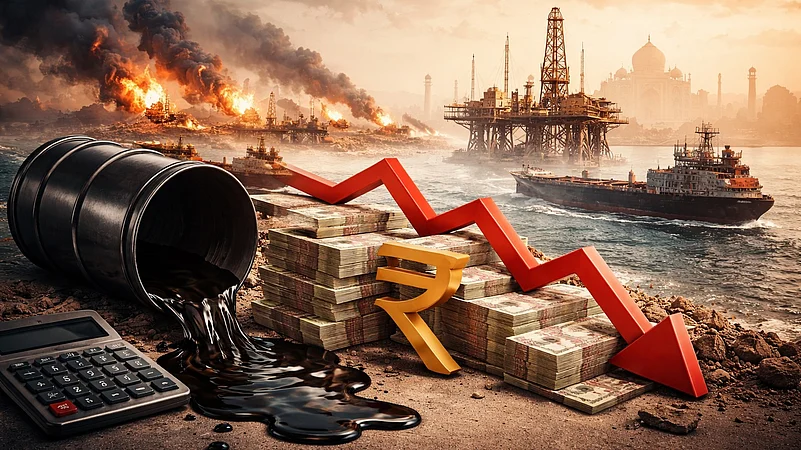

Brent crude futures fell 1.3% to $93.16 a barrel by 0329 GMT.
US West Texas Intermediate crude dropped 1.6% to $85.70 a barrel.
Investors are watching for new US sanctions on Iran, which could further tighten regional oil supplies and influence crude prices.
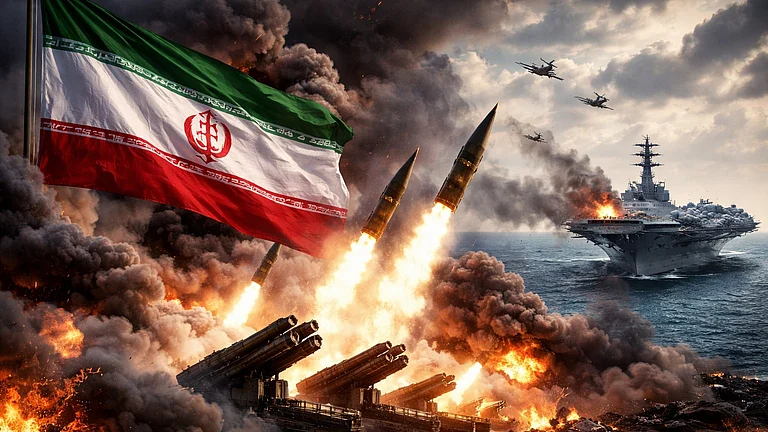
The United States has dramatically escalated its economic campaign against Iran, warning governments, banks, businesses and maritime entities that continue to provide Tehran with financial or commercial lifelines.
Dubbed “Economic D-Day”, the campaign shifts the focus from direct military pressure towards a broader effort to isolate Iran from the global financial and trading system.

1 October 2026
Get the latest issue of Outlook Business

Oil prices fell by more than $1 a barrel on Monday as investors booked profits ahead of an expected US announcement on fresh sanctions against Iran, which could further disrupt crude supplies from the Middle East.


Brent crude futures dropped $1.23, or 1.3%, to $93.16 a barrel by 0329 GMT. US West Texas Intermediate (WTI) crude fell $1.36, or 1.6%, to $85.70 a barrel.
The implications could extend well beyond Iran. With oil markets already vulnerable and the Strait of Hormuz facing heightened security risks, prolonged disruption could push up energy and shipping costs worldwide.
For India, which depends heavily on imported crude oil, the shock could quickly filter through corporate costs, inflation, trade balances and profit margins.
What Is The US Economic D-Day Against Iran?
The latest US campaign is aimed at dismantling the networks that have allowed Iran to continue trading despite existing restrictions.
Advertisement
Washington is targeting channels linked to oil smuggling, currency swaps, cash transfers, exchange houses, front companies and foreign shipping registries.
The strategy is particularly significant because it expands the pressure beyond Iranian entities themselves.
The US has warned that governments, financial institutions, companies, airports and maritime businesses that provide Tehran with what Washington considers an economic lifeline could face severe consequences.
The approach effectively seeks to make continued business with Iran more expensive and risky for third parties.
Instead of restricting only Iranian assets, Washington is attempting to make the international financial and commercial infrastructure supporting Iran increasingly difficult to access.
Advertisement
Why Are Iran's Trade Partners Now In The Crosshairs?
Iran continues to depend on international trading partners and intermediaries to sell its commodities, access foreign currency and obtain goods and equipment.
The US campaign therefore puts countries and companies maintaining commercial links with Tehran in a difficult position.
Major economies and trading hubs, including China, Turkey and several Asian and European markets, could face greater compliance risks if Washington expands secondary sanctions or other penalties.
For these businesses, the calculation is complicated by their dependence on access to the US financial system and dollar-based transactions.
Cutting ties with Iran could protect access to global financial markets, while continuing business could expose companies to sanctions-related costs and restrictions.
The pressure comes as Iran seeks to develop its own energy resources. The country recently discovered more than 7.5 trillion cubic feet of natural gas in southern Fars Province, potentially offering a major economic opportunity.
However, sanctions and financial isolation could make it harder for Tehran to attract the capital, technology, equipment and international buyers needed to fully commercialise such resources.
Why Oil And The Strait Of Hormuz Matter To Global Business
The biggest global economic risk lies in the Strait of Hormuz, one of the world's most important energy transit routes. Roughly one-fifth of global crude oil flows through the waterway, making any prolonged disruption a major threat to energy markets.
Heightened military tensions, naval blockades and security incidents have already increased uncertainty around shipping through the region. Commercial vessels operating in or near the conflict zone face higher security risks, while insurers can respond by increasing war-risk premiums.
Shipping companies may also reroute vessels away from vulnerable areas, adding both distance and cost to global supply chains. A sustained disruption around Hormuz could therefore affect not just crude oil but also broader maritime trade.
For oil markets, reduced availability or greater uncertainty over Gulf supplies can add a geopolitical premium to benchmark prices.
Higher crude prices would then feed into transportation, manufacturing and consumer prices across economies that depend on imported energy.
How Could Higher Energy And Shipping Costs Hit India Inc?
India is particularly exposed because it imports more than 80% of its crude oil requirements. Any sustained increase in international oil prices would raise the country's import bill and increase demand for foreign currency.
A larger oil bill can put pressure on the trade balance and the rupee while increasing costs across the domestic economy. Higher fuel prices also feed into logistics, freight and transportation expenses, raising the cost of moving goods across the country.
The shipping shock could compound the problem. Higher insurance premiums, longer routes and increased container freight rates would raise costs for companies importing raw materials as well as exporters sending products to overseas markets.
For businesses, the result could be a squeeze between rising input costs and their ability to pass those costs on to customers.
Which Indian Businesses Are Most Exposed?
The impact would be particularly significant for oil marketing companies, which could face pressure on refining and marketing margins if crude prices rise faster than domestic fuel prices can adjust.
Airlines, transport companies and logistics operators would also be vulnerable because fuel represents a significant operating expense.
Higher freight and shipping costs could further increase pressure on companies already dealing with longer routes and disrupted supply chains.
Manufacturing sectors such as paints, chemicals, tyres and auto components could face higher input costs because many rely directly or indirectly on petroleum-based raw materials.
Export-oriented companies could face a second layer of pressure from rising container freight rates, longer shipping routes and potential delivery delays.
The broader risk for India Inc is therefore not limited to crude oil. A prolonged US-Iran economic confrontation could create a combined energy, shipping and currency shock, raising operating costs across the economy and making the global trading environment considerably more uncertain.