
Improving access to new age medicines for obesity and diabetes over the next few years would be a key enabler for the growth of the domestic pharmaceutical industry, according to Sun Pharma Managing Director Kirti Ganorkar.
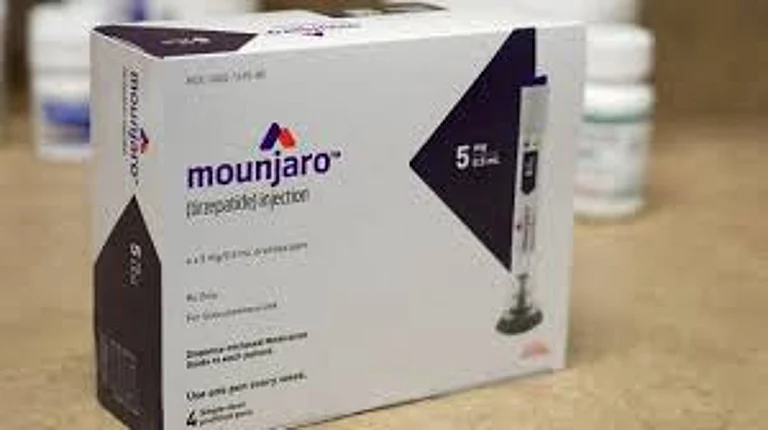
Glucagon-like peptide-1 (GLP-1) receptor agonists are drugs that treat type 2 diabetes, high blood sugar, and obesity by regulating insulin production.
India, known for its generic drug industry, is rapidly transforming into a major hub for the global weight management industry, amid rapid increase in obesity-led disease burden.

1 September 2026
Get the latest issue of Outlook Business

"Improving access to GLP-1 treatments in the coming years will be a key driver for the Indian pharmaceutical industry, helping address the growing burden of lifestyle diseases such as obesity and diabetes," Ganorkar told PTI.
Combined with AI-enabled digital tools for early disease detection and monitoring, and personalised medicine choices, the industry will continue to drive innovation that supports accessibility, affordability, and better outcomes for patients, he added.
Dr Reddy's Laboratories Chairman Satish Reddy stated that making risk capital more accessible can enable India to move from being the world's pharmacy to becoming the world's hub for pharmaceutical innovation.
Reddy stated that as India steps into 2026, with innovation emerging as the defining force for the next phase of growth, the outlook for the sector looks positive.
The emphasis will continue to be on building scientific excellence, regulatory agility, and collaborative innovation, reinforcing India's position as a trusted global partner, he added.
Advertisement
"Additionally, the pharmaceutical sector has a key role to play in attaining our vision of 'Viksit Bharat' with its own ambition of becoming a $500 billion industry by 2047," Reddy stated.
Despite external pressures, the sector has remained steadfast in advancing healthcare frontiers, delivering life-saving medicines across the globe, he stated.
Reddy noted that some of key initiatives such as the announcement of the Research, Development, and Innovation (RDI) scheme and the PRIP scheme for robust R&D and novel drug delivery systems are a step in the right direction, deepening and strengthening industry academia partnership.
Advertisement
"Further impetus in terms of making risk capital more accessible, can enable India to move from being the world's pharmacy to becoming the world's hub for pharmaceutical innovation," he added.
Rating firm Icra expects revenues of its sample set of Indian pharmaceutical companies to grow by 9 to 11% in FY2026.
This will be supported by growth of 8-10% in the domestic market and 15-17% in the European markets, while pricing pressure on certain key drugs such as Lenalidomide will result in moderation in the growth in the US market to 4-6%, it added.

Commenting on the healthcare sector, Aster DM Healthcare Founder & Chairman Azad Moopen said: "As we look to 2026, the opportunity lies in translating scale and capital into outcomes. This will require faster regulatory clearances, sharper focus on tier-2 and tier-3 infrastructure, sustained workforce skilling, and stronger public-private collaboration." Addressing talent shortages while enabling innovation will be critical for ensuring that quality healthcare remains accessible, affordable and sustainable for every Indian family, he added.