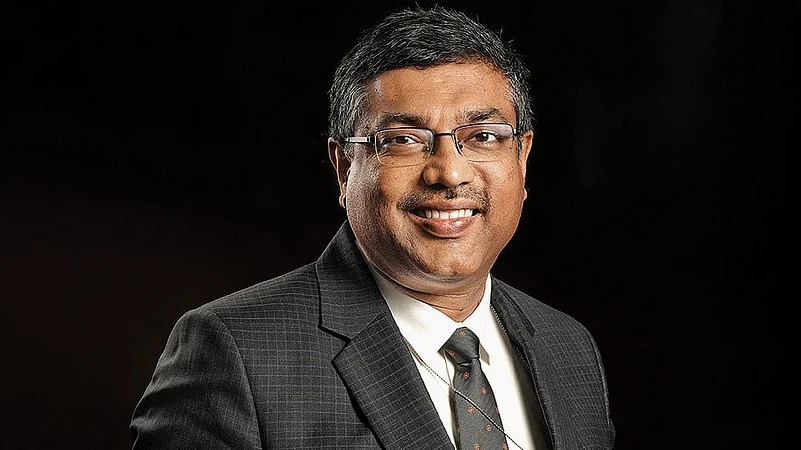
India is adopting a different approach to developing AI infrastructure by avoiding direct subsidies for data centres and instead enabling easier access and encouraging private investment, said S. Krishnan, Secretary, Ministry of Electronics and Information Technology, at the AI Impact Summit.
“Our focus in the AI space is to encourage the private sector to invest in data centers and AI-based computing infrastructure. Instead of directly subsidizing data centers, we have chosen to subsidize access to AI computing. In effect, we have underwritten the market to ensure that researchers, innovators, startups, small and medium enterprises, and students can access AI compute at affordable prices,” he said.
He also highlighted the affordability of GPUs in India, noting that access to AI computing is significantly cheaper than in many other parts of the world.
“Today, in India, AI compute is available at nearly one-third of the global cost. While international rates range between $2.50 and $3 per GPU hour, in India it is around $0.65 per GPU hour. This means access is roughly one-fourth of the global cost,” said S. Krishnan.
In the latest budget, India has also eased investment norms for data centers, Meity Secretary informed.

1 September 2026
Get the latest issue of Outlook Business

“The tax treatment of overseas entities has been clarified, making it easier for them to establish cloud and AI infrastructure in India to serve global markets,” he noted.


Advertisement
In his address, S. Krishnan said that India has emerged as one of the world’s leading data centre hubs, supported by abundant renewable energy that enables these facilities to operate sustainably using green power.
On the hardware front, he highlighted that developing indigenous AI accelerator chips is a key priority under the government’s broader innovation agenda.
He noted that India’s research institutions are actively working on chip design, calling it a major step towards strengthening the country’s domestic AI and semiconductor ecosystem.
The session at which S. Krishnan was speaking brought together representatives from the Indian government, data security professionals, Global South policy experts, and researchers specialising in hardware and AI security.
Advertisement
The panelists drew on their research networks and experience in convening global events to present live demonstrations and real-world examples of their hardware-enabled verification solutions.