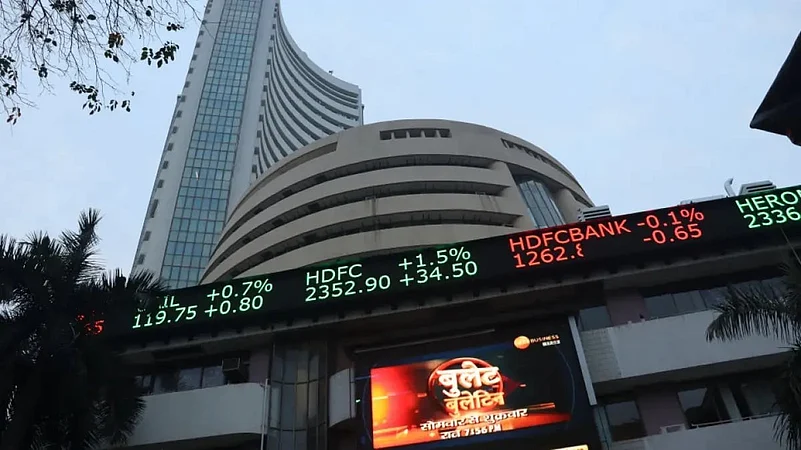

SEBI is sticking with India's new closing auction despite calls from traders for a rollback.
Early sessions saw sharp swings in official closing prices, confusing brokers and investors.
Weak participation by trading firms has contributed to thin liquidity and larger price moves.
India's new closing auction system has run into early turbulence, but the Securities and Exchange Board of India (SEBI) has no plans to roll it back, according to a Bloomberg report citing people familiar with discussions between the regulator and stock brokerages.
SEBI officials, including board member K.V.R. Murty, told market participants that the system was facing teething issues and should improve as more traders participate, the news agency reported. The regulator also urged brokerages to upgrade their technology and increase order flow.
The new mechanism, which covers more than 200 stocks with listed derivatives, was introduced to improve price discovery and bring India's market structure closer to major global exchanges.

1 September 2026
Get the latest issue of Outlook Business

Why Did the New System Cause Confusion?
The first two trading sessions under the new system produced unexpected price swings, particularly around expiry-day trading on the National Stock Exchange of India (NSE). Brokerages received questions from clients, while retail investors took to social media after seeing official closing prices differ sharply from where trading had ended.
Under the new system, the closing price is determined through an auction rather than simply reflecting the final price of continuous trading. The closing price is important because it is used to settle stock and index derivatives.
Advertisement
Bloomberg reported that weak participation was a key reason for the early volatility. Several proprietary trading firms and high-frequency traders reduced or avoided activity during the auction as they adjusted to the new framework.
Goldman Sachs said in a note to clients that thinner liquidity meant relatively small buy or sell orders could move the auction's equilibrium price more than traders were accustomed to.

SEBI Wants More Liquidity, Not a Rollback
SEBI's meetings with brokerages on Tuesday and Wednesday focused on improving participation and technology rather than reversing the reform. The regulator believes the auction will work more smoothly once sufficient liquidity develops.
Advertisement
Market participants have also pointed to the challenges of the transition. Mayank Sachan, CEO of Zenskar Research, told Bloomberg that giving liquidity more time to build before introducing the closing auction could have made the shift smoother.
At the same time, some traders argue that the new system has disrupted strategies that had worked for years. Aamodh Kuthethur, a retail algorithmic options trader, told the news agency that the change had effectively broken his trading system overnight.

.jpg?auto=format%2Ccompress&fit=max&format=webp&w=768&dpr=1.0)

The impact could extend beyond traders. Zerodha estimates the new framework could reduce industry-wide brokerage revenue by 1% to 5%, while Jefferies has warned that lower expiry-day activity could weigh on overall options volumes.
The changes could also affect the NSE as it prepares for its much-anticipated IPO. The exchange relies heavily on derivatives revenue, while equity futures and options trading had already fallen to a 17-month low in July.