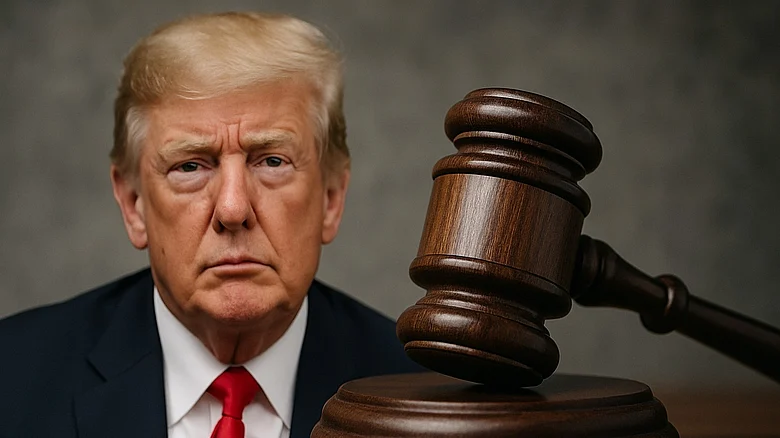
The US Supreme Court has struck down former President Donald Trump’s reciprocal tariff regime, ruling that the measures exceeded presidential authority under the International Emergency Economic Powers Act (IEEPA) of 1977.
The tariffs, announced on April 2 and branded as “Liberation Day” duties, imposed a flat 10% levy on all imports into the United States, alongside steeper country-specific tariffs ranging from 15% to 50%. Several of these rates were later revised through negotiations with trading partners.
In a 6–3 ruling, the court held that the US Constitution assigns taxing powers — including the authority to impose tariffs — exclusively to Congress. Writing for the majority, Chief Justice John Roberts stated that the Constitution “did not vest any part of the taxing power in the Executive Branch,” underscoring the limits of presidential authority in matters of taxation.

1 October 2026
Get the latest issue of Outlook Business

Justices Samuel Alito, Clarence Thomas and Brett Kavanaugh dissented. In his dissenting opinion, Kavanaugh argued that while the tariffs may be debatable as a matter of policy, they were lawful based on statutory text and historical precedent. He also warned that any attempt to unwind the tariffs and refund duties already collected could become a “mess,” given the billions of dollars at stake and the complexity of trade enforcement mechanisms.

US stock markets reacted positively to the ruling, with the Dow Jones Industrial Average and the S&P 500 posting immediate gains amid investor relief over reduced trade uncertainty.
Importantly, the judgment does not bar Trump — or any future administration — from imposing tariffs using alternative statutory authorities delegated by Congress. The ruling narrowly addresses the use of IEEPA as the legal foundation for the reciprocal tariff regime, leaving open other potential trade tools.
Advertisement
The court did not clarify whether businesses would be entitled to recover the billions of dollars already paid in duties. Several companies, including US warehouse retailer Costco and Chinese carmaker BYD, have already initiated legal proceedings seeking refunds. In his dissent, Kavanaugh cautioned that any repayment effort could prove highly complex.
“The Court offers no guidance on whether the government must refund the vast sums collected from importers, or how such a process should work,” Kavanaugh wrote. Arguments heard during the proceedings suggested that implementing refunds, if required, would likely be administratively burdensome and legally contentious.
A Serious Blow to Trump’s Tariff Agenda
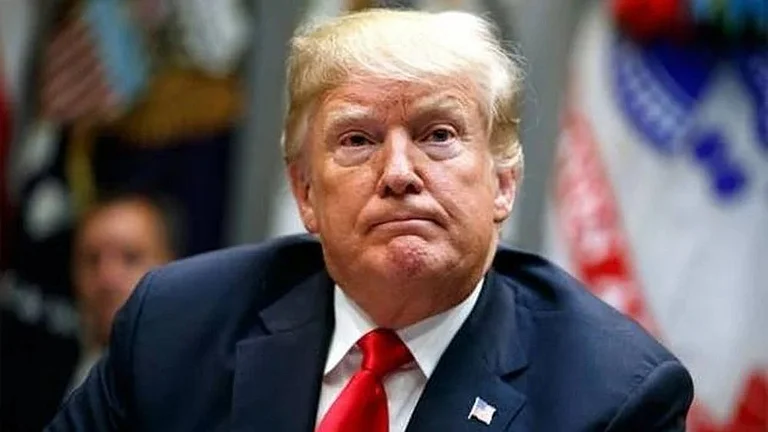
The ruling represents a significant setback for Trump, who has consistently defended his tariff strategy as a pillar of his economic nationalism. He has argued that reciprocal tariffs would strengthen US public finances, boost domestic manufacturing and ultimately “Make America Great Again.”
Advertisement
According to estimates from the Congressional Budget Office, the economic impact of maintaining the tariff framework could have reached nearly $3 trillion over the next decade. Trump justified the measures by arguing that persistent US trade deficits posed a serious threat to national security and economic stability.
This May Not Be the End
However, reports suggest that the Supreme Court’s decision does not necessarily close the door on future tariff action. US Treasury Secretary Scott Bessent has indicated that the administration would explore alternative legal avenues to preserve elements of the tariff framework. Those alternative statutory authorities, however, are generally considered less flexible than IEEPA.
The ruling also comes amid ongoing trade recalibrations. India and the United States announced the conclusion of an interim trade agreement on February 3, with negotiations continuing toward a broader bilateral trade agreement. Washington had earlier slashed a 25% punitive tariff and reduced reciprocal tariffs on India to 18%, with implementation expected from April.
While the Supreme Court’s judgment curtails one pathway for executive-driven tariff action, the broader debate over presidential trade powers — and the future of US tariff policy — remains far from settled.