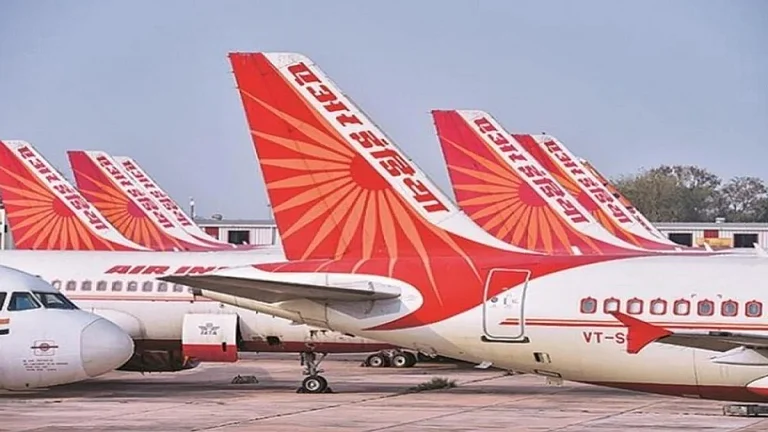
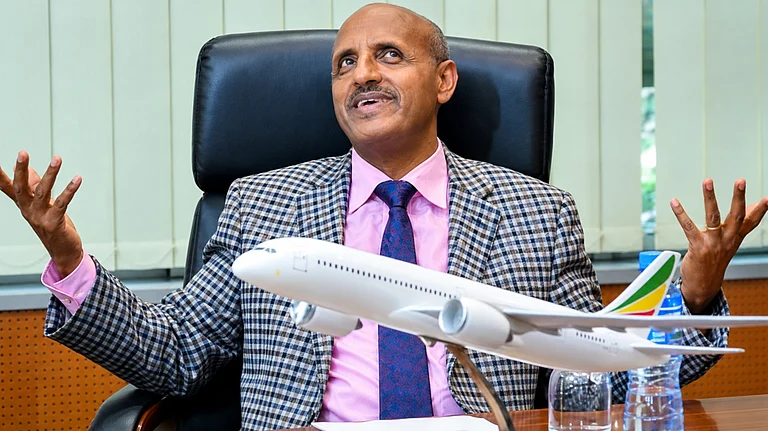
Tewolde Gebremariam takes charge at Air India as the airline battles losses, safety concerns and operational challenges.
Willie Walsh takes over at IndiGo with a mandate to strengthen operations and drive global expansion.
Their appointments come as Indian aviation faces rising costs, aircraft supply constraints and growing international ambitions.
India’s two largest airlines have new global aviation veterans at the helm at a time when the industry is facing a difficult mix of rising costs, geopolitical disruptions, aircraft supply constraints and strong passenger demand. Tewolde Gebremariam has taken operational charge of Air India, while Willie Walsh has been leading IndiGo since August.
The two appointments may look similar, but the challenges facing the airlines are markedly different. Tewolde has been brought in as Air India tries to improve safety, operational reliability and financial performance after years of losses. Walsh, meanwhile, has to restore operational discipline at IndiGo while steering its next phase of international expansion.

1 October 2026
Get the latest issue of Outlook Business

Together, Air India and IndiGo account for nearly 90% of India's domestic air traffic, according to Moneycontrol.
Air India’s First Priority Is To Fix The Basics
For Tewolde, the immediate task is to strengthen Air India’s operational foundation rather than simply chase growth.
Air India posted a loss of more than ₹26,000 crore in FY26 and has sought ₹10,000 crore in fresh equity from Tata Sons and Singapore Airlines, according to Economic Times (ET). The airline is also under heightened safety scrutiny following the fatal Ahmedabad crash in June 2025. ET reported that Tewolde is expected to focus on safety, operational reliability, engineering and maintenance, while also imposing greater financial discipline.
Advertisement
The scale of the challenge is significant. Air India is simultaneously trying to modernise its fleet, improve the reliability of its aircraft and integrate businesses brought together under the Tata Group. Reuters noted that the airline has also sought to defer deliveries of hundreds of aircraft from Airbus and Boeing as part of efforts to manage costs.
The external environment is making the turnaround harder. The closure of Pakistani airspace for Indian carriers has forced longer routings on several westbound flights, while geopolitical tensions in the Middle East have added pressure on fuel and operating costs. For an airline with a substantial international network, those pressures are particularly significant.
Advertisement
But Tewolde's background is one reason Tata has chosen him for the job. He spent nearly four decades with Ethiopian Airlines Group, including more than 11 years as its chief executive. His tenure saw Ethiopian Airlines expand significantly and build a larger international network.
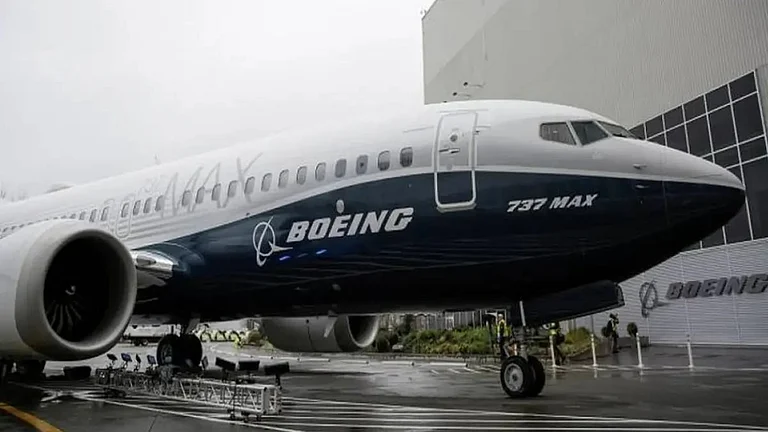
Reuters has also pointed to his experience dealing with crises, including the Ethiopian Airlines crash in 2019 and the grounding of Boeing 737 MAX aircraft. That experience could be particularly relevant as Air India works to strengthen safety and compliance.
The opportunity for Tewolde is equally large. Air India is already India's principal widebody operator, while IndiGo has ended its current wet-lease widebody operations and is expected to resume such flying when its own Airbus A350 aircraft arrive. That could give Air India room to strengthen its position in long-haul international flying, provided it can make the business financially viable.
IndiGo’s Challenge Is To Grow Without Losing Its Discipline
Walsh inherits a much stronger financial and market position, but his challenge is not necessarily easier.
IndiGo controls more than 66% of India's domestic market, according to Business Standard, and has built its position around scale, cost discipline and operational consistency.
But the airline was jolted by a major operational disruption in December last year. Business Standard reported that Walsh took charge after Pieter Elbers' departure against the backdrop of that disruption. His mandate now covers global expansion, operations and commercial strategy.
The first requirement is therefore to ensure that growth does not again overwhelm the airline's operational systems.
The Times Of India, citing industry insiders and people familiar with the airline, reported that IndiGo's earlier management had faced complaints from pilots over crew availability even as the airline continued adding aircraft. The airline has a large aircraft order book, making workforce planning and operational execution increasingly important as capacity expands.
Walsh also arrives with a particularly relevant background. The trained pilot has led British Airways and International Airlines Group and spent several years as director general of IATA. His experience is expected to help IndiGo navigate the complexities of becoming a more global airline.
That international ambition is already taking shape. Reuters reported that IndiGo is ending its current widebody operation involving Norse Atlantic and will wait for its own Airbus A350-900 aircraft before restarting such services. The airline has also agreed to buy 1,000 LEAP-1A engines from CFM International, with plans for its own maintenance facility.
This means Walsh has to manage two objectives simultaneously: keep IndiGo's domestic engine running efficiently while building the capabilities needed for long-haul international operations.
Why Are India’s Airlines Turning To Expat CEOs?
The simultaneous appointment of foreign CEOs at India's two biggest airlines also raises a broader question about the country's aviation leadership pipeline.
Business Standard noted that Indian aviation has repeatedly relied on expatriate executives for its top jobs. The newspaper attributed this partly to the industry's history: private commercial aviation opened up only in 1994, while Air India's decades-long monopoly relied heavily on civil servants and public-sector managers. That left India with a relatively limited pool of senior executives with extensive airline-management experience, particularly in international aviation.
That does not mean India lacks capable aviation leaders. Business Standard pointed out that Aditya Ghosh's 2008-2018 tenure was one of IndiGo's longest and most successful periods under an Indian chief executive.


The argument, therefore, is less about whether foreign executives are better and more about the specialised experience that airlines are seeking as Indian aviation becomes increasingly global.
Tewolde brings experience in turning Ethiopian Airlines into a major international carrier. Walsh brings decades of experience across major European airlines and the global aviation industry. Their appointments suggest that India's largest carriers are willing to look globally for leadership as the complexity of their businesses increases.
But their success will ultimately be judged in India.
For Tewolde, that means making Air India safer, more reliable and financially sustainable while restoring confidence among employees, regulators and passengers. For Walsh, it means ensuring that IndiGo's international ambitions do not undermine the operational discipline that made it India's dominant domestic airline.
The bigger test for both CEOs is whether global aviation experience can be converted into sustainable growth in one of the world's fastest-growing aviation markets.