Budget 2026–27 announces seven new high-speed rail corridors for green mobility.
Routes link major hubs: Mumbai–Pune, Pune–Hyderabad, Delhi–Varanasi and more.
Aim is faster connectivity for finance, tech, manufacturing and emerging cities.
Industry sees boost for regional integration, but stresses land and access commitments.
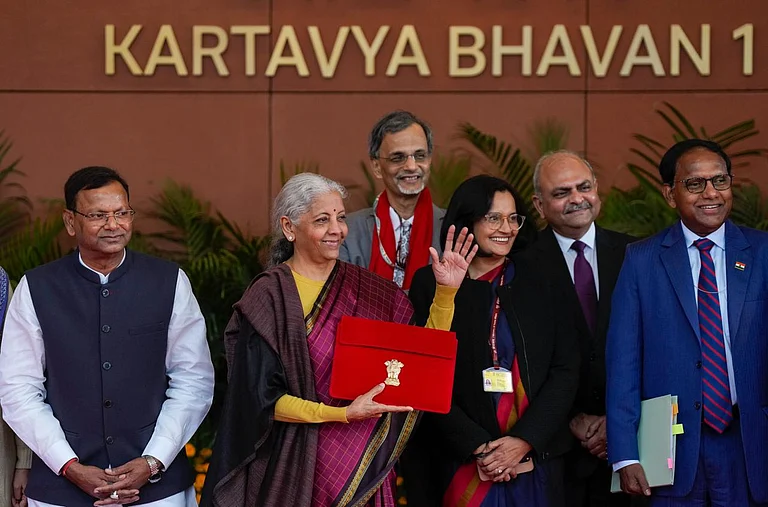
Finance Minister Nirmala Sitharaman today announced that India is set to expand its high-speed rail network with seven new corridors. This is also to promote environmentally sustainable passenger systems, she noted during her nineth consecutive budget speech.
"In order to promote environmentally sustainable passenger systems, we will develop 7 high-speed rail corridors between cities as growth connectors," Sitharaman said while presenting the Union Budget 2026-27 in parliament.

1 September 2026
Get the latest issue of Outlook Business

As per the announcement, the proposed rail corridors are: Mumbai to Pune, Pune to Hyderabad, Hyderabad to Bengaluru, Hyderabad to Chennai, Chennai to Bengaluru, Delhi to Varanasi and Varanasi to Siliguri.
The minister said that these corridors will together link India’s financial hubs, technology centres, manufacturing clusters, and emerging cities with faster and cleaner mobility.
The finance minister presented her ninth consecutive budget in the Parliament, where she said that the Centre had focused on “reforms over rhetoric”.
Currently, work on one high-speed corridor between Ahmedabad and Mumbai is in progress. Similarly, two dedicated freight corridors--Eastern and Western--are in operation covering several states and districts.
Advertisement
Deepak Shetty, MD of JCB India, noted that the government's strong emphasis on infrastructure, "particularly the development of seven high-speed rail corridors as growth connectors, will further enhance regional integration, improve urban mobility, and boost productivity, making India an attractive destination for global investment".
Manish Sharma, sector leader of Infrastructure, Transport and Logistics, at PwC India, termed new high speed rail corridors and DFCs as welcome steps. "However, launching these developments need to be tied down to iron clad, irrevocable state government commitments on aspects like land, first and last mile access arrangements, and security to ensure timebound execution," he added.