The Donald Trump administration plans to turn the Peace Corps into a Tech Corps to send STEM graduates abroad to promote US AI tools.
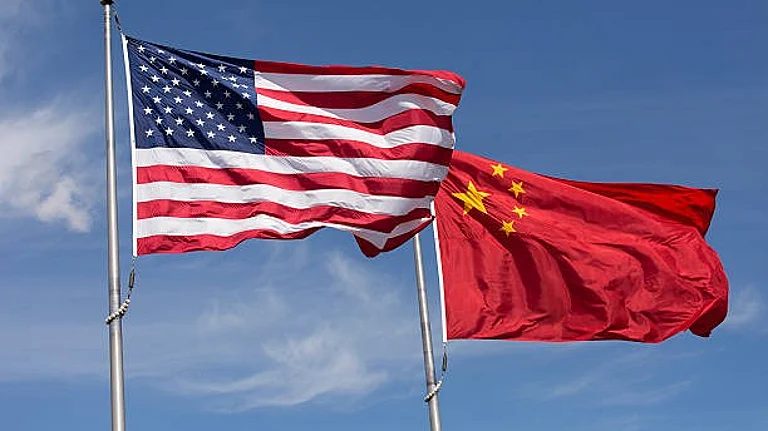
The move aims to expand US tech presence in the Global South and reduce reliance on Chinese AI systems.
It complements efforts like the American AI Exports Program to strengthen America’s global AI leadership.
US President Donald Trump administration has planned to launch a new Peace Corps programme called 'Tech Corps'. The new initiative is aimed at promoting American technology overseas and countering China's growing influence in AI, according to a report by Bloomberg citing a US official.
White House Office of Science and Technology Policy Director Michael Kratsios announced the plan at the India AI Impact Summit 2026 on Friday. "Real AI sovereignty means owning and using best-in-class technology for the benefit of your people...," he said while announcing the plan.

1 October 2026
Get the latest issue of Outlook Business

He also gave remarks on America's AI leadership and international AI adoption, the rejection of global governance for the pursuit of real AI sovereignty, and the opportunity of nations to join the US as partners to build the AI future for their peoples with components of the American AI stack.


Krastsios also urged nations to focus on strategic autonomy alongside rapid AI adoption rather than aiming for full self-sufficiency.
Advertisement
In a statement, the White House also said that countries using the American AI technology ecosystem would be able to access some of the world's most advanced tools, while also ensuring that sensitive data remains stored within their own borders.
Notably, the administration or Kratsios did not directly mention that the initiative is built to counter China.

What is the Tech Corps?
The Tech Corps is a new initiative of the Peace Corps, which will provide volunteer technical talent with the US import partners to provide last-mile support in deploying powerful AI applications for enhanced public services.
Advertisement
The proposed initiative, reportedly called the Technology Prosperity Corps, would send up to 5,000 American science and math graduates abroad over the next five years. These volunteers and advisers would work with partner countries to support the adoption of US-made AI hardware and software, while reducing reliance on Chinese technology, the report said.
Recruitment and training for the first batch of volunteers is expected to begin this year, with a target of 500 professionals in the initial cohort. The State Department, the US Commercial Service, the International Development Finance Corporation, the Export-Import Bank and partner-country ministries are expected to coordinate the placements, the report added.
The initiative would also complement the Trump administration's previously announced American AI Exports Program, established by Trump through a July executive order. That effort offers partner nations bundled packages of US-made AI chips, servers, cloud services and networking equipment.
What Is Its Core Aim?
The initiative is intended to redefine the six-decade-old Peace Corps for a technology-led era, giving it a renewed mandate and direction. To give context here, the Peace Corps was founded in 1961 by President John F Kennedy during the Cold War as a goodwill diplomacy programme.
Last year, more than 3,000 volunteers served in over 60 countries on projects ranging from agriculture to healthcare and environmental protection.
Adding a technology-focused mission would mark a major shift in the Peace Corps' traditional role. However, some details of the new programme remain unclear, including which countries will participate and how it may affect existing Peace Corps operations.
Funding for the Technology Prosperity Corps is expected to include contributions from corporations and charitable organisations, in addition to federal support.

Is It Countering China's AI Push?
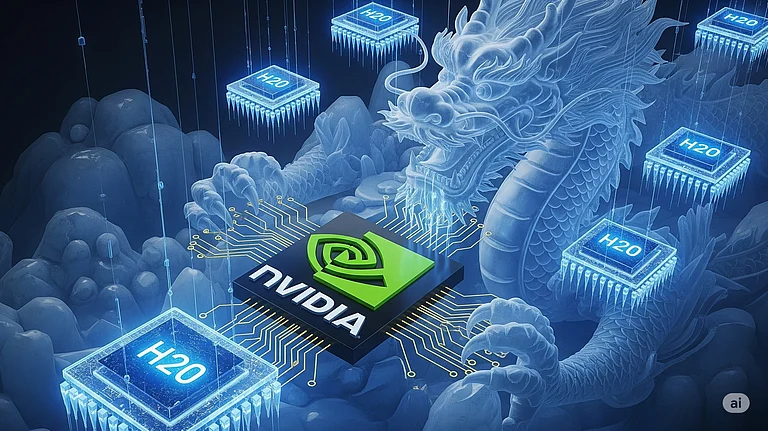
The move also aligns with Donald Trump’s broader push to secure American leadership in artificial intelligence. As Washington seeks to expand exports of advanced technologies, including high-end chips from Nvidia, the revamped tech corps is seen as part of a wider strategy to counter China’s long-standing infrastructure diplomacy across regions such as Africa, South America and parts of Europe.
China's push includes AI products such as large-language models developed by DeepSeek, and builds on earlier efforts like its Digital Silk Road initiative, under which Chinese firms helped build telecommunications networks globally.
We had earlier reported that the US remains ahead in core technology areas such as AI research, software frameworks, cloud infrastructure and quantum computing. It also continues to attract top technical talent from around the world.
China, however, is either leading or rapidly catching up in the real-world use of AI and robotics. This includes applications such as drone deliveries, driverless taxis and large-scale factory automation.
The country has also made significant progress in building digital infrastructure across developing countries, particularly in the Global South. At the same time, China is pushing hard to become more technologically self-reliant through strong government support, industrial policies and state-backed funding.
What is America's AI stack?
The "AI stack" refers to the full package of American technology, including chips, software, cloud systems and standards, that the US plans to offer other countries under its American AI Exports Program. The goal is to help nations build and scale their own artificial intelligence systems using US-backed tools.
The programme has four main pillars, including the newly announced Tech Corps. The other three initiatives, including National Champions, New International Financing, and AI Agents Standard, designed to strengthen the global reach of its artificial intelligence ecosystem.
Under the National Champions plan, the US Commerce Department will work with leading AI companies in partner countries and integrate them into customised American AI packages. The idea is to show that US technology can strengthen local AI industries rather than replace them.
On the other hand, the US Treasury Department is also setting up a new fund at the World Bank under the third pillar. It will be focused on helping countries tackle financial and infrastructure challenges that slow AI adoption. Additional funding support will also come from the Export-Import Bank, the US International Development Finance Corporation, the State Department and the Small Business Administration.
The US goverment will also help develop common safety and technical standards for next-generation agentic AI systems. The aim is to ensure these systems are secure, reliable and interoperable, giving governments and businesses greater confidence in adopting them.