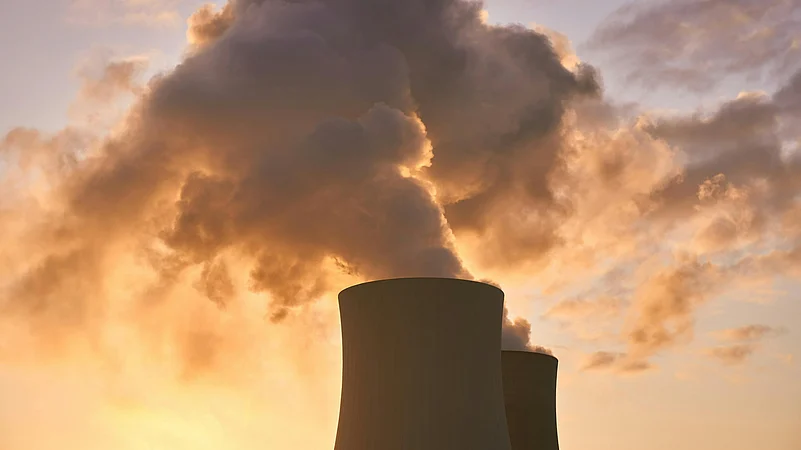
The government on Sunday proposed customs duty exemptions to encourage investments in nuclear power, battery energy storage and sodium antimonate to boost non-fossil fuel-based energy generation.
This assumes significance in view of India's ambitious target of having 500 GW of renewable energy.
India is required to add at least 50 GW of renewable energy per annum capacity by 2030 to achieve this target.

1 September 2026
Get the latest issue of Outlook Business

Finance Minister Nirmala Sitharaman, in her budget speech in the Lok Sabha, said, “I propose to extend the basic customs duty exemption given to capital goods used for manufacturing Lithium-Ion Cells for batteries, to those used for manufacturing Lithium-Ion Cells for battery energy storage systems too.” According to the indirect tax proposals, zero import duty is proposed on specified capital goods for use in the manufacture of lithium-ion cells for batteries of Battery Energy Storage System.



She also proposed to exempt basic customs duty on the import of sodium antimonate for use in the manufacture of solar glass.
Presently, 7.5% basic customs duty is levied on sodium antimonate.
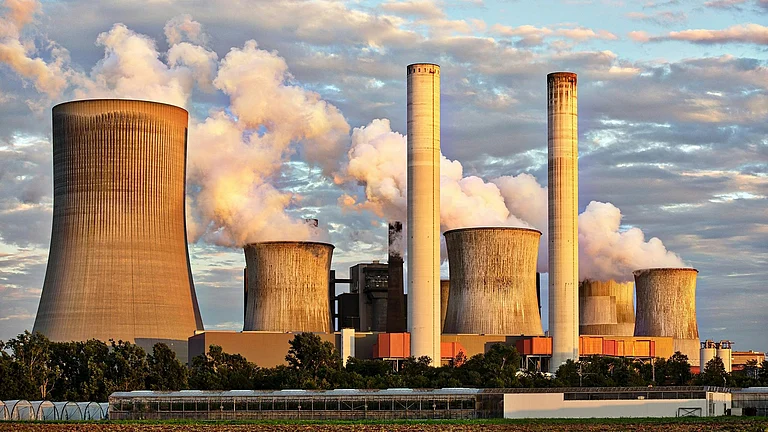
Boosting nuclear power is also needed in the country to replace coal-based electricity generation, which serves as a base load.
Sitharaman proposed to extend the existing basic customs duty exemption on imports of goods required for Nuclear Power Projects till the year 2035 and expand it for all nuclear plants irrespective of their capacity.

Advertisement
About the biogas blended CNG (compressed natural gas), she said, “I propose to exclude the entire value of biogas while calculating the Central Excise duty payable on biogas blended CNG.” There has been an industry demand for this exemption to boost the bio-energy sector in the country.
Indian Biogas Association (IBA) Chairman Gaurav Kedia said this progressive measure shall open a wider market for bio-CNG/CBG, thus bolstering efforts towards reduced trade deficit.
It is a strong signal of the government's commitment to clean energy, circular economy principles, and the promotion of domestically produced renewable fuels, he said.

Advertisement
He is of the view that the exemption will improve the cost competitiveness of compressed biogas, encourage greater blending with CNG, and accelerate investments across the biogas value chain.
It will also support farmers, waste aggregators, technology providers, and project developers by strengthening demand and improving project viability, he stated.
The IBA believes it is an important step towards the nation's long-term goal of a sustainable, self-reliant energy ecosystem.