Adani Group capex is boosting order books for engineering and infrastructure companies.
Hitachi Energy, BHEL, PSP Projects emerge as key beneficiaries of Adani's expansion.
₹2.1 lakh crore capex plan is creating long-term growth opportunities for vendors
Adani Group's record infrastructure spending is creating a new set of stock market winners beyond its own listed companies, with contractors, engineering firms and power technology suppliers emerging as key beneficiaries of the conglomerate's aggressive capital expenditure programme.
The group deployed ₹1.53 lakh crore in capital expenditure during FY26, the highest annual investment by any Indian corporate, with nearly 80% of the spending flowing through vendors and partners. It plans to raise the pace further by investing about ₹2.1 lakh crore in FY27, while targeting nearly $125 billion of investments across businesses over the next five years, according to an Economic Times report.

1 September 2026
Get the latest issue of Outlook Business

Investors have already started rewarding companies expected to benefit from this spending. Shares of Hitachi Energy India have surged 197% over the past two years, while Cemindia Projects and GE Vernova T&D India have rallied 152% and 147%, respectively. BHEL has gained 79% over the past year, while PSP Projects is up 39%.


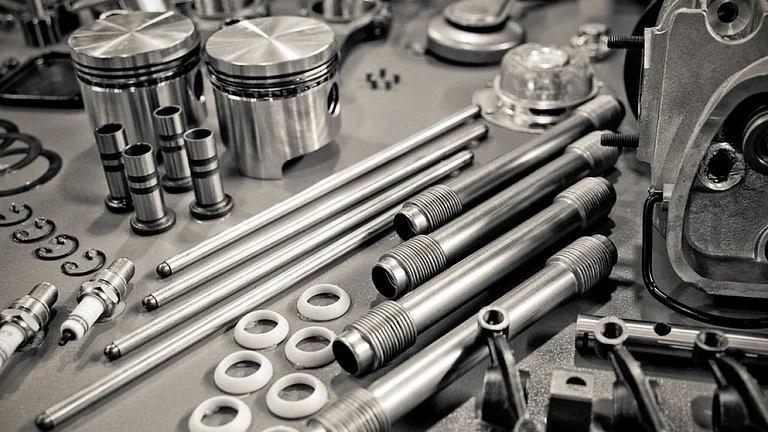


Vendors Becoming Strategic Partners
The Adani Group is also redefining its relationship with suppliers. Group CFO Jugeshinder "Robbie" Singh recently told analysts that the scale of the company's investment programme requires greater reliance on specialised external companies rather than developing every capability in-house.
Advertisement
According to Singh, Adani now views many of its suppliers as "strategic partners", aiming to help them evolve into globally competitive businesses capable of executing large-scale infrastructure projects.
The approach mirrors global manufacturing ecosystems, where a central company finances and manages large projects while specialist firms provide engineering, construction and technology expertise.
Construction Companies See Order Books Expand
Among the biggest beneficiaries is PSP Projects, in which Adani acquired a 34.41% stake last year.
The construction company's order book jumped 85% to ₹13,447 crore in FY26 from ₹7,266 crore a year earlier. Adani-related projects now account for nearly 67% of its order book, compared with about 25% a year ago. New order inflows more than tripled to ₹10,925 crore, while revenue increased 25% to ₹3,149 crore.
Advertisement
However, the surge in business has yet to fully translate into profitability. EBITDA remained largely flat at ₹180 crore, while return on capital employed declined to 7% from 10% in FY25. The company's working capital cycle also lengthened significantly, highlighting the execution challenges associated with rapid expansion.
Another major beneficiary is Cemindia Projects, formerly ITD Cementation, after an Adani promoter entity acquired a controlling stake.
The company's order book grew 34% to ₹24,545 crore in FY26, while fresh orders more than doubled to ₹14,821 crore. Revenue rose to ₹10,061 crore, and EBITDA climbed 30% to ₹1,199 crore. Unlike PSP Projects, Cemindia also improved capital efficiency, with return on capital employed increasing to 34%.
CARE Ratings estimates Adani Group projects could eventually account for nearly half of Cemindia's order book, compared with about 14% currently.
Power Equipment Makers Also Benefit
Adani's spending is creating opportunities well beyond construction.
Adani Energy Solutions has strengthened its funding position through multiple capital raises, including an ₹8,373 crore QIP, Japanese green financing worth $750 million, Apollo-backed notes worth $500 million, and a fresh ₹10,000 crore fundraising programme approved for FY27.
The stronger balance sheet provides greater certainty for suppliers involved in large transmission projects.
One of the biggest beneficiaries has been Hitachi Energy India, whose HVDC technology is being deployed in Adani Energy Solutions' 6,000 MW Bhadla-Fatehpur transmission corridor.
Hitachi Energy reported ₹18,457 crore of fresh orders in FY26, with nearly half estimated to have come from Adani projects. Its order book expanded to ₹29,555 crore, while revenue rose 28% and EBITDA more than doubled.
BHEL has also benefited, generating nearly ₹6,673 crore of revenue from Adani Group projects during FY26, equivalent to around one-fifth of its annual sales. Its overall order book increased to ₹2.39 lakh crore, while EBITDA jumped 83%.
Similarly, GE Vernova T&D India secured the Khavda-South Olpad HVDC transmission project from Adani Energy Solutions. Brokerages estimate Adani-linked contracts contributed between ₹8,000 crore and ₹10,000 crore of the company's FY26 order inflows.
Opportunities Alongside Risks
The investment opportunity extends beyond immediate order wins. Adani Power plans to invest more than ₹2 lakh crore to expand generation capacity to 45 GW by FY32, creating potential demand for boilers, turbines, generators and emission-control systems across the domestic manufacturing ecosystem.
However, analysts caution that larger order books do not automatically translate into higher shareholder returns. Companies with heavy exposure to a single customer face concentration risks, while rapid expansion can stretch working capital and pressure profitability, as seen in PSP Projects' recent performance.
Still, with Adani targeting one of the world's largest private infrastructure investment programmes, the group's vendor ecosystem is increasingly emerging as an indirect way for investors to participate in India's infrastructure buildout. As projects move from order books to execution, the focus will shift from securing contracts to converting those opportunities into sustainable earnings and cash flows.