
India faces energy security stress as Russia and Gulf supplies tighten.
West Asia provides 48.7% crude, 68.4% LNG and 91% LPG imports.
LPG prices rise to ₹913 as crude swings from $71 to $117.
Experts urge export curbs and long-term Russian crude contracts.
India seems to be entering a phase that may prove to be one of the hardest testing periods for its energy security in a generation. As the West Asia conflict entered the second week, geopolitical pressure was bearing down simultaneously on its two dominant crude suppliers, Russia and West Asia.
The concentration of risk is stark. From these two suppliers, India purchases over 80% of its crude needs. In 2025, West Asia accounted for 48.7% of India's crude oil imports, 68.4% of its LNG imports and more than 91% of its LPG. Add Russia's 35% share of crude supply, and the arithmetic leaves remarkably little room for manoeuvre when either source comes under strain.

1 September 2026
Get the latest issue of Outlook Business

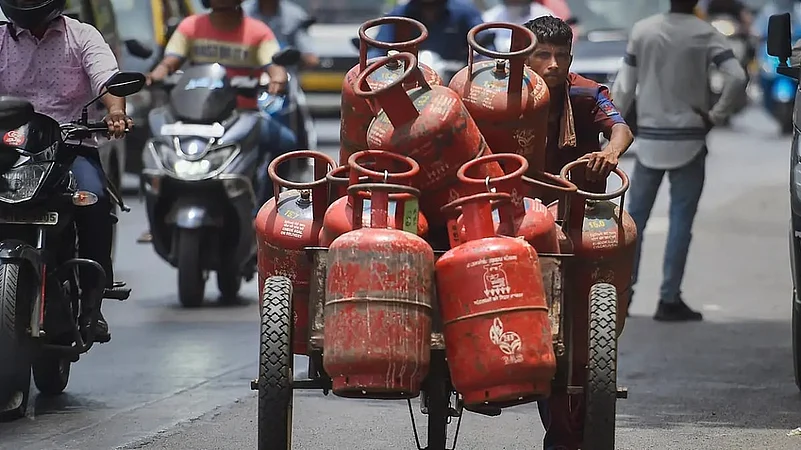
Nevertheless, the strain is already visible. Household LPG cylinder prices in Delhi have risen to around ₹913 following a hike of ₹60 per 14.2-kg cylinder, with commercial cylinders up by roughly ₹115.
Shortages of commercial LPG have been reported in Mumbai and Bengaluru, where restaurants and hotels have begun warning of potential shutdowns. Global crude prices swung from roughly $71 per barrel just before the Iran conflict erupted on 27th February to a peak of around $117 on 9th March before settling near $90 — a trajectory that is squeezing India's import bill, pressing on the rupee and feeding domestic inflation.
Advertisement
Way Ahead
Ajay Srivastava, founder at New Delhi-based think tank Global Trade Research Initiative (GTRI), suggested that India has a lesson to learn from the other Asian economies. China instructed its state refiners to halt new diesel and gasoline export contracts and cancel existing shipments to protect domestic stocks. Thailand suspended petroleum exports entirely. Singapore's Petrochemical Corporation declared force majeure and cut production after feedstock disruptions. India has the national energy security provisions to do the same — redirecting refinery output towards domestic markets would build fuel reserves, cushion inflation and protect supply for transport, agriculture and industry if Gulf disruptions deepen.
Advertisement
"The government can invoke national energy security provisions to prioritise domestic fuel availability. Redirecting refinery output toward domestic markets would help build fuel reserves, cushion inflation and ensure uninterrupted supply for transport, agriculture and industry if disruptions in Gulf oil flows intensify," Srivastava said.
GTRI also believes that India should lock long-term crude supply contracts with Russia. Discounted Russian crude has been a genuine stabiliser for Indian refiners since the Ukraine conflict began. It said that the alternative sources are less attractive than they might appear: the US, despite an 82% rise in exports to India worth $9.8bn in 2025, runs a net crude deficit and has limited spare export capacity.
West African and Latin American barrels carry higher freight costs and longer transit times. Russia, by contrast, offers stable volumes, predictable pricing and a meaningful buffer against global volatility.
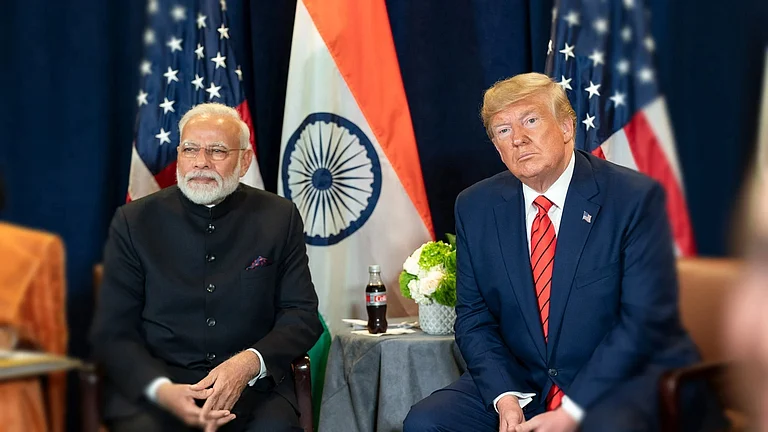


The last route, and most politically charged, as GTRI put it, is for India to resist Washington's attempts to govern its bilateral energy trade with Russia. On 5th March, the US Treasury issued a one-month waiver permitting India to purchase Russian oil cargoes already stranded at sea — but the volumes are small and offer little substantive relief to Indian refiners.
"More fundamentally, India and Russia are sovereign states, and their bilateral energy trade does not fall under U.S. jurisdiction. Attempts by Washington to authorise or restrict such trade raise serious questions about extraterritorial control over commerce between sovereign nations," he noted.