




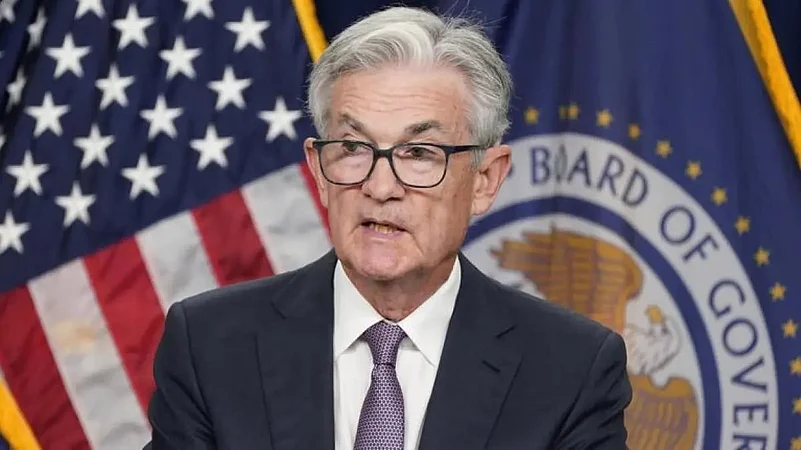

Global central banks rally behind Powell, warning against political interference in the Federal Reserve.
Former Federal Reserve chairs join pushback, calling the move an unprecedented threat to independence.
Markets react sharply, with gold and silver surging and the dollar weakening.
In a rare show of unity, the heads of ten major central banks, including the Bank for International Settlements (BIS), have expressed solidarity with Federal Reserve Chair Jerome Powell amid an unprecedented pressure campaign by US President Donald Trump’s administration against the Federal Reserve.
Major global central banks, including the European Central Bank (ECB) and the Bank of England (BoE), said they “stand in full solidarity” with the Federal Reserve and Powell after the Trump administration opened a criminal indictment against the central bank chief. Trump later released a statement saying he did not “know anything” about the probe.

1 September 2026
Get the latest issue of Outlook Business

“Chair Powell has served with integrity, focused on his mandate and with an unwavering commitment to the public interest,” central bankers from institutions including the Bank of Canada, the Bank of England and the European Central Bank, along with other senior monetary authorities, said in a rare joint statement seen by the BBC.
According to a report by the Financial Times, all living former Federal Reserve chairs also closed ranks and pushed back against the Department of Justice’s criminal indictment of Powell. Former Federal Reserve chiefs Janet Yellen, Ben Bernanke and Alan Greenspan signed a statement describing the Trump administration’s actions as an “unprecedented attempt” to undermine the Federal Reserve’s independence.
Advertisement
They warned that the administration was running the US like an “emerging market.” “This is how monetary policy is made in emerging markets with weak institutions, with highly negative consequences for inflation,” the statement said, adding that such practices “have no place in the United States, whose greatest strength is the rule of law, which is at the foundation of our economic success.”
Persistent Pressure on Powell
The sharp reaction from senior central bankers around the world follows prosecutors opening a criminal indictment late Sunday into Powell over a $2.5 billion renovation of the Federal Reserve’s headquarters in Washington.
Responding to the developments, Powell said that “the threat of criminal charges is a consequence of the Federal Reserve setting interest rates based on our best assessment of what will serve the public, rather than following the preferences of the president.”
Advertisement
Financial markets reacted sharply. Precious metals and other safe-haven assets surged, with gold rising as much as 2.7% and silver jumping 7.8%, while the dollar index, which measures the US currency against a basket of six major currencies, fell 0.3%, according to the Financial Times.
In its last three meetings, the Federal Open Market Committee has cut the benchmark Federal Reserve funds target range by a cumulative 25 basis points, bringing it to a three-year low of 3.50%–3.75%. Despite this, Trump has persistently pressured the Federal Reserve to slash rates to as low as 1%, repeatedly attacking Powell and saying he would “love” to fire him.
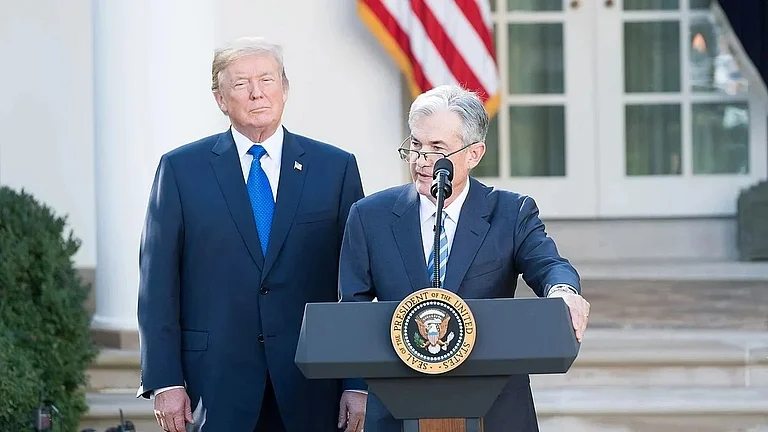
Central Bank Independence at Risk
Independence from government influence is a core principle of modern central banking and is essential for maintaining financial stability and public trust. Central bankers and policymakers have warned that political interference in the Federal Reserve could weaken confidence in one of its dual mandates—particularly its commitment to controlling inflation—with ripple effects across the global economy.
Higher inflation and increased financial market volatility could make it more difficult for other central banks to manage interest rates and price stability. “It is therefore critical to preserve that independence, with full respect for the rule of law and democratic accountability,” the group of central bankers said.









