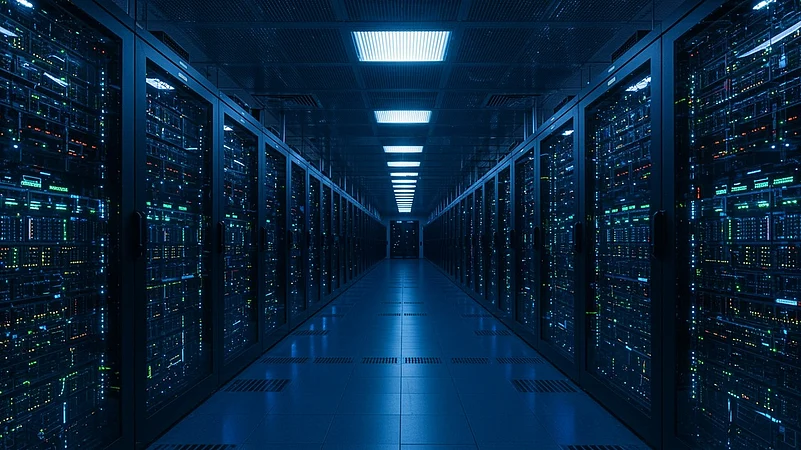

Global protests against water-intensive data centres are growing, as communities worry that cooling large AI facilities could strain local water supplies already under pressure.
India’s rapidly expanding data-centre industry, driven by AI and major investments from global tech firms, could intensify water stress in cities that already face shortages.
Balancing digital growth with environmental sustainability will be crucial, requiring policies on energy efficiency, water usage and responsible infrastructure development.
In early February 2026, more than 50 people gathered in Johor, Malaysia to protest against a proposed data centre project, citing daily disruptions from construction dust and raising concerns about the long-term strain such facilities could place on local water resources.
Residents worry that data centres require large volumes of water for cooling servers. If the facility draws water from the same municipal supply used by nearby communities, it could reduce the amount of water available for homes, especially the dry period.
The incident reflects the growing unease not only in Malaysia but in different parts of the world where a rapid influx of data center developments is putting increasing pressure on water supplies and local resources. The fears are backed by data from the likes of Environmental and Energy Study Institute (EESI) which shows that large data centers can consume up to 5 million gallons of water per day, roughly equivalent to the daily water needs of a town with 10,000 to 50,000 residents.

1 September 2026
Get the latest issue of Outlook Business

Advertisement
India, with its ambitious AI growth targets and a significant share of the world's water-stressed cities, sits at the sharpest end of this contradiction. In an attempt to attract cloud infrastructure investments, the government has introduced a 20-year tax holiday until 2047 for foreign cloud service providers that use India-based data centers to serve global customers. However, even as all this goes on, a critical question arises: can Indian cities handle the massive water requirements of hyperscale data centers when many are already facing severe water stress?
Datacenters’ Drinking Problem
Advertisement
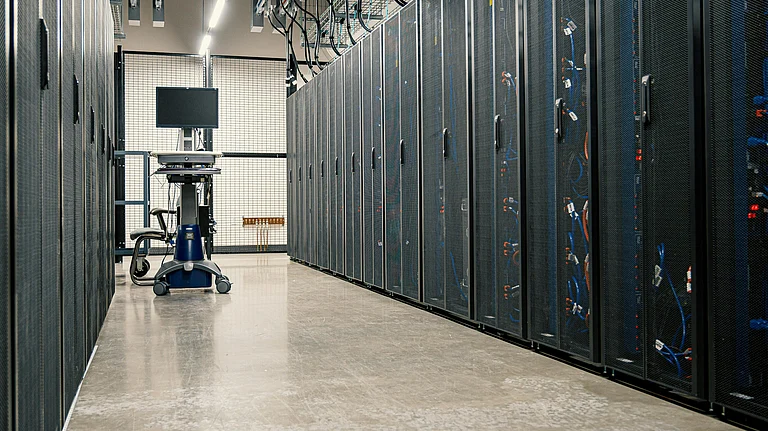
Data Centers have a thirst for water, and their rapid expansion threatens freshwater supplies. They require significant cooling as the hardware running inside them consumes significant energy and generates substantial heat. This heat has to be dissipated through various technologies, broadly classifiable into evaporative cooling and air-cooled chillers. Unlike air-based cooling, which is similar to a home AC, evaporative cooling speeds up the cooling by spraying a steady stream of water over the cooling coils, but results in the loss of the sprayed water to evaporation. They are used in centralized AC systems such as those found in offices and shopping complexes.
The problem has compounded with the increasing scale of the data centres. Earlier, they were relatively small, typically ranging between 2 MW and 5 MW of capacity. But, with the rise of AI and high-performance computing, capacities have expanded by a thousand times or more. “The earlier generation of servers relied on CPU chips, which typically consumed around 300–500 watts. Today, GPU-based systems can consume 2 kilowatts or more per chip, increasing cooling requirements by 10–20 times,” says energy-market analyst Akkenaguntla Karthik.

According to researchers at the University of California, Riverside, generating a 100-word AI response resulted in the evaporation of around one bottle of water (around 519 milliliters) from the cooling towers. While this may appear minimal at first glance, the impact multiplies significantly because users worldwide interact with AI systems such as ChatGPT billions of times every day.
As hyperscale facilities expand rapidly, often in regions already facing water stress or environmental pressures, they are also sparking off protests, legal challenges and public debates over whether such infrastructure places an unfair burden on local resources.
In Santiago, Chile, environmental groups opposed a new facility planned by Google, arguing that the project would draw heavily on groundwater during a prolonged drought. The concerns were serious enough that the project’s environmental approval was reconsidered and the company was asked to revise its cooling plans.
Similar resistance has been seen in parts of the Netherlands, where residents and farmers in Hollands Kroon raised concerns over the resource footprint of facilities operated by Microsoft, including their water consumption and energy demand.

The India Scenario
Closer home, India’s rapid adoption of artificial intelligence (AI) is driving a sharp expansion of its data centre industry. These data centres house servers, networking systems and IT infrastructure that support everything from AI tools like ChatGPT to streaming platforms and connected technologies.
Investment in the sector has also accelerated significantly. In 2025, Google announced a $15 billion investment to build an AI-focused data centre in Andhra Pradesh, marking one of its largest investments in the country. Other global technology companies, including Amazon Web Services and Meta, along with domestic conglomerates such as Reliance Industries, are also investing heavily in India’s growing data centre ecosystem. The surge in demand has even attracted participation from real-estate developers looking to enter the infrastructure segment.
According to KPMG, the sector is set for rapid expansion, with India’s total data centre capacity expected to reach over 8 GW by 2030 from the current level of 1 GW. Industry estimates suggest that $25–30 billion could be invested in expanding capacity by 2030, underscoring the scale of growth anticipated in the coming years.
However, the same problems that afflict data centres across the globe also threaten such projects in India, with even greater urgency. Indian data centers have traditionally used air-cooled chillers or water-based cooling systems. Air-cooled chillers do not require water, but they are relatively expensive to operate.
“Water-based cooling systems, on the other hand, are cheaper from an operational standpoint, which is why they became the preferred option when the data centre industry first began expanding,” says Narendra Sen, founder of NeevCloud, an AI cloud-service provider.
“India already faces water scarcity, and there are legitimate concerns about using water for machines when many communities struggle with water availability,” says Sen.

The Development Imperative
However, there is also a broader economic dimension. Data centers are the factories of the digital economy. They hold critical digital infrastructure. Vast amounts of data are stored and processed within these facilities, making them essential to modern economies. “Disruptions can have widespread consequences, as seen in incidents such as outages at cloud facilities like those operated by Amazon Web Services in Bahrain, where service disruptions affected multiple digital services,” Sen added.
They also require a stable regulatory environment and significant long-term investment, often involving billions of dollars and infrastructure designed to operate for decades. If community protests or regulatory conflicts lead to facility shutdowns, it could seriously damage investor confidence.
“For investors, stability and long-term operational certainty are critical. If a data centre were forced to shut down due to public opposition or sustainability concerns, it could discourage future investment in the sector,” says Sen.
Policy intervention has a critical role to play in accelerating the transition toward more sustainable data centre operations. The government needs to introduce efficiency benchmarks and regulatory frameworks to guide the sector’s growth.
For example, China has already implemented guidelines requiring data centers to maintain a Power Usage Effectiveness (PUE) below 1.3. In India, similar ideas are beginning to emerge within initiatives linked to the country’s expanding AI ecosystem, where facilities achieving PUE levels of 1.3 or lower may receive additional incentives or recognition.
Beyond energy efficiency, “governments may also need to establish regulations around water usage in data centers, similar to environmental disclosure requirements in other industries, mandatory reporting or limiting water consumption could help ensure that the rapid expansion of digital infrastructure does not create unintended environmental pressures, particularly in water-stressed regions,” said Narendra.

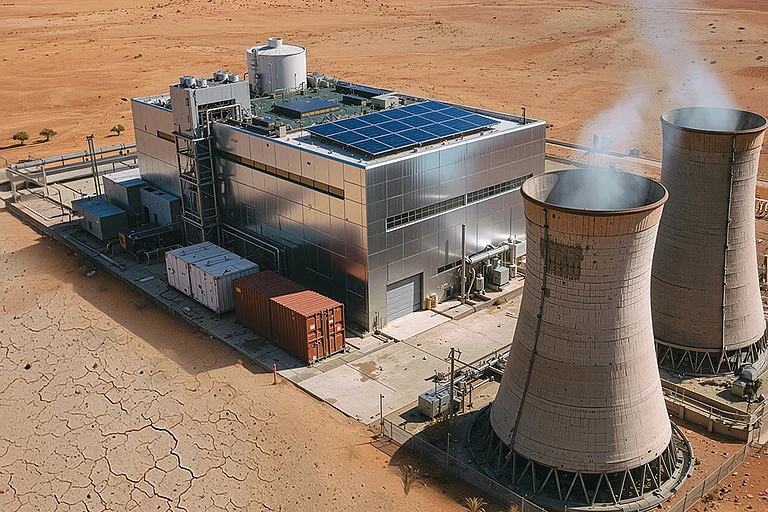


As the data centre sector continues to expand in India, balancing technological growth, environmental sustainability and investment security will be essential for its long-term success.