

Supreme Court redraws GIB conservation zones, replacing broad curbs with science-led core habitats in Rajasthan and Gujarat.
Renewable and transmission projects gain clarity, unlocking most desert areas and adopting a differentiated approach to powerline undergrounding.
Ruling signals pragmatic coexistence, treating renewable energy as a national priority alongside targeted conservation measures.
Across the sun-baked deserts of Rajasthan and Gujarat, rows of solar panels shimmer under relentless skies, while wind turbines trace slow arcs against the horizon. These landscapes, often described as empty or inhospitable, have quietly become the backbone of India’s clean energy transition. They are where some of the country’s most ambitious renewable energy projects have taken shape — and where the next phase of India’s energy security will be decided.
In a major boost to India’s renewable energy ambitions, long-stalled renewable energy projects totalling nearly 14,000 MW have finally been cleared, giving them a much-needed lifeline. The move is being seen as a decisive push to revive critical infrastructure and accelerate the country’s clean energy transition.

1 September 2026
Get the latest issue of Outlook Business

It is in this context that the Supreme Court’s judgement of December 19 2025 on the Great Indian Bustard (GIB) assumes significance well beyond wildlife protection. Rather than being a narrow environmental ruling, it marks a critical recalibration of how India balances biodiversity concerns with the urgent need to scale renewable energy generation and transmission infrastructure.
Advertisement
For years, the absence of clear spatial definitions around GIB habitats had cast a long shadow over renewable energy development in these regions. Developers faced the risk of sweeping restrictions across large tracts of land critical for solar parks, wind farms and associated transmission corridors. The Court’s latest ruling decisively addresses this uncertainty by moving away from broad, open-ended curbs to a sharply delineated, science-led framework.
With much deliberation, the expert committee formed by the Supreme Court submitted detailed reports for Rajasthan and Gujarat. The committee gave detailed and reasoned recommendations regarding the determination of core habitat areas, setting up of a powerline corridor and re-routing of existing powerlines.
Advertisement
The Ministry of New and Renewable Energy, Ministry of Power, and Ministry of Environment, Forest and Climate Change played a constructive and balancing role by fully endorsing the recommendations of the expert committee. Their unified stand reflected strong consensus and support for the protection of biodiversity vis-à-vis energy needs before the Supreme Court.
The recommendations have been substantially accepted by the Supreme Court. Acting on the recommendations of the expert committee, the Court has confined the highest level of protection to clearly identified core habitats in Rajasthan and Gujarat. These limited zones will be treated as no-go areas for certain forms of infrastructure. Crucially, by narrowing the scope of restrictions to well-defined conservation priorities, the judgement unlocks the vast majority of desert landscapes for continued renewable energy deployment. For the clean energy sector, this clarity is both timely and consequential.
The Court has explicitly acknowledged that the same geographies that support the bustard are indispensable to India’s energy transition. Solar and wind capacity have scaled rapidly in these regions because of their natural advantages, and the judgement reflects an understanding that India’s climate commitments cannot be met without continued project development here. Rather than framing renewables as a competing interest, the ruling situates them as a national imperative that must be enabled through better planning and regulation.
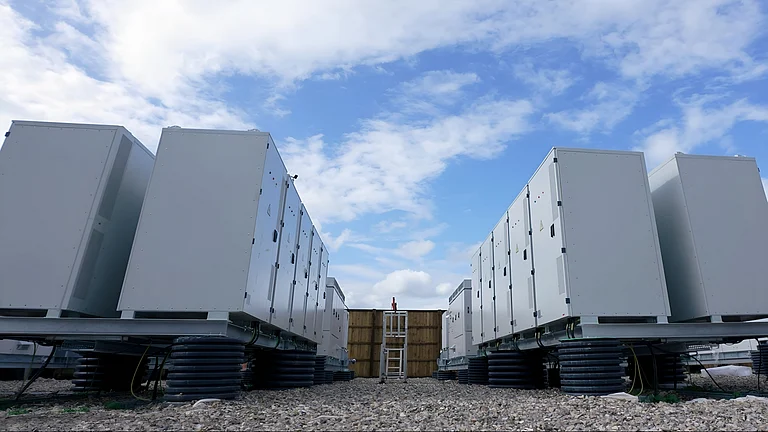
This pragmatic balance is most evident in the Court’s treatment of power transmission lines — a critical enabler of renewable energy growth. Recognising that evacuation infrastructure is as vital as generation capacity, the judgement rejects the notion of blanket undergrounding of all overhead lines. The Court accepts industry concerns that undergrounding high-voltage transmission lines is often technically unviable, prohibitively expensive and potentially disruptive to grid stability.
Instead, the ruling mandates a differentiated, voltage-specific approach. Select lower-voltage lines in sensitive stretches are to be undergrounded, while higher-capacity transmission lines are to be rerouted or mitigated within a defined two-year timeframe. The optimisation of transmission corridors — encouraging shared routes to minimise land fragmentation — further strengthens the feasibility of large-scale renewable integration into the national grid.

Equally important is the Court’s stance on renewable energy projects themselves. While new wind and large solar installations are restricted within narrowly defined core habitats, the judgement places no broad-based embargo on renewable development. Expansion outside these limited zones remains firmly permissible, reinforcing the message that clean energy growth will continue at scale, provided projects are responsibly sited.
The ruling also adopts a measured position on mitigation technologies such as bird flight diverters. Rather than mandating their universal deployment, the Court has called for further scientific validation of their effectiveness. This evidence-driven approach aligns with the sector’s long-standing view that mitigation must be practical, targeted and proportionate, rather than symbolic.
Beyond immediate project considerations, the judgement signals a shift towards shared responsibility. Renewable energy developers are encouraged to contribute to conservation outcomes, not as a constraint on growth, but as part of a broader sustainability framework. This aligns with the evolving understanding of Corporate Environmental Responsibility, particularly for infrastructure-led industries operating at scale.
Taken as a whole, the Supreme Court’s judgement marks a reset in the renewable energy–environment discourse. By replacing ambiguity with defined boundaries, acknowledging the technical realities of transmission infrastructure, and reinforcing the centrality of renewables to India’s future, the ruling provides the clean energy sector with long-awaited confidence.
For India’s energy transition, the message is clear: renewable energy and grid expansion will move forward decisively, guided by precision rather than paralysis. Conservation considerations remain important, but they are no longer allowed to impede the momentum of a sector that is vital to economic growth, climate resilience and national interest.
The author is a member in Governing Council, Sustainable Projects Developers Association (SPDA).
(Disclaimer: This is an authored article, and the views expressed are solely those of the contributors and do not reflect the opinions of Outlook Business.)