Sponsored Content
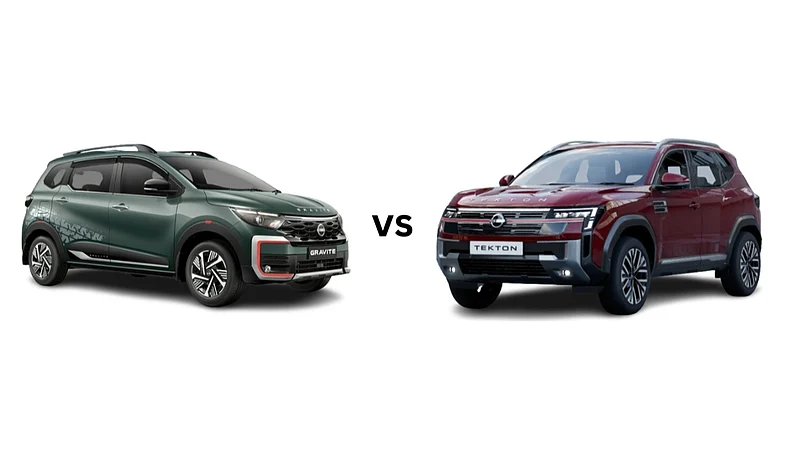
The Renault Duster and the Nissan Tekton may share the same platform and several engineering fundamentals, but they have been developed with very different identities. Rather than offering identical experiences with different badges, each SUV has its own approach to design, comfort, technology, and driving appeal.
Understanding these differences can help buyers choose the SUV that best matches their expectations.
A Common Foundation
Sharing a platform allows manufacturers to benefit from common engineering, structural strength, suspension architecture, and powertrain options.
1 September 2026
Get the latest issue of Outlook Business

As a result, both the Renault Duster and Nissan Tekton offer similar dimensions, turbo-petrol engine choices, generous cabin space, and practical packaging.
However, the similarities largely end there.
Renault Duster: Built for Adventure
The new Renault Duster continues the character that made the nameplate popular.
Its design emphasises ruggedness with a bold grille carrying Duster lettering, muscular wheel arches, protective body cladding, 212 mm of ground clearance, and approach and departure angles designed to inspire confidence on challenging roads.
Inside, the focus remains on practicality and comfort with a driver-oriented cockpit, ventilated front seats, leatherette upholstery, panoramic sunroof, and Google-built-in infotainment.
The overall personality is that of an SUV ready for both city roads and weekend adventures.
Nissan Tekton: A More Premium Interpretation
While sharing the same platform, the Nissan Tekton adopts a noticeably different direction.
Advertisement
Inspired by the Nissan Patrol, it features a full-width chrome grille, Signature C-shaped LED lighting, premium alloy wheels, and a more refined exterior design.
Inside, the Tekton focuses on luxury with a tri-tone cabin, premium leatherette upholstery, powered and ventilated seats, ambient lighting, Arkamys 3D surround sound, and high-quality interior finishes inspired by Japanese craftsmanship.
Its personality is centred on sophistication and everyday refinement.
Technology with Different Priorities
Both SUVs are equipped with modern connected technology.
The Renault Duster features the openR Link infotainment system with Google built in, Google Maps, Google Assistant, wireless smartphone connectivity, and My Renault connected services.
Advertisement
The Nissan Tekton also offers Google built-in but expands the experience with the Tek-Link HD infotainment system, OTA software updates, Google Play integration, and MyNISSAN connected services offering more than 55 connected features.
While both provide seamless connectivity, each reflects its brand's own digital ecosystem.
Similar Performance, Different Driving Character
Both SUVs offer turbo-petrol engine options paired with manual and automatic transmissions.
The Renault Duster offers the Turbo TCe 100 and Turbo TCe 160 engines, while the Nissan Tekton uses the Turbo T160 and Turbo T280 naming for comparable powertrains.
Even with similar mechanical foundations, suspension tuning, steering calibration, and feature packaging contribute to each SUV's unique driving personality.
Safety Remains a Shared Strength
Both models place strong emphasis on occupant protection.
The Renault Duster comes with 17 advanced driver assistance systems (ADAS), adaptive cruise control, active emergency braking, blind-spot warning, lane-keep assist, and a 360° camera.
The Nissan Tekton complements this with 17+ ADAS features, six airbags as standard, a 5-star Bharat NCAP safety rating, a 3D Around View Monitor, and advanced parking assistance systems.
Both provide comprehensive safety packages suited to modern SUV buyers.
Choosing the Personality That Fits You
Although the two SUVs share their engineering roots, they appeal to different preferences.
The Renault Duster is likely to attract buyers who appreciate rugged styling, outdoor capability, and a classic SUV character.
The Nissan Tekton is better suited to buyers looking for premium cabin design, extensive connected technology, and a more luxurious ownership experience.
Neither approach is inherently better—it simply depends on what matters most to the buyer.
Compare Before You Decide
When two SUVs share the same platform but offer different personalities, comparing them carefully becomes even more important.
Platforms like ACKO Drive allow buyers to compare specifications, explore features, understand variant differences, check prices, and evaluate multiple SUVs side by side before making a purchase decision.
Final Thoughts
The Renault Duster and Nissan Tekton demonstrate how a shared platform can produce two distinctly different SUVs.
The Duster carries forward its adventure-ready identity, while the Tekton embraces a more premium and technology-focused direction. For buyers, the decision is less about the platform they share and more about choosing the personality that best complements their lifestyle and driving preferences.
Disclaimer: This is a sponsored article. All possible measures have been taken to ensure accuracy, reliability, timeliness and authenticity of the information; however OutlookBusiness.com does not take any liability for the same. Using of any information provided in the article is solely at the viewers’ discretion.