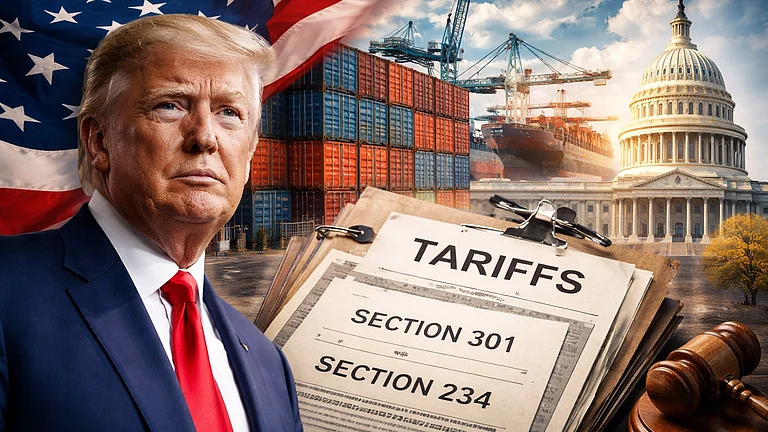
Once again, a ruling from the US Supreme Court on February 20 has injected fresh turbulence into global markets. The 6-3 decision struck down large swathes of President Donald Trump’s sweeping “reciprocal” tariffs, finding he lacked authority under the International Emergency Economic Powers Act to impose broad import duties without congressional backing. The Court’s ruling reaffirmed that tariff power resides with Congress, not the executive, and marks a rare legal rebuke to a cornerstone of Trump’s second-term economic strategy.
The initial market response was mixed. European stocks rallied and Asia-Pacific indices climbed on hopes of lower trade frictions, while safe-haven assets such as gold enjoyed a late bid. But that calm was short-lived.
Swiftly pivoting, the White House announced it would deploy alternative legal avenues under the 1974 Trade Act to maintain tariff pressure, unveiling a flat-rate global surcharge – initially 10 per cent and soon raised to 15 per cent – for up to 150 days unless extended by Congress. Trump has even threatened “more powerful and obnoxious” levies and warned trading partners against “playing games” with US economic interests.

3 February 2026
Get the latest issue of Outlook Business

The result? More volatility. The Dow Jones slid 822 points on Monday, European and US equities fell, and market participants seem caught between relief over the judiciary’s check on executive overreach and concern over the unpredictability of the unfolding trade policy.
In that uncertainty lies the story for the weeks ahead: will Congress step in to clarify the scope of tariff authority, will trading partners recalibrate their engagement with Washington, or will the US continue to rewrite its own trade playbook on the fly? The answers are far from settled yet.