Jharkhand can play a pivotal role in India's net-zero transition by repurposing about 45,000 hectare of mining land, leveraging legacy energy assets and scaling low-carbon industrial pathways, according to a new study.
The study by Delhi-based think tank International Forum for Environment, Sustainability and Technology (iFOREST) presented a comprehensive assessment of the state’s transition prospects across coal mining and power, steel, automobiles, and other key industries.
"Over 11,000 hectares of land are available immediately from closed and non-operational coal mines. Overall, about 45,000 ha of land can be planned for repurposing in the next 5-10 years, providing a major opportunity to repurpose mining land for green investments such as renewable energy, green manufacturing, logistics, and allied activities, supporting economic diversification and job creation in coal-dependent districts," it said.

1 September 2026
Get the latest issue of Outlook Business

With a cumulative District Mineral Foundation (DMF) accrual of ₹16,977 crore, Jharkhand has a major opportunity to finance just transition-aligned investments in coal districts in the initial phases, including livelihood diversification, skilling, and other welfare activities, it added.
The study highlighted the state's strategic importance in India's low-carbon development pathway, besides emphasising coal transition as a major opportunity for green investment and employment generation if planned early.
"As nearly 60% of mines approach transition due to exhaustion of mineable reserves and declining economic viability, systematic repurposing of land associated with these mines over the next decade could unlock large additional land parcels, particularly in districts such as Dhanbad, Bokaro and Ramgarh," it said.
Advertisement
The study said Jharkhand also has an estimated 77 gw of renewable energy potential and recommended environmentally responsible expansion using repurposed mining land, industrial wastelands and waterbodies for floating solar, supported by public-sector utilities such as the DVC in legacy coal regions.
The steel sector and its value chain represent another major opportunity, it said, adding that with nearly 12% of India's crude steel capacity, Jharkhand is well placed to lead in green steel and green hydrogen adoption.
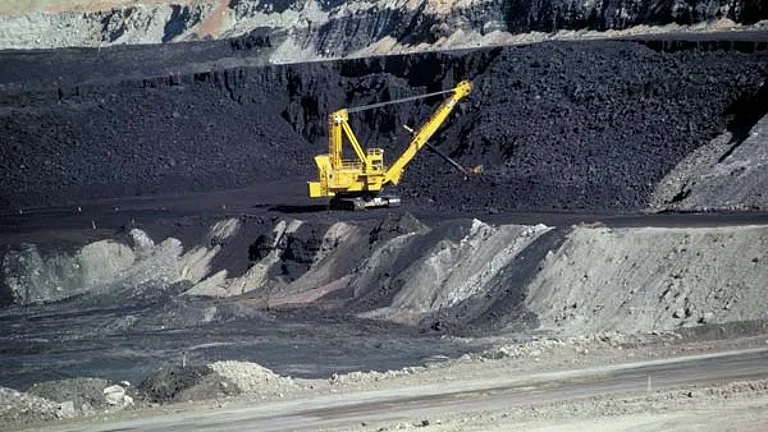
A phased shift to low-carbon steel pathways, anchored by companies like Tata Steel and SAIL, can enable early pilots, scale up green hydrogen and create jobs across the value chain, it said.
Advertisement
By strengthening the Jamshedpur-Adityapur auto cluster, Jharkhand can also emerge as a leader in the EV transition in eastern India, the study said.
"By repurposing land and energy assets, the state can attract green investments and generate employment in transition districts, so that local communities can benefit from this shift. The state is already creating an enabling environment to boost industry investments through simplified permitting processes," said Srestha Banerjee, the director of Just Transition and Climate Change at iFOREST.
State Forest and Environment Secretary Aboobacker Siddique said land is a critical resource for any economic development.


"For Jharkhand, it is an important opportunity to repurpose and reuse mining land to support this. Besides supporting a green growth, we will need to mainstream climate and just transition considerations in various economic sectors and also allocate state budgets accordingly," he said.
Central Coalfields Ltd CMD Nilendu Kumar Singh said mining isn't going to stop in the next 30-40 years.
"Therefore, we have time to plan. But this planning needs to create the right alternatives by repurposing land, based on local opportunities, knowledge and skills, so that people can shift naturally. For the coal industry, it is also important to use clean coal and move to green mining and transportation practices to reduce emissions," he said.
State Labour Secretary Jitendra Kumar Singh said energy transition is actually a livelihood transition, and Jharkhand is taking measures through ITIs and the skill development society.
The study identifies eight priority districts, Dhanbad, Bokaro, Ramgarh, Chatra, Hazaribagh, Saraikela-Kharsawan, East Singhbhum and West Singhbhum, as transition hotspots over the next decade.
"Around 32% of Jharkhand’s revenue comes from fossil fuels, so the impact will be significant," it said.
State Taskforce on Sustainable Just Transition chairperson Ajay Kumar Rastogi said the key challenge is in transitioning informal workers and the wider ecosystem.
"This requires education and alternative livelihoods," he said.