

Nifty falls over 2%, Sensex drops 3%+, marking steepest declines in months amid geopolitical shock.
Crude jumps above $82 as Iran confirms closure of Strait of Hormuz, raising supply-chain fears.
Rupee hits one-month low; FPIs sell ₹7,500 crore as investors shift to safe-haven assets like gold.
India’s benchmark indices, the Nifty 50 and the Sensex, slumped on Monday following the escalation of geopolitical tensions in West Asia over the weekend. The Nifty 50 fell 2.06% to 24,659.25, the sharpest intraday drop since February 1. Meanwhile, the BSE Sensex dropped 3.38% to 78,543.73, the steepest fall in nearly a year.
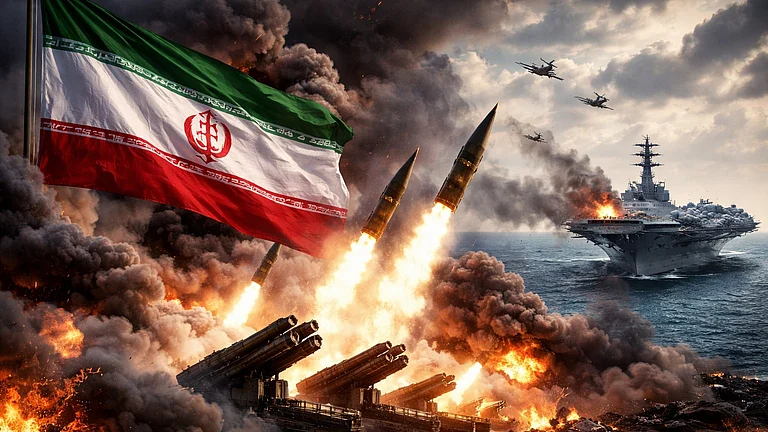
On Saturday, the US and Israel launched a combined military strike against Iran, killing Supreme Leader Ayatollah Ali Khamenei. The rising geopolitical worries are expected to further push crude prices higher and trigger risk-averse sentiment among investors.

1 September 2026
Get the latest issue of Outlook Business

“The sell-off is found to be sharper if geopolitics morphs into a sustained energy shock, e.g., in the 2011 Arab Spring phase, Brent rose 20–25% in month one and equity drawdown widened,” Elara Capital said in a report. On Friday, foreign portfolio investors (FPIs) sold shares worth over ₹7,500 crore, as per data from the National Stock Exchange (NSE).

All 16 major sectors turned red, with broader small-caps and mid-caps falling 3.8% and 3.4%, respectively. Shares of oil marketing companies, the aviation sector, chemical manufacturers, paint, and tyre makers fell sharply owing to rising oil prices.
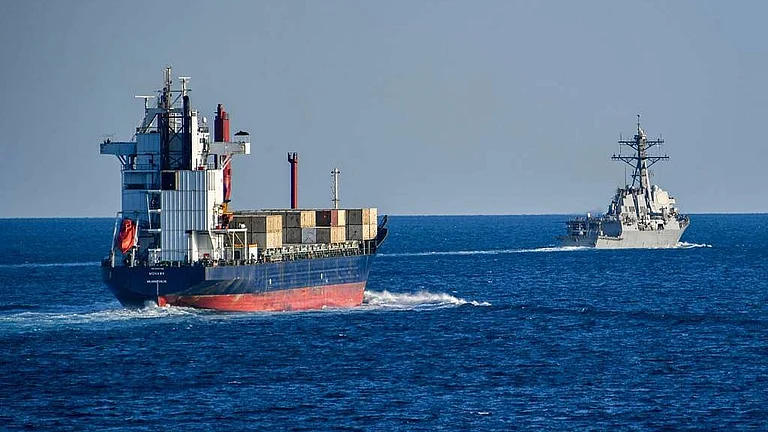
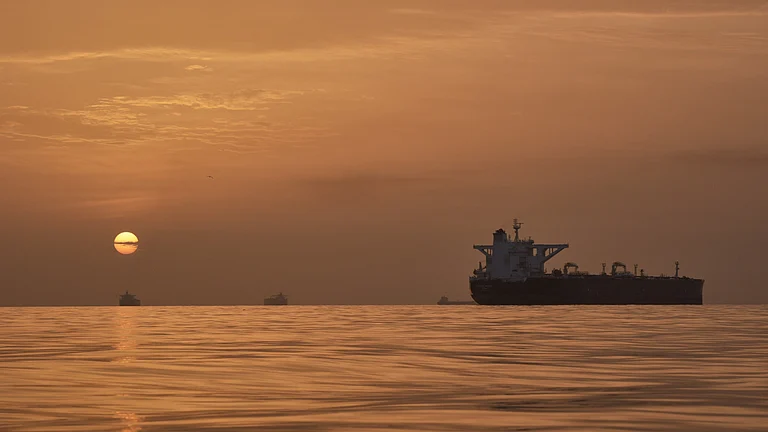
Oil prices surged over 7% to nearly $82.40 per barrel, their highest level in months, owing to heightened tensions in West Asia. Continued escalation in the region and the attack on Iran have further clouded the outlook, raising worries of supply chain disruption following the shutdown of the Strait of Hormuz.
Advertisement
Iran is also the fourth-largest oil producer in the Organisation of the Petroleum Exporting Countries and allies (OPEC+). Tehran has confirmed it has closed navigation through the Strait, which accounts for nearly 20% of global oil flows and 40% of India’s crude import route.
“An important consideration is how the global supply chain holds up. The strategic geographic location of the Strait of Hormuz, Dubai Airport, and overall sea freight should cause a near-term spike in supply chain risks,” the report said.
Safe-haven asset gold climbed 2%, while the Indian rupee slumped to ₹91.23 per dollar, its lowest level in a month. The domestic currency is expected to come under further pressure during the day, likely owing to panic buying by importers and FPI sell-offs. However, the fall is likely to be capped at ₹91.50 per dollar on exporters’ dollar sales and likely intervention in the forex market by the Reserve Bank of India to curb excessive volatility.
Advertisement
“We need to watch developments intra-day, as the geopolitical situation in the Middle East will be of critical importance in gauging the markets,” Anil Kumar Bhansali, Head of Treasury and Executive Director, Finrex Treasury Advisors LLP, said in a note.